

Within the Nato
Turkey’s defence sector is expanding, and not everyone is comfortable with this
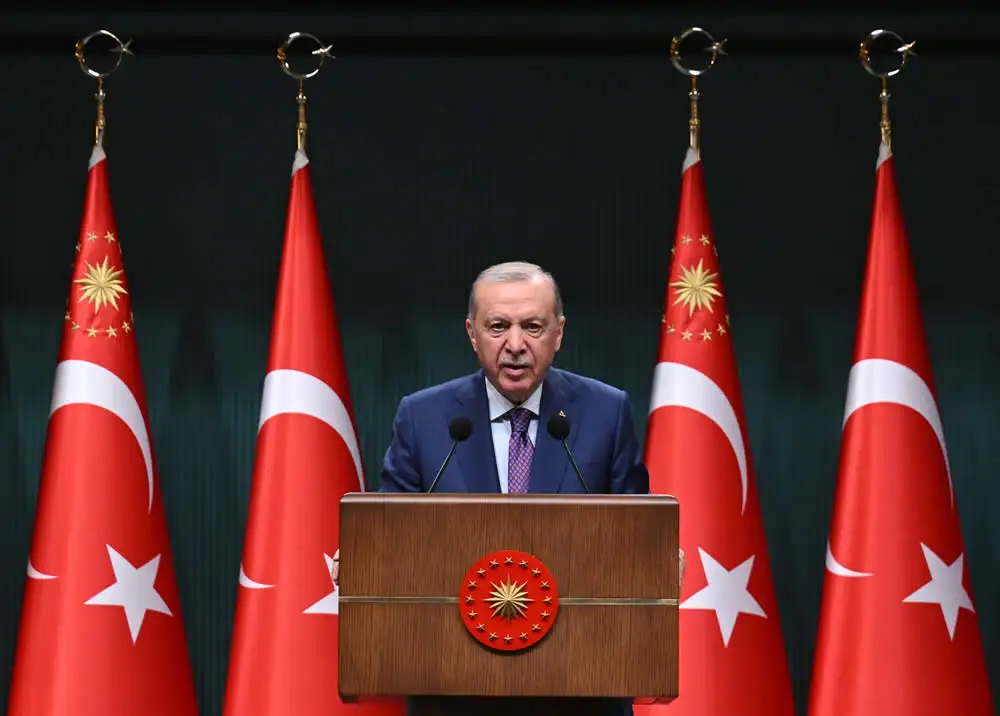
After decades in which Europe conceived of its security within a post-war order now taken for granted, the return of war to the continent has brought defence back to the centre of politics. This is not a temporary blip linked to Ukraine or the conflict in the Middle East: the demand for European security is measured over the long term, destined to last well beyond the outcome of the current conflicts.
The stance adopted by the United States under Donald Trump has made the definition of a new paradigm for continental defence even more urgent. As indicated by the new National Security Strategy, Washington is no longer asking Europe to strengthen itself to become a more reliable ally. On the contrary, the Trump administration treats its European allies less and less as partners and increasingly as tools subordinate to its own interests. More recently, the United States has also warned its NATO allies of substantial cuts to its military presence in Europe.
All this comes shortly before the Alliance’s next summit, scheduled for 7 and 8 July in Ankara. An event that takes on even greater significance in light of transatlantic tensions. For some time now, many in Europe have viewed Turkey as a natural partner to address the accumulated backlog in the defence sector. The United States, for its part, has chosen Ankara as one of the pillars of its stabilisation strategy in the Middle East.
Turkey’s influence has been consolidated on multiple levels. Ankara controls the Bosporus and Dardanelles Straits, which provide access to the Black Sea, maintains open channels with Russia, and operates effectively in theatres such as Libya, Syria, the Caucasus and the Horn of Africa. These are areas that directly affect European security and have an impact on crucial issues such as migration flows, energy and raw material supplies, strategic connectivity and trade.
Added to this is the industrial pillar. “Turkey’s defence industrial base has become one of the most capable within NATO. Exports have risen from a few hundred million dollars twenty years ago to over seven billion last year, and much of this capability previously existed only in the United States and a few European countries,” say Seren Korkmaz and Riccardo Gasco of the Turkish think tank IstanPol. In recent years, Turkish defence firms have significantly increased joint production and technology transfer agreements, with the aim of expanding exports and building long-term industrial partnerships. Turkey has thus established itself as one of the most advanced players in the drone and munitions manufacturing sectors, offering platforms already field-tested, faster delivery times and more flexible procurement arrangements compared to many European competitors. This trend is also evident in Italy, where in 2025 Leonardo signed an agreement with the Turkish firm Baykar to create a joint venture dedicated to the co-production of unmanned aerial vehicles for the European market, with production sites planned in both Italy and Turkey.
At the SAHA 2026 military fair in Istanbul, Turkey then unveiled a model of the Yildirimhan ballistic missile, still under development, with a claimed range of around six thousand kilometres. The political message is clear: Ankara does not wish to limit itself to regional deterrence or a drone-driven export model, but aims to enter the more exclusive ranks of powers possessing long-range capabilities. Whilst Ankara’s influence is now recognised, there is still no shared political framework at European level within which to integrate it. Turkey’s genuine integration into the EU’s defence framework remains complicated.
The first obstacle is political. Alongside countries such as Italy, Spain, Poland and Portugal, which see Ankara as a useful partner for strengthening industrial and military capabilities, other actors such as Greece, Cyprus and France continue to view it with deep mistrust, in light of tensions over territorial waters and disputed maritime borders in the eastern Mediterranean.
Added to this is the crisis in Turkish democracy, made evident by the Turkish government’s decision to target the opposition through the courts. Whilst it is true that, at European level, very few voices have been raised against this drift, the erosion of trust in the independence of institutions has a profound impact. It weighs on trust, on the predictability of decisions and on the stability of agreements, making it more difficult to place the commitments made by Ankara within a stable framework.
As Selim Koru, one of the sharpest voices in the Turkish debate and author of the newsletter “Kulturkampf”, observes, European rearmament stems from the need to bring defence back to the centre of the Union’s political project. It also stems from the realisation that Europe can no longer entrust its security to actors outside its own political and values-based sphere. In this context, integrating Turkey presents an obvious contradiction: Ankara is now politically further removed from the EU than the United States itself. What kind of alignment can exist with a country that is simultaneously a partner, a competitor, a rival and, for some member states, even a threat?
The result of this divergence is that Brussels has not yet been able to produce a common strategy. Instead, progress is being made in a disorganised manner. As Korkmaz and Gasco observe, the Commission has its own dossiers, member states have bilateral interests that often pull in opposite directions, and intermediary institutions manage separate files. In April, Commission President Ursula von der Leyen stated that it is necessary to “succeed in completing the European continent, so that it is not shaped by Russian, Turkish or Chinese influence”. The Commission subsequently backtracked to avoid a diplomatic crisis, but the episode clearly illustrates the ambiguity of the issue. This uncertain stance has, in practical terms, contributed to Turkey’s exclusion from the first tranche of SAFE loans – the European instrument designed to strengthen the defence industry – and continues to weigh on other EU dossiers. The European Parliament’s Committee on Security and Defence (SEDE) has in fact excluded Ankara from the defence components of the new Horizon Europe programme for the period 2028–2034. Not the best way to establish a partnership.