

Conversation with Nick Clegg
Europe pontificates about values but still hasn’t built a digital market
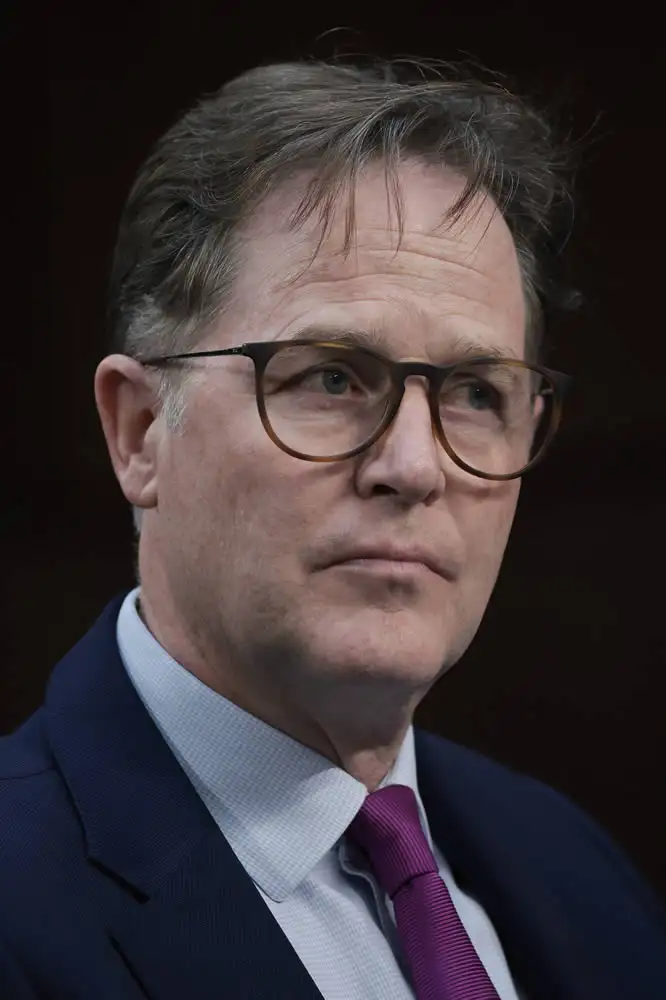
European politicians in Brussels, Rome, Berlin, and Paris “pontificate about European values and about how the European digital market is different from the American one, but the truth is we don’t have a European market. It doesn’t exist, it’s a fiction: there is no single European digital market,” says Nick Clegg, the former British deputy prime minister from the Liberal Democrats when they were in government with the Conservatives from 2010 to 2015, and former president of Global Affairs at Meta, which he left last year to return to London. “I think this is a betrayal of the interests of Europeans, of our children and grandchildren: European political elites keep criticizing American and Chinese companies and then deny Europeans the chance to compete, because they’ve failed to build a European single market for digital services.” Clegg spoke at the third edition of the “Rome Conference on AI, Ethics and Governance,” organized by Wilson Sonsini and Libra Legal Partners, and for months he has been doing interviews about his book, “How to Save the Internet,” about why he left Meta, Silicon Valley, and America, and about whether the United Kingdom and Europe can close the transatlantic digital gap.
“When I arrived in Silicon Valley in the autumn of 2018,” he recounts, “the world was completely different. My job at Facebook and Meta was mainly about helping the company manage the problems it was facing at that moment, not least the fallout from the Cambridge Analytica scandal and the 2016 US election” — the one marked by Russian interference, and above all by the British consulting firm that had illegally harvested and used the data of around 87 million Facebook users in the campaign that first brought Donald Trump to the White House, as well as in the Brexit campaign. “I introduced a series of changes at Facebook, but it became clear to me that the company was transforming in a very significant and drastic way, for two reasons. First, because the technology itself was changing, with generative AI, and also because social media apps were becoming progressively less social and more dominated by algorithm-recommended content. Then Trump was elected for a second time, and that seemed like a good moment for me to leave.” This presidential term is very different from Trump’s first, more aggressive, more unscrupulous, more personalistic, and Silicon Valley, like many other industries, has adapted to it. “The interesting thing,” Clegg says, during our phone conversation plagued by alarms going off continuously outside the windows of Il Foglio’s newsroom — it’s hot — “is that all of this was entirely predictable. I remember when the Trump Administration, on its first day in office, said it would scrap the executive order introduced by Joe Biden in the previous administration, which many considered excessive interference in the workings of private companies — David Sacks and Marc Andreessen called it ‘a form of communism.’ But now look at the Trump Administration talking about nationalizing or semi-nationalizing some AI labs and suspending some of their models: all of this is far more invasive than even what Brussels is doing in the AI sector.”
Just imagine if Biden had done or said that: it’s the refrain that punctuates Trump’s second term, made up of excesses and broken promises, in every area, whether it’s foreign policy, the trade war, or insults hurled at allies. But the world has changed, and this president is given a great deal of leeway, because if Trump turns against you, your life becomes hell. That goes for the billionaires running Big Tech too — no one is really safe. According to Clegg, this flattening into deference to presidential whims “is driven by a mix of fear, FOMO (fear of missing out), fear of being cut out, and self-interest. Fear because, you know, this is a highly transactional and aggressive administration. Tech companies, understandably, don’t want to end up in the White House’s crosshairs. FOMO because they’re afraid that if they don’t sit at the Administration’s side, their competitors will, and gain an advantage over them. And self-interest because it’s very appealing for Silicon Valley companies to have a US Administration that has, for instance, said it wants to take on Brussels and stop Brussels and other non-American regulators from interfering with their business.” This alignment is damaging for Europe, which nonetheless continues not to react: “Right now, there are 27 different national data protection authorities in the EU. In Germany alone there are 17 different data protection authorities, and they all interpret a law written before AI, the GDPR, differently from one another, and then apply it to a technology that didn’t even exist when the GDPR was drafted. And that’s just one example among thousands of how we’ve failed to create a market capable of competing with China and America. I think it’s a tragedy that European politicians spend their time making grand speeches and issuing press releases about how special our European values are, and then refuse or fail to implement the Draghi report and other similar reports, which would actually give us the chance to compete with America and China. As long as Europe chooses rhetoric over action, criticizes Silicon Valley and Chinese tech companies but refuses to act at home to become more than the sum of our parts, I fear European policy will remain empty.” Things aren’t going any better in the United Kingdom: “Brexit was an act of self-harm that left the country much, much weaker,” Clegg says, and even without European laws and European fragmentation, the country is still lagging behind in competing with the major superpowers. But things can change, Clegg is convinced of that — he saw it and helped make it happen when he was in politics and the UK built up a start-up and innovation ecosystem that hadn’t existed before, and he sees it happening in many parts of Europe too: he cites Barcelona, where there’s a cluster of satellite-manufacturing companies, and adds that he’s very interested in Spain — “you know, my wife Miriam is involved in Spanish politics” — and indeed, in just the past few days Miriam González Durántez registered the name of a new party, Democracia 21, right in the middle of the political crisis that’s sinking Prime Minister Pedro Sánchez. But Clegg also offers other examples that have nothing to do with family: “I just got back from Estonia, a highly advanced country, and I spoke with the founder of Bolt, the second-largest company after Uber in the taxi market, an Estonian company. Go to France, and in Paris there’s Station F, a major incubator for new companies. Go to Munich, where Europe’s leading defense-tech cluster is based. So all the ingredients are there, but what we’re not doing is connecting these experiences to one another: we need to connect the talent.”
Talent comes up again and again in European conversations, and now that America has become so inhospitable, it should be easier to attract it, retain it, and make the most of it. What it takes is the will to do so, as always, as with everything. Clegg says he doesn’t want to go back into politics, but he points out that passivity and inertia are not a strategy, and that nationalism and populism, too, are best fought by offering opportunity — the soil in which talent flourishes.
Nick Clegg, former deputy prime minister from the Liberal Democrats when they were in government with the Conservatives from 2010 to 2015 in the Uk, and former president of Global Affairs at Meta, last year returned to London.