AUGUST 20-23. LOUISIANA LITERATURE / COPENHAGEN, DENMARK
Reading recommendations from Louisiana Literature
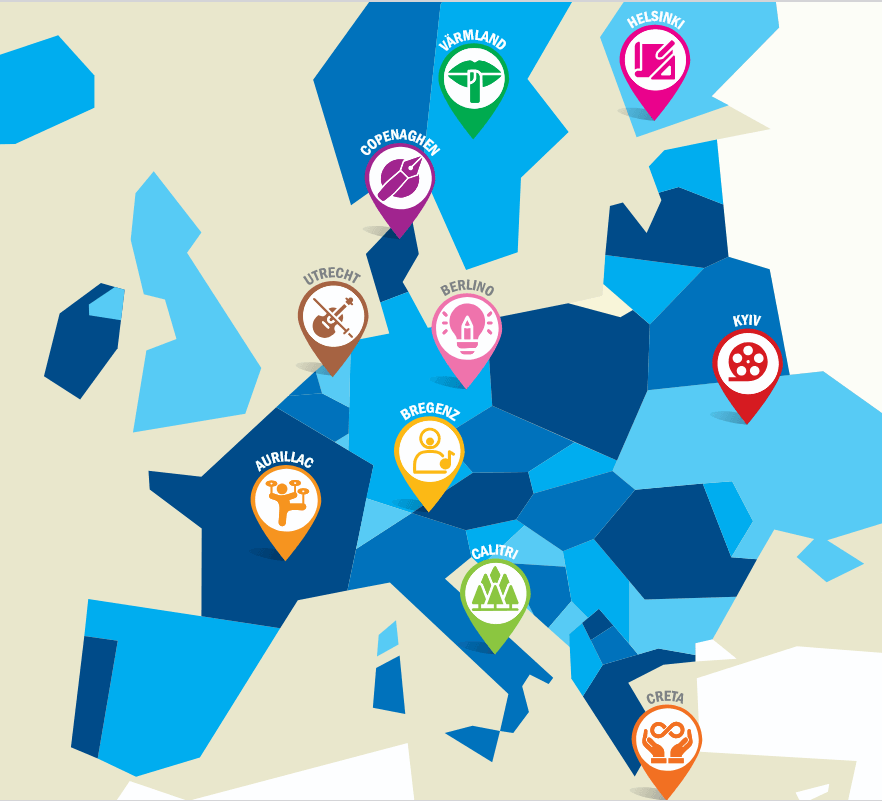
The YouTube channel of Copenhagen’s Louisiana Museum is a precious archive of conversations with writers, artists, architects, and designers invited by the institution for an exhibition or event. The most anticipated is the Louisiana Literature festival, held in the museum’s magnificent garden. This year’s program, as always, is top quality: interviews, readings, and performances with Danish and international writers. One of the guests will be Nelio Biedermann, a very young Swiss writer of Hungarian descent and author of “Lázárs,” currently being translated into thirty countries. It’s the new great European novel, a sweeping family saga recounting the splendor and decline of an aristocratic Hungarian family on the banks of the Danube, but told with the freshness and edge of a Gen Z voice. In Italy it will be published on September 8 by Guanda. Other guests include Kiran Desai, with “The Loneliness of Sonia and Sunny” (Adelphi), another novel brimming with color, humor, and life; Siri Hustvedt, with her memoir on life with Paul Auster (out in September in Italian from Einaudi); and David Szalay, Georgi Gospodinov, Leïla Slimani, and Kae Tempest, a poet and artist of great linguistic sensitivity. Also appearing: Elizabeth Strout and Anne Carson, who will give a performance with many people on stage based on her novel in verse “Autobiography of Red.”
AUGUST 27-SEPTEMBER 4. ODESA INTERNATIONAL FILM FESTIVAL / KYIV, UKRAINE
The Odyssey of Odesa and Kyiv, for freedom
For the third year in a row, Odesa’s international film festival has been relocated to Kyiv, since the Black Sea city is the target of heavy, widespread Russian attacks (not that the capital is immune either — quite the opposite). The festival poster tells the story of the bond between the two cities: a light rises from the sea, a symbol of hope, rebirth, and a horizon to strive toward, while the skylines and symbols of Kyiv and Odesa are reflected in the waters of the Black Sea. The poster also celebrates the thirty-fifth anniversary of Ukrainian independence — the yellow-and-blue palette recalls the flag, but also the sun and sky, light and sea — and this year’s slogan is: freedom is in our DNA. Aside from a retrospective on Georgian cinema, the official selection has not yet been announced, but as always it will include premieres of the most anticipated Ukrainian films, along with debut works: since 2022 national cinema has been closely followed by Ukrainians, especially young people. This was also noted by Yuliia Antipova, director of the Zhovten, the city’s oldest cinema, operating in the Podil district since 1931, which survived the Second World War, a major fire in 2014, and now Russia’s full-scale invasion. After closing for three months from February to May 2022, it resumed regular operations, with the necessary precautions. It will host the festival, and if the air-raid sirens sound, as happens several times a day, the screening will be interrupted, everyone will retreat to the bunkers, and once the all-clear sounds, the film will resume. A true odyssey.
AUGUST 28-SEPTEMBER 6. UTRECHT EARLY MUSIC FESTIVAL / UTRECHT, THE NETHERLANDS
The experimental festival of baroque music
On her album “Destinées,” violinist Sophie de Bardonnèche selected and performed, together with Justin Taylor and Lucile Boulange, pieces by forgotten Baroque women composers, excluded from the canon. They will bring them to the stage at the Utrecht Early Music Festival, dedicated to Baroque, Renaissance, and medieval music. This year’s title, “Giving Voices,” is inspired by the Baroque composer Marin Marais’s piece “Les voix humaines,” written for viola da gamba, in which the human voice echoes through the instrument’s strings. In a similar spirit, Ensemble Odyssee will play with sonic disguises and tricks: in concert you hear percussion, or a flute, but on stage there are only string instruments — the special effects of Baroque music, not dusty, but alive. There will also be contemporary Baroque music, thanks to a new generation of musicians breaking the taboo against composing new music for fear of comparison with the venerated masters. The program also includes improvisation, seventeenth-century music from Bohemia and Moravia, and villancicos de remedio, colonial devotional songs born in Latin America, which Música Temprana will present along with their historical context. This is the experimental festival of the summer.
AUGUST 27-30. SOUND FESTIVAL / VÄRMLAND, SWEDEN
Healing through sound, music, and silence
In Hinduism and Buddhism, “Om” is the primordial vibration from which everything originates. The first verse of the universe, the sound of creation, the sacred mantra. If everything is vibration, then we too are sound, music, resonance. From this principle springs the Sound Festival at Ängsbacka, a community nestled in the forests of Värmland, Sweden, where sound, music, and silence become tools for healing, connection, and transformation. You don’t need to be a musician or have any experience: your own voice, your own creativity, and your own presence are enough to explore musicality as a channel for connecting with yourself and others, expanding the nervous system, softening the heart, and nourishing the spirit. The program includes sound baths (for relaxation), singing circles (to free one’s voice), jam sessions (to join in playing or just listening), percussion courses, yoga, gatherings in nature or around the fire, and music therapy sessions. Particularly interesting will be the sessions with the Iranian Sufi multi-instrumentalist and spiritual researcher Mahzoon, who will lead experiences of Persian dervish circular dance, along with workshops on building simple musical instruments. Craftspeople will guide participants through every stage of the process, from design to the moment the instrument comes to life and is played for the first time.
AUGUST 28-SEPTEMBER 6. HELSINKI DESIGN WEEK / HELSINKI, FINLAND
UFO house or saucer: the future in Nordic design
The Futuro House is an elliptical, assemblable plastic chalet resembling a UFO (or a saucer, as Americans call it), designed by the Finnish architect Matti Suuronen in the late 1960s. Several dozen were built around the world, products of the optimism and experimentation of the era and its taste for space-age architecture, later gone out of fashion. Now a new example, Futuro No. 21, will be reassembled by architect Jan van Dijs in Helsinki’s Kaisaniemi garden, in collaboration with Marimekko, for Helsinki Design Week. The 2026 edition explores how small changes can trigger something bigger, and how the creative sector thrives on connections and informal encounters. Also worth seeing is the Artek retrospective, “The Making of Modern Living,” which recreates the atmosphere of the brand’s first store, opened in Helsinki in 1936 — not just a place to buy furniture, but also a cultural space.
JULY 22-AUGUST 23. BREGENZ FESTIVAL / BREGENZ, AUSTRIA
Floating La Traviata and augmented reality
Damiano Michieletto’s “La Traviata” at the Bregenz Festival in Austria, set in the 1920s, is sold out for every date through August 23. Critics have praised the orchestra and cast, especially soprano Marjukka Tepponen in the role of Violetta. But part of its success is owed to the setting: the festival’s spectacular floating stage on Lake Constance, designed by set designer Paolo Fantin with a 28-meter mirror. Alongside “La Traviata,” one of the most romantic and moving operas ever written, the festival — turning eighty this year — is also staging a sharp, humorous satirical opera, “The Excursions of Mr. Broucek,” by Czech composer Leoš Janáček, which premiered in 1920. Also debuting is “YUM!” by composer and media artist Wen Liu, which works like this: the audience takes part in a decadent dinner where augmented reality transforms gelatin into appetizing dishes. But it soon turns out to be a digital simulacrum, and the piece denounces our obsession with consumption and inequality. Then come climate disaster, the food crisis, and the collapse of the social system — the whole package, in short. For more classic tastes, there’s also a production of Donizetti’s “The Elixir of Love.”
AUGUST 26-30. SPONZ FEST / CALITRI, ITALY
Stories and music in Capossela’s woods
The forest is not just a physical place but “an archetype of enchantment, magic, fear, sacredness; it often symbolizes the unconscious, concealment, but is also a place of losing one’s way,” according to Vinicio Capossela, who dedicates this year’s edition of Sponz Fest — this time called Sponz Im-Bosck — to it. This rebetiko singer-songwriter, colorful musician, and folklore astronaut says of “going into the woods”: “Seeking refuge in the part not in the light, the part removed from rules and moral judgment, as if the protection offered by nature could suspend the workings of law and social convention. It’s the place of clandestine love affairs, of hermitage, of banditry, of ambush, and it’s also the place of nature’s sacredness.” The festival is held, as always, in Calitri, in Capossela’s own Irpinia, an inland area turned into a bustling, open cultural laboratory. It opens with the town band’s Grand Concert and a community dinner in the piazza. At the heart of the program is a dialogue with the radio drama “Under Milk Wood” by the poet Dylan Thomas, which inspired Capossela’s own work for voices, “Sotto il Bosco di Latte” (from an idea by Renato Striglia), broadcast on Radio Rai. That text was in turn reworked into the show “Sotto il Pascone,” performed in the Calitri dialect. A weave of voices and echoes, where every path is tangled and branches off — in short, you lose yourself in the woods of the tale.
AUGUST 26-27. FORWARD FESTIVAL / BERLIN, GERMANY
If it’s needed and doesn’t exist, it’s not a dead end, it’s the brief
Creatives — of whom our era has no shortage — are nonetheless admirable for their forward-looking, progressive spirit, since they take pleasure and enjoyment in finding solutions (even if their energy is often directed at fairly trivial matters). Forward Festival brings together the world’s most talented creatives in various European cities, arriving in Berlin at the end of August. Here the creative industry — designers, architects, thinkers, artists, marketing and tech experts, and entrepreneurs — meets to imagine the future of creativity, one of the most powerful tools we have for living better. This year’s theme is “Turn Ideas Into Action”: the method, process, and will needed to put an idea into practice. Guests will include Annie Atkins, the paper-prop designer (maps, letters, top-secret documents) for Wes Anderson and Spielberg; the duo Anton & Irene, creators of campaigns for Ikea, Spotify, and the Met; the font studio Dynamo Typeface; and Stefan Sagmeister, who will give a talk on how to bring depth and meaning to creative work and on the importance of failure — another theme dear to the industry. This is the optimism of creatives, distilled in a line from OpenAI’s Julia Hoffman at last year’s edition of the festival in Frankfurt: “If the thing you need doesn’t exist, it’s not a dead end, it’s the brief.”
AUGUST 19-22. FESTIVAL D’AURILLAC / AURILLAC, FRANCE
The street is ours, and we make it into art
Legend has it that every tumbler, circus performer, alternative type, street artist, and van-dwelling nomad in France gathers each August in Aurillac, in the Cantal department, in the southwest. Given our habit of handing out the title of “European capital” to any excellence we come across, this small Auvergne town can rightly be called the European capital of street theater. Since 1986 it has hosted the Festival International de Théâtre de Rue d’Aurillac, organized by the association ÉCLAT — an event that has helped transform street theater from a marginal practice into a recognized artistic discipline. Over forty years, the festival has supported the birth of new companies, encouraged experimentation with innovative performance languages, and built an international network of artists, programmers, and cultural organizers. On the street, after all, people meet, talk, experiment, and weave relationships. That’s why the festival, deliberately created in a rural, decentralized area, has become a reference model across Europe. This edition dedicates a major focus to Mediterranean artistic production (part of the ministerial project Saison Méditerranée 2026), highlighting artists from North Africa and the Arab world. The official program includes 19 shows, alongside more than 650 “compagnies de passage,” offering free performances. As festival director Frédéric Remy put it, echoing “La Haine”: “La rue c’est à nous” — the street is ours.
AUGUST 10-11. XENOS / CRETE, GREECE
Zeus’s sacred law (and its betrayal): hospitality
Thanks to Nolan, we’ve all had a refresher on Zeus’s law of hospitality, which commands that guests be treated well and welcomed into one’s home, given shelter and fed — because anyone, even a beggar, might be a god in disguise. At the amphitheater of Gortyn, in Crete, the show “Xenos” will explore the gap between the sacredness of hospitality and the experience of migrants arriving in Greece today from Asia — how the country, the government, and its citizens welcome and care for them (in other words, how Greece today transgresses the law of Zeus). The performance combines ancient texts, audio documents, literary texts, and music with the testimonies of refugees.