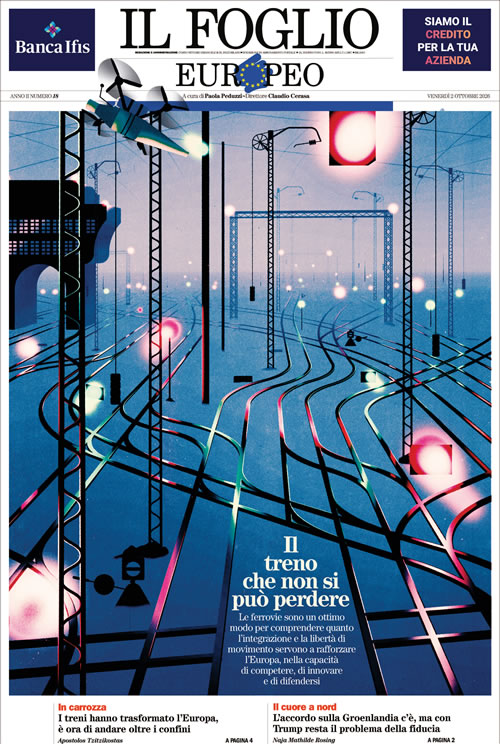
Europe has invested heavily in high-speed rail. New lines have shortened journeys and connected major cities. But building infrastructure is only part of the game. Tracks create the possibility of better services. They do not guarantee them. To obtain the full return on public investment, Europe also needs competition between operators.
Europeans saw competition transform air travel and telecoms. Supply expanded. New business models appeared. Prices fell. Rail moved more slowly. National incumbents remained dominant, including in countries with modern high-speed networks. Expensive infrastructure was built, but its potential benefits were not always passed on fully to passengers.
Italy provided the first convincing demonstration. The country had already invested in high-speed infrastructure. The entry of Italo in 2012 added the second ingredient: competition. The result was not a transfer of passengers between companies. Frequencies increased. Service improved. Prices fell. Both operators innovated. The market expanded and attracted new passengers.
The Rome–Milan corridor became the clearest example. Travellers gained a dense timetable and a broad range of fares and services. Competition reduced Italian ticket prices by 31%. Rail became more attractive and gained passengers from aviation. Emissions fell. Competition multiplied the dividend generated by the infrastructure.
Spain then confirmed the model. It had built Europe’s largest high-speed network but, for many years, only Renfe operated commercial services. Competition started in 2021. Renfe, SNCF’s Ouigo and Trenitalia-backed Iryo now compete on the main corridors. Between 2019 and 2024, commercial high-speed rail frequencies increased by 55% and passenger numbers by 77%. Average prices were 44% lower in real terms. Consumer surplus was calculated to be €430 million in 2024, according to the regulator CNMC. The infrastructure did not change overnight. The way it was used did.
The lesson from Italy and Spain is clear. Infrastructure and competition are complements. New tracks increase capacity and reduce journey times. Competition converts those advantages into more frequencies, lower fares, better service and greater choice. It attracts passengers from cars and planes. Countries combining investment with competition obtain a larger economic, social and environmental return.
These benefits are beginning to spread. Trenitalia entered the Paris–Lyon route in December 2021. The French transport regulator subsequently reported a 10% fall in prices. Renfe now provides services to Marseille. France already had excellent high-speed infrastructure. The arrival of additional operators is allowing passengers to capture more of its value, and this is only the beginning. Further operators are expected to launch services across the country. At the same time, SNCF is expanding in the opposite direction. It already competes in Spain through Ouigo and plans to enter the Italian domestic high-speed market in 2027. A golden triangle of competition is emerging between Italy, Spain and France. Operators from each country are increasingly challenging incumbents in the others.
The expansion of high-speed operators into neighbouring countries has exposed a gap between the legal right to enter a market and the practical ability to run trains. Entrants have alleged discriminatory treatment in rolling-stock authorisation, the allocation of attractive train paths and access to service facilities. Each obstacle can delay a launch, raise its cost or weaken the service before it has had a chance to establish itself. Europe will not have a genuinely integrated high-speed market if crossing a border means having to fight for the operational conditions that incumbents already enjoy.
The expansion of high-speed rail competition is no longer confined to a few national markets. Germany could provide the next major step. Italo has announced a €3.6 billion investment and plans to enter the German market in 2028. It has ordered 26 high-speed trains, with options for 14 more. Germany is only the beginning. Its new trains will also be authorised for Belgium and the Netherlands, where Italo envisages further expansion from 2030. Meanwhile, Trenitalia’s parent company is preparing services through the Channel Tunnel.
The European Commission’s High-Speed Rail Action Plan can extend the competition dividend to the whole of the European Union. Europe is preparing new connections, stronger cross-border links and services in regions that currently lack them. But infrastructure alone will not deliver the full return. Competition must follow the tracks, increasing frequencies, lowering fares and expanding choice. Infrastructure creates the opportunity. Competition multiplies the dividend for citizens.
Juan Montero-Pascual is Director of the Florence School of Regulation – Transport and Professor of Administrative Law and Economic Regulation at the Universidad Nacional de Educación a Distancia (UNED) in Madrid.