“Afghanistan can’t handle a totally free media”, I was told after the fall of the Taliban regime in 2001, by representatives of foreign governments, by Afghans who had returned from Europe or the US, by heads of NGOs. Can’t handle what exactly? I wondered. And which Afghans are you all talking about? Afghans who had grown up outside the country were arriving or returning with dynamic ideas about the purpose and range of media, and with diverse opinions about movies, music, news reporting. Afghans who had lived under the Taliban were hungry for something new. The idea that Afghans weren’t ready to hear music on their radios made me laugh. Everyone goes crazy for music, I reasoned. That’s why the Taliban had to ban it.
Radio was the best kind of idea: simple but revolutionary. I recall the term “no-brainer” being thrown around a lot those early days. Women on the radio? No-brainer. Call-in shows for the morning drive? No-brainer. Under the Taliban, the punishment for being caught with banned music could be severe and violent, but Afghans still managed to find a way to listen. They smuggled cassettes from Pakistan through checkpoints hidden in the upholstery of their cars, bought them on the black market, and closed their windows and curtains at home before playing their Michael Jackson and Ahmad Zahir tapes at a low enough volume. Would these Afghans tune in to a radio station after so many years of being deprived? Definitely a no-brainer.
We named the station Arman, the Dari word for “hope,” and started hiring. Immediately, we received hundreds of applications, from both men and women. Very few of the applicants had any radio experience, but then again neither did we. Our collective inexperience could be a virtue, we reasoned; we wanted to start something totally new, with people who could speak and understand both Pashto and Dari and hadn’t been trained on the flowery, almost Shakespearean Dari of the state radio. Dari, the lingua franca, was used in higher education and business, the language spoken by most people in Kabul, while Pashto, a grammatically complex language with its own rich literary history, was now unfortunately associated with the Taliban. Language, which also signified ethnicity, had divided us—and not only under the Taliban; the British and Soviets had both recognized and exacerbated this division. Pashto had been the language of my ancestors and my mother tongue, but by the time we were born our family had been in Kabul for so long we barely spoke it and learned little in school. But in the new Kabul, on the new radio, both languages would be given equal weight. Just as importantly, from the very first broadcast, we wanted men and women in the studio together. Obvious, we thought, but revolutionary.
“Democracy” was already a buzzword in those days, even before the US changed its goal for the war from capturing Osama bin Laden and dismantling Al Qaeda to the unspoken one of nation building. My own feelings about the war itself and how it was conducted would change over time. And whatever a general or diplomat meant by democracy, whether they said it on the battlefield in Helmand province or from the embassy in Kabul, that changed as well over the years. Over two decades, this word deployed so repeatedly appeared to lose its meaning. But not for us.
Turns out, Afghans want to hear ordinary people on the radio discussing ordinary things. They want to hear both of their official languages, and they want to hear those languages spoken in the accent they acquired as a refugee, or with the inflection of their cousin who had never left the country, in the way they speak it at home around the dinner table. And, contrary to the hand-wringing by the international community about whether Afghans were ready for a free media, our listeners really— more than anything, it seemed — wanted to hear women on the radio. Any complaints we got at first from conservatives complaining were outweighed by the praise we received from our listeners. Within six months, polling showed that three of our five most popular DJs were women.
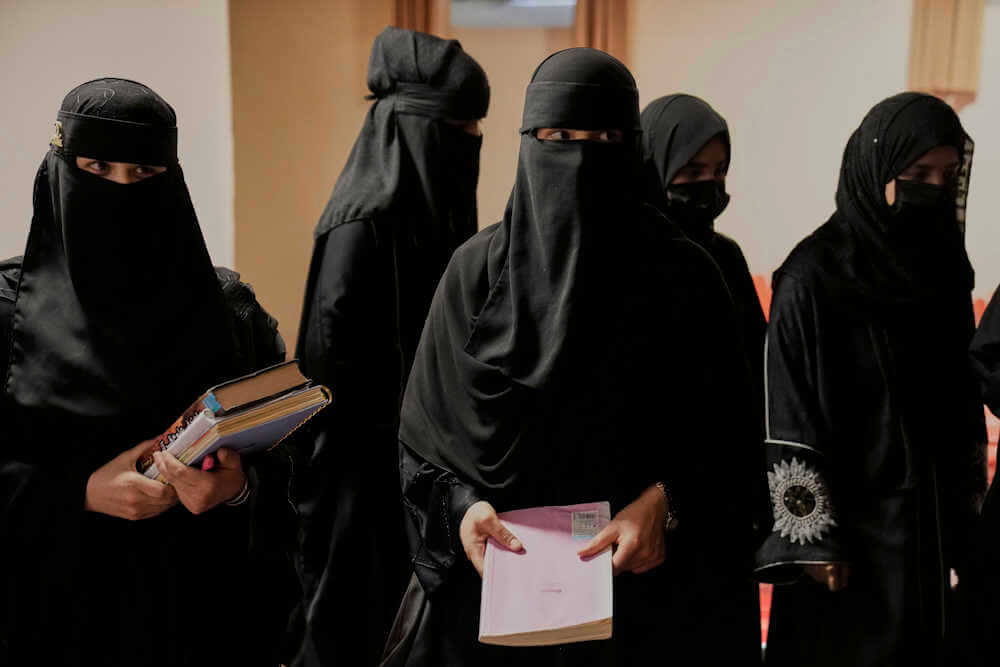
Since the withdrawal of Us Forces in 2021, I have not been back to Afghanistan, but traveling constantly, from London to Oslo to Delhi, trying to keep Moby, and Afghanistan, on the world’s radar; securing partners for our new projects, particularly educational programming that we hope will help prevent Afghan girls from falling too far behind while the Taliban uphold their ban on girls’ secondary education. I’ve implored high-ranking international government officials not to turn their backs on a country they had invested so much in, and had professed to care about, but that they now seemed to be dismissing as a sore spot, as hopeless. The future of the people, I would argue, requires engagement. It is the only way to ameliorate the misery for Afghans who could not flee, who remain in a country that has since then been choked by sanctions and an ever-worsening humanitarian crisis. Our education programs would help the girls the senior official professed to care about, but they require rational engagement with the Taliban government.
For the past two years, I’d traveled from capital to capital, Ngo to Ngo, donor to donor, trying to make a case for safeguarding the gains of the past two decades, which I had seen take hold most tenaciously in Afghan civil society, sometimes because of, and sometimes in spite of, foreign aid and investment. “It’s the greatest and most lasting thing to come out of the twenty-year war,” I’d say. “It’s the legacy that Afghans have created for other Afghans.” Supporting institutions like the media is one of the best ways to help Afghans out of poverty and away from the riptide of extremism, I’d insist.
Those conversations didn’t always go smoothly. I found myself, bewildered at an embassy reception or think tank meet and greet, comforting Western politicians as they confessed to feelings of guilt over the way the international community left so suddenly, abandoning Afghans. “It’s not your fault,” I’d tell them, as though they were a child and Afghanistan a glass of spilled milk.
Since 2007, we’ve broadcast our entertainment and news channels via satellite as well as terrestrial and cable, to make sure Afghans beyond Kabul can also access our shows. Afghans, as resourceful as ever, find a way to watch what they can. In some Kabul neighborhoods, one household buys a satellite dish for the entire street, and ten homes connect to it via rudimentary cables. In the provinces, villagers use one of the hundreds of local cable operators across the country. Those with access to the Internet can download shows off our app, which is available thanks to lessons from the days of distance learning during the pandemic, and a quarter of the population is said to have access to the Internet via their phones. By January 2024, we’d begun airing the educational programming, hoping for the best.
As I have for twenty years, and ever more profoundly since 2021, I live with two opposing visions of Afghanistan’s future in my head at all times. In one, the educational programs work. They make Afghan girls feel less alone, and their parents less anxious. Afghanistan doesn’t fall behind as precipitously as it otherwise would, and when things improve — in whatever way that happens —, Afghan children and teenagers are able to pick up where they left off. The programs, in no way an alternative to schools, are a temporary Band-Aid and only need to be used for a short period. It is not hard for me, as an optimist, to imagine such things happening.
I can also just as easily imagine everything going wrong and our new programming harming the people we are trying to help, putting new pressure on them, shining a light where they would prefer to stay hidden. Some nights, as I lie awake and think about Afghanistan, I fear there is no bottom to this worst-case scenario. Life only gets harder for millions of Afghans. There are more women begging in their blue chadors on the streets, their babies lying on blankets beside them as evidence of their desperation. With caches of weapons and droves of experienced fighters sitting idly in the provinces with nothing to do, no jobs, no school, no money, no wives, Afghanistan becomes Somalia. The country fragments. The Taliban continue to get harsher and more violent in their struggle to maintain power. Afghanistan is again a nation of refugees, many of whom will never see their home again. I try not to let my mind go there.
On September 29, the Taliban regime imposed a nationwide internet blackout.
This text is an adaptation for Il Foglio Europeo of “Free Radio Afghanistan: A Twenty-Year Odyssey for an Independent Voice in Kabul”, published by William Collins.