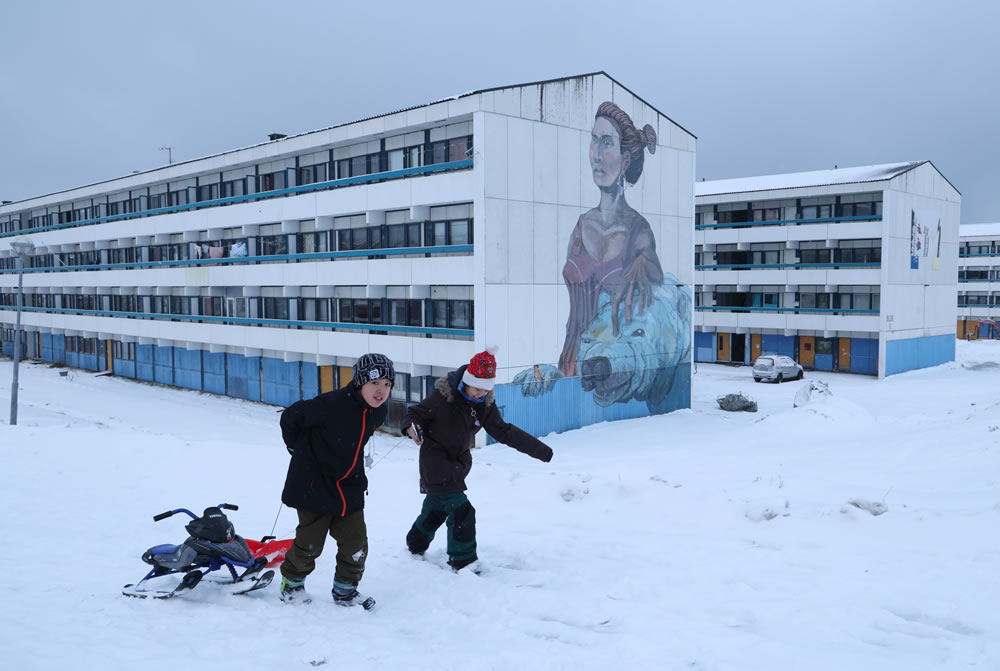
On September 22, 2026, Donald Trump, together with the leaders of Denmark and Greenland, signed an agreement on strengthened security in Greenland and the wider Arctic and North Atlantic region. Just days earlier, on September 18, Trump had announced that the United States had reached an agreement with Denmark and Greenland that, in his words, gives the United States “permanent control” over security and other needs in Greenland.
The announcement came after months of tension over Greenland’s strategic importance and the question of who has the right to determine its future. The Danish and Greenlandic governments have emphasized that the agreement respects the sovereignty and territorial integrity of the Kingdom of Denmark, as well as the Greenlandic people’s right to self-determination.
Before looking at what this agreement means, I also think it is important to acknowledge the Greenlandic political leadership. Greenland has been under enormous international pressure, yet its representatives have continued to stand up for Greenland’s interests and the Greenlandic people’s right to self-determination. Navigating this situation has required diplomacy, patience and the ability to remain at the table even when the pressure has been immense. I do believe that deserves to be recognized.
But this development does add a new and important dimension to a question that has already challenged Europe, the Kingdom of Denmark, NATO and, above all, Greenland itself.
And yet, despite everything that has been said and done over the past months, an agreement was still reached. This leaves a difficult question hanging in the air: How can a country that has spent months putting pressure on Greenland and openly questioning its right to determine its own future now become the country entrusted with its permanent security? How do we reconcile those two realities? And what does it mean when the same power that made Greenland question its intentions is now presented as part of the answer to protecting Greenland?
Greenland became a geopolitical question because of
its location, but it became a human question because of its people.
The recent crisis forced Europe to look north and,
perhaps for the first time in a long time, to look seriously at Greenland – not
merely as territory belonging to the Kingdom of Denmark, but as a people with
their own history, identity and right to determine their own future.
Greenland cannot simply be reduced to “European territory” or to an American strategic asset.
Greenland is geographically part of North America, while politically it is part of the Kingdom of Denmark, with extensive self-government. This unique position is precisely what makes Greenland so important. It is situated between Europe and North America, between two sides of the Atlantic that are connected not only by oceans, but by history, security and alliances.
Its geographical position has made Greenland strategically important for generations. But Greenland’s significance should not be discussed only through the lens of European security or NATO. There is another dimension that cannot be separated from the conversation: the people who have lived on this land for thousands of years.
The Inuit people are the Indigenous people of Greenland. We are the people who have been the keepers and protectors of some of the most extraordinary landscapes and ecosystems on Earth. We survived thousands of years in one of the harshest environments on the planet, and still thrived as a people, carrying stories of love, courage, family and survival from one generation to the next.
We were once connected as one people, but colonial borders and political structures divided us.
For a long time, many of our stories were told through the eyes of colonial countries rather than by the people themselves. Our way of life, culture and traditions were often measured against how closely they resembled Western civilization.
That is why the question of Greenland is not only about geography.
It is also about sovereignty.
Sovereignty is ultimately about the right of a people to determine their own future. Greenland is part of the Kingdom of Denmark, but it has extensive self-government, established first through Home Rule in 1979 and further expanded through the Self-Government Act in 2009. Foreign and security policy remain matters for the Kingdom, while Greenland governs many areas of its own domestic affairs.
This makes the discussion about Greenland particularly complex.
Europe speaks constantly about sovereignty, democracy and international law. Yet Greenland exposes how complicated those principles can become when geography, colonial history, security interests and American power intersect.
The question cannot simply be: Who controls Greenland?
The question must also be: What does Greenland itself want, and how do we respect the people who live there?
For many years, Greenland was not given the same international attention that it receives today. But the recent crisis created an echo across Europe.
Many European countries began to show greater interest in Greenland, not simply because of its strategic position, but because of the opportunity to create stronger relationships between Greenland and the rest of Europe – to strengthen connections between cultures, traditions and people across borders.
For many Greenlandic people, it also created space for conversations about the relationship between Greenland and Denmark, about history, identity, the future, but also the past.
Countries that previously knew very little about Greenland suddenly began looking north and asking questions. Who are these people? What is Greenland’s history? What can Europe learn from Greenland? And how can relationships be built that are based not only on strategic interests, but also on mutual respect?
That was perhaps one of the most beautiful things I felt came out of this difficult situation.
It created room.
A room that had not always been given to the Inuit.
For the first time, many people became curious about who we are – not simply as people living in the far north, but as a people with our own culture, traditions, history and identity.
Of course, this is a challenging subject. There are many different stories, opinions and political positions surrounding Greenland and Denmark.
I choose to focus on what can bring us forward.
I believe that the power lies in love, courage and responsibility, and that healing requires us to think about and focus on future generations.
We cannot change the past by making people today pay for things they did not personally commit. But taking responsibility for history and being held accountable for its consequences is necessary – if we want to heal.
Shame, pain and hatred directed towards people who are simply products of the history of the Danish Kingdom cannot be the answer either.
For a long time, I believe people have been trying to find someone to blame.
And people who come from both worlds often become either a bridge or a burden – a living symbol of a history that once took place. How that history is processed depends on the individual.
But I believe being a bridge can also be a strength.
Trump and the question of Europe and NATO
Then, in December 2024, Donald Trump made his renewed interest in Greenland unmistakably clear. On December 22, he stated that American “ownership and control of Greenland” was important for U.S. national security. Greenland’s Prime Minister Múte B. Egede responded that Greenland was not for sale and never will be for sale.
I personally believe that this is also a strong message saying: “You think you can buy everything with your American dollars – take and do what you want with no consequences” – but we won’t let you. You cannot buy land. You cannot buy a people.
Watching the situation develop, and seeing the possibility of Greenland being treated primarily as a strategic possession rather than as the home of a people, I began to fear the worst.
War.
To put Greenland into context: it is a peaceful society without its own conventional military. Defense and security are matters handled at the level of the Kingdom of Denmark. Greenland is nevertheless covered by NATO through Denmark’s membership of the Alliance.
And this is where Greenland became a European question.
When Donald Trump threatened the existing status quo around Greenland, the discussion was no longer only about Greenland and Denmark. It also raised questions about sovereignty, territorial integrity, international law and the principles underpinning the transatlantic alliance.
NATO exists around the principle of collective defense. Article 5 states that an armed attack against one member is considered an attack against all, and that Allies commit to assisting one another.
Greenland’s strategic importance to NATO is also very real. NATO describes the Arctic and the High North as increasingly important to the Alliance’s collective security, with seven of the eight Arctic states being NATO Allies.
But I believe there is something deeper here than military strategy.
Europe’s security is not only about protecting territory.
It is also about protecting the principles on which European cooperation was built: sovereignty, democracy, human rights, the rule of law, solidarity and the right of people to determine their own future.
For me, that is what made the solidarity shown towards Greenland so meaningful.
It was not simply about a piece of land on a map.
It was about saying that the future of a people cannot simply be decided by someone else.
And perhaps that is one of the most important lessons Greenland can offer Europe.
Geography may make Greenland strategically important.
NATO may make Greenland part of a wider security architecture.
But none of those things should make Greenland invisible as a people.
The land is not separate from the people who call it home.
The Arctic is not an empty space.
Greenland is not only a strategic asset.
It is home.
And its people deserve to have their voices heard when the world discusses its future.
My personal story
Being “Greenlandic” in Denmark did not exactly have the most positive meaning when I was growing up.
I came from a loving and supportive family where no one ever made me feel that I was “half” of anything. I was simply a whole person.
But outside my family, the world was not always like that.
Being both Greenlandic and Danish made me a political topic from the day I took my first breath.
Growing up between two countries and adapting to two worlds, I gradually realized how deeply racism and stereotypes towards Inuit people – and, in the Danish context, towards the Greenlandic people – could affect people’s lives.
Standing in the middle can be challenging, because sometimes people will tell you that your voice is not as valid as someone who is “truly” one thing or the other.
But I kept thinking:
What about people like me?
There must be many of us.
Where are they?
I have always been very spiritual. I love nature and the ocean, and Inuit culture runs through my veins. It has given me peace and comfort throughout my life, because nature does not judge you. It lives in harmony with you when you show it respect.
The racism did not scare me away.
Instead, it made me want to tell more people about the beauty of life in the North and challenge the stereotypes they had about Inuit people.
When I was living in Nuuk, where my family is from, I was interviewed by a newspaper. During the interview, the woman suddenly asked me:
“Have you ever thought about entering Miss Greenland?”
I was 16 back then, and I remember thinking: What is that?
She explained what a beauty pageant was. I had never heard of or seen anything like it before.
But I never forgot that conversation.
When I returned to Denmark, I quickly felt again that someone like me could never do something like that. People would laugh. People would use racial slurs.
And suddenly it became a mission for me.
I can do it.
We can do it.
Why not?
That was when my journey really began.
I started promoting Inuit culture, fashion, beauty and traditions. I refused to let other people’s perceptions decide our fate. I wanted to challenge the ignorance I often encountered, and I wanted to protect and represent my country and my people – I wondered why no one knew about Greenland or the Inuit people in general.
When I entered the beauty pageant world, it also became a political statement.
But it did not scare me.
We all have our own personal reasons for the paths we choose in life. Mine was, without a doubt, to show that Inuit people are just as capable as any other people in this world.
I began a journey without knowing where it would take me.
I did not know anyone who was doing what I was doing. That was frightening and unpredictable. People had many different opinions about the way I chose to do it.
But I wanted to do it my own way.
To be myself.
To do something that genuinely felt right in my heart.
That is the feeling I have always held on to:
“Be true to yourself. People will either like it or they will not.”
But the people who understand what you are trying to do will find you.
And they will support you.
Because this is not only about me.
It is about taking space.
It is about representing.
It is about challenging people’s perceptions.
And it is about making a difference.
And that is what kept me going – In how many lives can I make a positive impact? How many lives can I inspire to be bold and use the voice they were given?
These are also values that I choose to live by, both personally and politically.
I am proud to have been given opportunities to represent Greenland and to speak about these questions in Europe – I am not scared to use the voice I was given. I will continue to fight for what I believe is right.
Because my involvement did not begin with Trump.
It began much earlier – with a little girl being asked whether she had ever thought about becoming Miss Greenland.
It began with wondering whether someone like me had a place in the conversation.
And today, I realise that perhaps the answer was never about whether I belonged in that space.
It was about creating the space.
For Greenland.
For the Inuit people.
For people who come from more than one world.
And for the generations that come after us.
Naja Mathilde Rosing, crowned Miss Grand Greenland 2024, made history as the country’s first-ever representative at Miss Grand International. Rosing will be a guest at Il Foglio’s Festa dell’Ottimismo (Feast of Optimism) on October 10.