

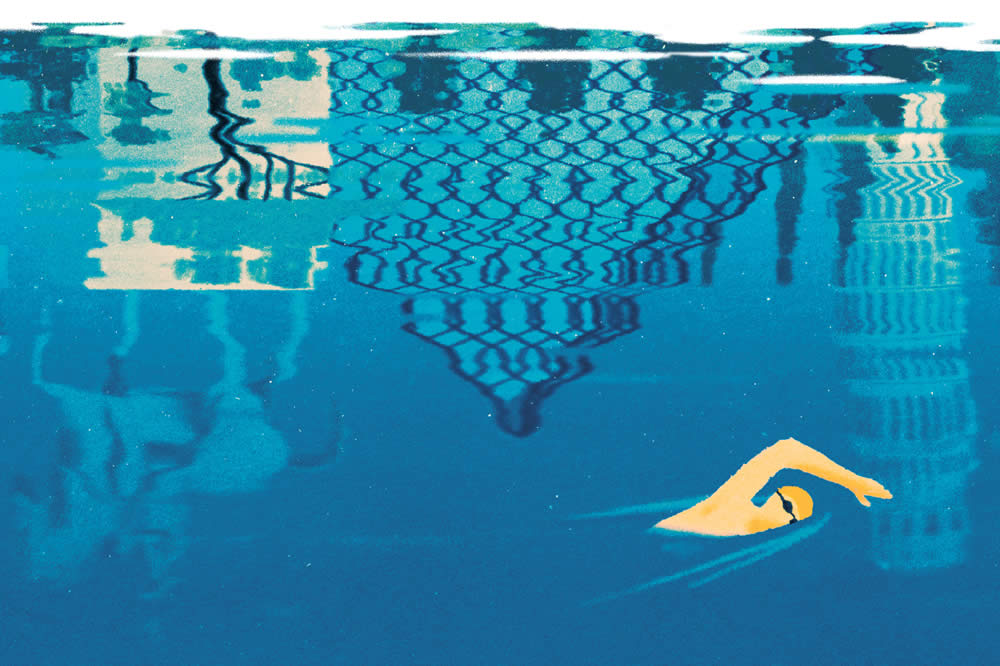
In the second half of the nineteenth century, the Musée des Égouts was one of Paris’s prides, European royalty and dignitaries took underground tours – men on foot and women on little boats – of the city’s sewer system, symbol of France’s modernity. Last year, on the occasion of the Olympics, the museum hosted a small exhibition full of photos, drawings, postcards on the history of bathing in the Seine, the water on the surface, the obsession of Parisian authorities not only for the athletes arriving in the city: living city rivers has become a very European thing. In the eighteenth century people bathed naked in the Seine, then the practice was declared indecorous, men and women were separated into distant zones and at the beginning of the last century immersing oneself in the city waters of the river was banned: “human intervention” was already then considered the first cause of pollution. For many years no one dealt with the issue anymore, first one war then another, finally when peace returned they started again with promises and investments, while many other European capitals equipped themselves to win this competition among city swimmers. But the Seine was, perhaps still is, hostile and difficult, full of dangerous bacteria, Jacques Chirac, when he was mayor of Paris, in 1988, said he would take a dip in the Seine within five years and the Environment minister of the time, Brice Lalonde, replied: “I’ll be there with you, with a towel and antibiotics.”
In this torrid summer, the dream came true, after last year we watched worried as Olympic athletes, competing in the Seine, ended up getting some infections, even though brazen Parisian grandeur, colorful and imposing, hid many flaws of that edition: today people swim in the city river, three “swimming pools” well-demarcated by yellow buoys have been opened, because water cleanliness is an expensive and shaky affair, an unexpected current or thunderstorm is enough and the bathing criteria immediately fail. But how can you compare the charts that record oscillations of bacteria and algae in the water with the wonder of small city beaches? Two on the rive droite, one on the rive gauche, free, clean, orderly, yellow, the color of summer, after one hundred and two years of bans (how will we recoup the fourteen hundred billion euros spent to make the Seine swimmable?, many wonder, particularly to attack the mayor of Paris, Anne Hidalgo, our lady of demonstrative baths in a sickly-looking river).
Berlin watches French emphasis with legitimate disdain, but actually theirs is a matter of envy: since 2012 a citizens’ association, Flussbad Berlin (Flussbad is, precisely, bathing in the river), has been pressuring the municipality to declare the Spree swimmable, closed to bathing since 1925, when an increase in the city’s population and the arrival of factories and industries made it unapproachable. In May, on a sunny afternoon, Flussbad organized a demonstration, baptized “Dip-Dip-Hurrah”, in the 150 meters of Spree that a hundred years ago hosted “the swimming station,” in front of the Humboldt Forum museum, which replicates the architecture of the ancient Hohenzollern castle. Life preservers, unicorns and inflatable ducks furnished the Spree, while dozens of people dove into the 21-degree water, shouting to photographers “I thought it would be dirtier!”, and releasing statements of overtourism intolerance: this part of the city has been occupied by tourists for years, we want it back. The municipality is cautious, says that by the end of the year a bacteriological analysis will be published that will give clearer indications on the future of bathing in the Spree, promises a trial period for next spring and invites insistent swimmers to go meanwhile and let off steam in the many little lakes around Berlin. But they don’t listen, they say there’s nothing more European than bathing in the city river, that you can’t stay behind, be beaten by the French, no less, because of the usual German bureaucracy that kills desires.
Where this European mania for bathing in the river under your house was born isn’t clear, there are those who say it’s a possibility that only we have and that, like many other things, we don’t know how to value it, we don’t know how to make it part of the European way of life. There are those who place it among this century’s prevailing tastes, in the hegemony of “experience”: you don’t really know a place if you don’t live it, that’s how the restaurant-you-absolutely-have-to-go-to has taken the place of the museum or a poet’s house, and that’s how the city beach becomes irresistible. There are those instead who say that the others, the tourists, have nothing to do with it, it’s a citizens’ desire to be able to enjoy every part of their own city, especially since there’s climate change and even in Warsaw the traditional winter baths in the Vistula, a mix between a survival test and cryotherapy, no longer seem sufficient, you need bathing in summer too, even if the river of dragons and protective mermaids is so polluted that only frost makes it accessible. Whatever the reason, bathing in city rivers is anyway much more practicable in northern Europe, where people swim even in winter: when we talk about the great divisions between the north and south of our continent, them frugal us spendthrift, them willing to do anything to drive back Putin and his aggressions and us inclined to reopen to Russia, them digitized in everything us with mandatory paper copies in line at administrative offices, we forget to mention the most important: them who immerse themselves even in liquid ice just to take a bath and us who if the water isn’t warm don’t even get close. As always desire wins and so in Oslo, one of the biggest businesses in so-called “leisure time” includes floating saunas on the city’s (salt) fjord, victory over pollution, because here too for many years city water was banned. The Oslo Sauna Association was created in 2016 by the (ice) swimming club of the Norwegian Foreign Ministry and was met with the skepticism often reserved for diplomats. But they were right, now the 26 floating saunas are always booked, from 7 in the morning to 11 at night, tourists come, of course, who take the sauna, dive into water that never exceeds 20 degrees and return to the sauna, dozens of times back and forth, but Oslo inhabitants also come who can tell you which part of the fjord is cleanest based on the currents.
Copenhagen has beaches too, Amsterdam wins the race for city bathing hands down, while waiting for the September appointment of “City swim”, when you can finally swim through the old canals usually not suitable for bathing (frightening stories are told about those waters): on that one day of the year you might even encounter Queen Máxima in the Amstel. Nostalgic Europeans look at this mania for bathing in city rivers as testimony of an unstoppable decline, for them only the Danube and Rhine exist, witnesses of what we’ve become, wars, peace, mended fractures, scars, embraces. But Europe’s future, and our heart, have moved further on, to the river of resistance and survival: the Dnipro. In Kyiv, the city’s beach is Trukhaniv Island – the getaway, the escape. Since the Russians invaded Ukraine, swimming has been banned: the water is polluted, and debris from Russian missiles is scattered everywhere.
And yet, many still swim. They take photos in their swimsuits, they embrace their river with the defiant pride of those who find themselves on a new front line – defending all of us, proudly and unmistakably European.
