Cyprus at the head of the EU
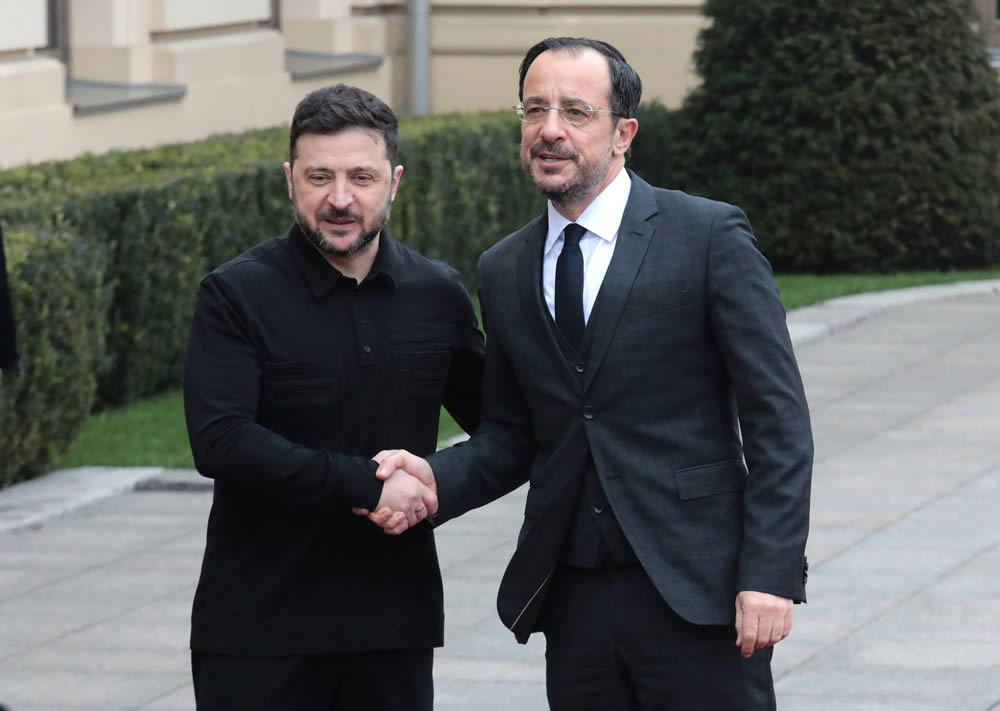
Since January first, the rotating presidency of the Council of the European Union belongs to Cyprus, one of the smallest and most peripheral of its member states, but one that has the ambition to act as a bridge with the Middle East and the southern shore of the Mediterranean. This is the most original element of the program and calendar presented by Cypriot President Nikos Christodoulides on December 21. After nearly four years of Russia’s war against Ukraine and a 2025 marked by tensions with Donald Trump’s United States, the Cypriot presidency of the EU will try to refocus the priorities of the Twenty-Seven toward the south. In April, on the sidelines of an informal European Council, Christodoulides will host an EU summit with the heads of state and government of the region: from North Africa to the Middle East, Israel included. “We have a unique relationship with the countries of the region, due to our geographical proximity, and we want to make the most of it: we aspire to be the EU’s gateway to the Middle East,” a Cypriot diplomat tells Foglio. “Deepening our relations with regional organizations such as the Gulf Cooperation Council and the Arab League constitute a strategic priority for the Cypriot presidency,” President Christodoulides explained.
“An autonomous Union, open to the world” is the motto of the Cypriot presidency of the EU Council, formally inaugurated on January 7 in Lefkosia. Eight days later there will be a visit from the Commission chaired by Ursula von der Leyen. “Autonomy” is the key word of the five general priorities that Cyprus has set for itself. The first is linked to the international context: “Autonomy through security, readiness, and preparedness in defense matters.” The Cypriot presidency intends to continue work on the rearmament plan, in addition to support for Ukraine. The second focuses on internal economic reforms: “Autonomy through competitiveness.” Cyprus will have the task of advancing negotiations on legislative proposals to implement some of Mario Draghi’s recommendations. The third has to do with trade: “Open to the world, autonomous.” The presidency will support the Commission’s work to diversify markets and supply chains. The fourth is dedicated to social matters: “An autonomous Union of values that leaves no one behind.” Cyprus will have to work particularly on the plan for sustainable housing. The fifth is perhaps the most difficult: “A long-term budget for an autonomous Union.” The Cypriot presidency will advance negotiations on the multiannual financial framework, one of the hottest dossiers of this 2026. “The Cypriot presidency will work with determination to give new impetus to the European edifice and contribute substantially to the next stage of our common journey,” President Nikos Christodoulides assured.
Another month of unknowns about Ukraine
Despite the agreement reached at the European Council on December 18 on financing for Ukraine, the EU faces another month of unknowns and uncertainties due to negotiations conducted by Donald Trump to end the war. On January 3, the National Security advisors of several European countries and leaders of EU institutions arrived in Kyiv to discuss the security guarantees that Europe would be called upon to provide. On January 6 there was another summit of leaders of the coalition of the willing. But the nightmare of a capitulation imposed by Trump is ever-present, as is the risk of a U.S. interruption of arms sales and intelligence sharing. On January 29, the foreign ministers of the twenty-seven will meet in Brussels. The EU has not yet found a strategy and the means to support Ukraine alone.
EU-US relations at the European Parliament
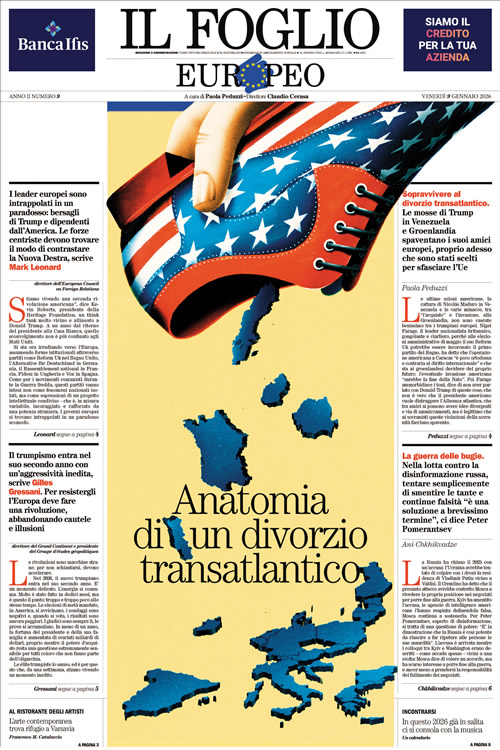
The European Parliament will meet in plenary session from January 19 to 22. Although the agenda is not yet final, a debate on relations between the European Union and the United States is scheduled. The date was not chosen by chance: practically one year after Donald Trump’s return to the White House, the debate promises to be heated after a 2025 marked by the tariff war, attacks by the Administration against European democracies, and the withdrawal of support for Ukraine. While Ursula von der Leyen and António Costa, the presidents of the Commission and the European Council, do not yet dare to define the United States as an adversary for fear of Trump’s retaliation, the MEPs will feel freer to criticize his Administration’s choices. For once they will also have the opportunity to react in concrete ways. In the coming months, the European Parliament must decide whether to accept or reject the agreement concluded by von der Leyen with Trump in July, which provides for the elimination of tariffs on American products. Will the MEPs have the courage to question an agreement that is disadvantageous for the EU?
The uncertainty of the signature with Mercosur
Will Ursula von der Leyen finally manage to sign the free trade agreement between the EU and Mercosur? In December, the Commission president had been forced to postpone her trip to South America, due to opposition from Italy and France to the trade agreement with Brazil, Argentina, Paraguay, and Uruguay. However, Italian Prime Minister Giorgia Meloni had assured that she would be ready to give the green light at the beginning of this 2026. Will Meloni keep her word? A new date for the signature has already been set: January the 12th in Paraguay, the country that will assume the rotating presidency of Mercosur from Brazil that day. Another postponement could push Mercosur countries to definitively abandon the agreement with the EU.
Digital networks on the Commission’s agenda
In EU jargon it’s called the Digital Networks Act. The acronym is “DNA.” It is one of the main legislative initiatives of this early 2026: on January 20, the Commission should present its proposal to modernize the regulatory framework for telecommunications and digital infrastructure, revising the European Electronic Communications Code to adapt it to new technological challenges and create a true European digital single market. The objectives are diverse. The Commission wants to create common and clearer rules, reducing regulatory and bureaucratic fragmentation. It intends to accelerate the deployment of 5G, fiber, and gigabit networks, efficiently managing the radio spectrum and planning the copper switch-off. It hopes to accelerate the integration of the digital ecosystem with unified rules for networks, cloud, and data centers. One of the great unknowns is how to finance network development. To avoid irritating the United States, Ursula von der Leyen has given up the idea of a network fee for large content providers. The alternative could be to yield to pressure from large telecommunications operators to relax competition rules and favor mergers in the name of investments, but with the risk of seeing prices increase for consumers.