Forget the Elkanns, forget the Del Vecchios, set aside the Benettons. The “Succession” without upheavals and without brawls doesn’t happen in Italy but in civilized Sweden, where the Wallenberg dynasty (pronunciation: Vallenberg) has just launched a generational handover plan without fanfare. Being Swedish, these Wallenbergs are semi-unknown, at least to us.
They keep an extremely low profile, they don’t drive around in Lambos but probably in beat-up Volvos. The family motto is in fact “Esse non videri” (to be, not to appear) and despite being around since the 1800s, the first time they reached international prominence was in 1996 when a New York Times article discovered them, defining them as “the shy dynasty” but also “the Swedish answer to the Rockefellers” (who didn’t seem so shy, go figure). But they’re extremely wealthy anyway, just think that they control an empire on which the sun never sets (which in Sweden sets quite a lot) and which includes stakes in Electrolux appliances, Saab aircraft engines, Ericsson phones, the national airline SAS, the legendary Grand Hotel in Stockholm, and the less well-known SEB bank, which is however the country’s largest. In total, it’s estimated that the big family controls 35 percent of the Stockholm Stock Exchange’s value.
Currently the clan, which consists of thirty members, is led by three representatives of the fifth generation, cousins Jacob, Peter, and Marcus, who are however getting on in years, heading toward 70, so they’ve decided to pass the baton to a new batch of Wallenbergs: six heirs, male and female, selected from among the scions who will thus enter the innermost circle of the Wallenbergsfaren, or the “Wallenberg sphere,” as it’s called in Sweden. The six will have to comply with a code of conduct established by a family protocol seven years ago. They’re required to meet civilly once a year, in May, at one of the family homes on a Swedish island, and every six weeks to meet with three of the thirty heirs, on a rotating basis. And there these 24 non-ruling heirs presumably won’t plot behind their backs, nor drag them to court as is normally done among capitalists; if in general, and in Italy, the generational transition seems like the final season of “Dynasty,” in Sweden it’s a class council. A most civilized system that, to stay with cinema, seems like a crossover between “Quo Vado,” the film where Checco Zalone at a certain point emigrates to Northern Europe discovering civilization, and “Succession,” with the genteel capitalism of the Nordic dawns, so different from what we’re used to.
And moreover, there’s even a miniseries about them, which is called with little imagination “Wallenberg” and aired in Sweden in 2007 (but without Zalone). But if in Italy we are indeed accustomed to witnessing feuds like the one among the heirs of the Luxottica empire who have been at war with each other for years (and now who knows what will happen with the investigation opened into the takeover wanted by CEO Francesco Milleri of Mediobanca), or the difficult handover between Luciano Benetton’s generation and that of his son, or the endless telenovela of the Agnellis, between wills, secret flights, and now even possibly fake works of art, the Wallenbergs with their boring rectitude seem like a mirage.
The origins of the family fortune go back to the mid-1800s, when three brothers, André, Jacob and Marcus Wallenberg, after a trip to America, decided to found a bank. Obviously a Swedish bank, so it will be the first in the world to have female employees and pensions for workers. But the great turning point came toward the end of the century, when following the great economic crisis many Swedish companies in difficulty turned to them, who in exchange for shares financed everyone. At the end of the crisis, the Wallenberg bank found itself owner of half of Sweden.
How they managed to get to today without going bankrupt or tearing each other apart is the real mystery: according to the Economist, it’s thanks to a diabolical contraption, the Knut and Alice Wallenberg Foundation (KAW), the first and largest of the 16 family foundations that, since 1917, have kept the family safe from deadly inheritance taxes. Officially in fact the Wallenbergs don’t own anything, all their assets are held by these non-profit foundations which also give out large charitable contributions (300 million dollars last year) but save them at least as much in taxes.
They have their troubles too, though, it must be said. One Wallenberg heir, Mark, who was supposed to be the designated leader, killed himself in 1971, apparently due to the unbearable pressure of leading the family empire. He killed himself with a hunting rifle in the middle of negotiations that were supposed to lead to the merger between the family bank and the larger Skandinaviska Banken. Found lifeless on November 19, 1971 near a lake, the evening before he had been at a reception at the Italian embassy.
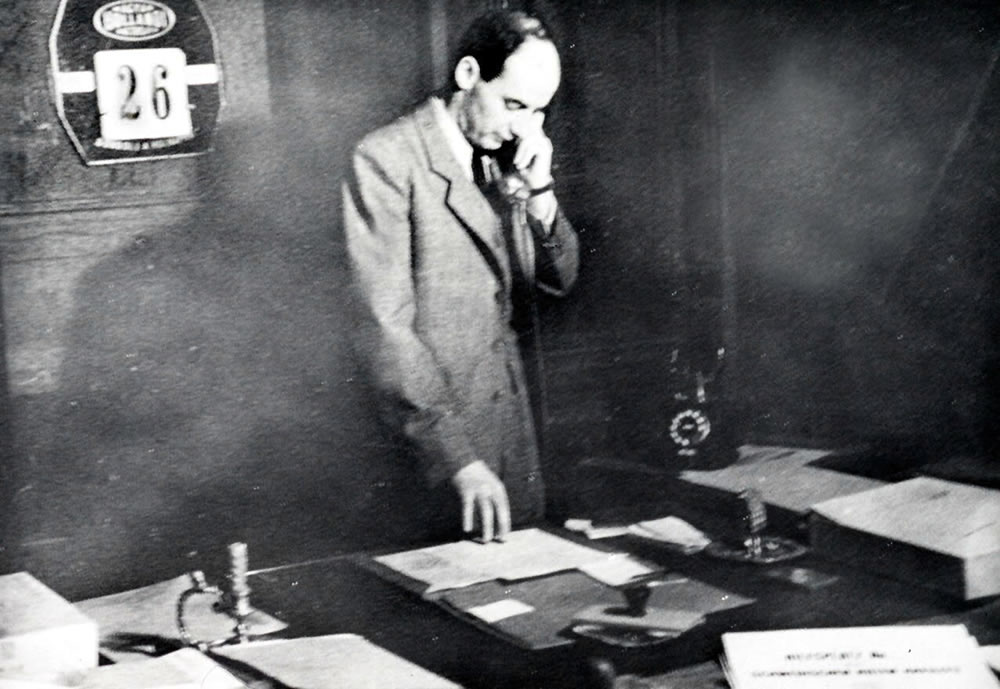
Besides the suicide, among the dark aspects of the dynasty there’s also the suspicion of having done business with Nazism during World War II (but who didn’t), and yet they also had an anti-Nazi hero. Raoul Wallenberg was a kind of Perlasca: a diplomat in Budapest, he saved thousands of Hungarian Jews by giving them Swedish passports and preventing them from ending up in concentration camps. But then he was kidnapped and killed by the Soviets in 1945.
But beyond the unpleasant coincidence of the suicide the day after a party at our diplomatic headquarters (was the buffet or the conversation that terrible?), the Wallenbergs’ relations with Italy are multiple and varied since always: it’s unclear whether the suicidal Mark or another Marcus (they’re all called Marcus or Mark or Marc with a c, perhaps it’s another family secret to muddy the waters) was friends with Gianni Agnelli. Same fate, with heir Edoardo who takes his own life. And with the Avvocato this Wallenberg also shared a passion for regattas. And at a certain point there was also the industrial alliance between Saab auto (later sold) and Fiat, which materialized in the 9000 model, which shared the chassis of the Fiat Croma and Lancia Thema of which it was a bit the “arty” and hipster variant of the sedan for the “cumenda” of the 1980s. Then the Wallenbergs through Electrolux took over Zanussi. The points of contact end here: now, while the sixth generation of Swedish capitalists will discuss civilly with their cousins on the little island, perhaps eating trout, their Italian counterparts will presumably be dreaming of poisoning their relatives.