In the aftermath of the sensational Louvre theft, carried out on October 19th by four bandits dressed as workers, French authorities decided to mobilize around one hundred investigators to recover the priceless jewels of the French Crown: about sixty from the Brigade de répression du banditisme, a special police unit dealing with major thefts, including those of works of art, and thirty-four from the Central Office for Combating Cultural Property Trafficking, which has the task of coordinating with European police forces to extend searches internationally. The four perpetrators of the “heist of the century,” as it was dubbed by the French press, have been arrested. The jewels, with an estimated financial value of 88 million euros and priceless patrimonial and symbolic value, however, have not yet been found. Last October, the Israeli website CTech revealed that Paris had requested the help of the Israeli company Cgi Group as part of the investigation. Chaired by the former head of Shin Bet (the internal intelligence service of the Jewish state) Yaakov Peri, the company, which operates in the sectors of business intelligence, cybersecurity, and strategic consulting, counts among its clients Israeli Prime Minister Benjamin Netanyahu and former Georgian President Salomé Zourabichvili. But it was in 2019 that it attracted international attention for its role in solving the theft at the Grünes Gewölbe Museum in Dresden, where thieves stole jewels worth approximately 113 million euros. The Louvre management, last October, formally denied the involvement of Cgi Group as revealed by the Israeli website CTech, declaring to AFP that “the museum has not contacted any Israeli company” and that the investigation remains under the exclusive authority of the French judicial police.
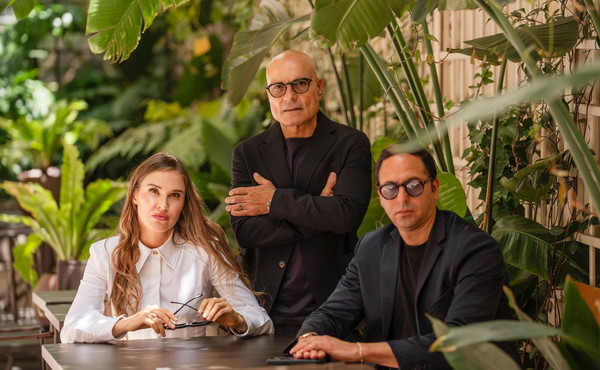
We contacted Cgi Group, which agreed to answer our questions and confirmed that it had been solicited by French authorities to help them discover the identity of the people involved and recover the jewels stolen from the Louvre’s Galerie d’Apollon. “Our client is an entity linked and connected to the Louvre, with a primary interest in recovering the jewels. Our agreements with clients provide for absolute confidentiality and confidentiality obligations regarding contracts and understandings,” Zvika Nave, founder and CEO of Cgi Group, tells Il Foglio: “Shortly after the Louvre heist, as part of the investigation, we established that one of the museum’s employees had transferred information to parties outside the Louvre: we were in possession of digital forensics evidence. The same employee we identified was subsequently arrested as a suspect in the heist.” The Israeli company, which last year opened an operational office in Rome (led by Zvika Nave and Oren Ziv) and recently another in Germany, marking a further milestone in its international expansion and strengthening its presence in the European market, had contact on the darknet with the alleged representative of the Louvre robbers. “A few days after the heist, we were contacted through the Cgi Group website by a person who presented himself as the representative of the robbers. He was aware of our involvement in the investigation into the November 25, 2019 heist at the Grünes Gewölbe Museum, located inside Dresden Castle, following which we had exposed internal collaboration between an employee of the museum’s security company and the robbers and had conducted a darknet negotiation that led to the arrest of the perpetrators and the recovery of most of the jewels. The person who presented himself as the representative of the Louvre robbers asked us if we were interested in starting darknet talks to sell us the stolen works,” recounts Zvika Nave. “During the conversations, we requested concrete proof and a sign of seriousness demonstrating that the representative of the robbers was actually in possession of some of the aforementioned works. The representative, contrary to what was erroneously written by other media outlets that indicated as part of the loot and subject of negotiation ‘Empress Eugénie’s crown’ (found immediately after the theft, as it was abandoned by the criminals during their escape, editor’s note), showed us an image of the pearl and diamond diadem of Napoleon’s third wife, one of the eight jewels stolen on October 19th and not yet recovered, accompanied by a timestamp with date and time,” adds the CEO of Cgi Group.
An image that Il Foglio was able to view, along with the conversations between the Israeli company and the person who presented himself as the representative of the robbers. How high is the risk that the image sent is a photo created by artificial intelligence? “We naturally considered the possibility of an attempt at misdirection. However, a world-class cybersecurity expert accompanied and supervised the entire process. All communications took place via Tor Browser, with extremely high and rigorous security standards,” assures Zvika Nave. Who goes into detail about the negotiations. “After defining the agreement and obtaining the mandate from the client, we immediately transmitted all the information to the client itself and the competent authorities in France. However, ego games, deliberate delays, and especially internal political dynamics prevented the operation from being carried out,” says the founder of Cgi Group. In November, the Israeli company was contacted again on the darknet. “This time the representative of the robbers revealed that he was also in possession of works stolen from the Jacques Chirac Museum and the Natural History Museum. We concluded a comprehensive agreement worth 15 million euros in Monero cryptocurrency, with an exchange planned in Slovakia, in a location that would be communicated later. Our client authorized the operation, but imposed a fundamental condition: the presence of an expert from the Louvre, the Jacques Chirac Museum, and the Natural History Museum, tasked with verifying that the jewels were intact and that the diamonds had not been replaced with less valuable stones. In this case too, an agreement on the expert’s identity was not reached and the operation was not completed,” reveals Zvika Nave.
When we ask him if there is still hope to bring the jewels back to Paris, he responds: “We remain always optimistic: we have a mission and we will do everything possible to succeed, as we have always done.” And he concludes: “As a further anecdote, in August 2025 I was interviewed by the newspaper Il Tempo and on that occasion I stated that the most discussed topic in darknet forums was the possibility of stealing the Mona Lisa from the Louvre.”