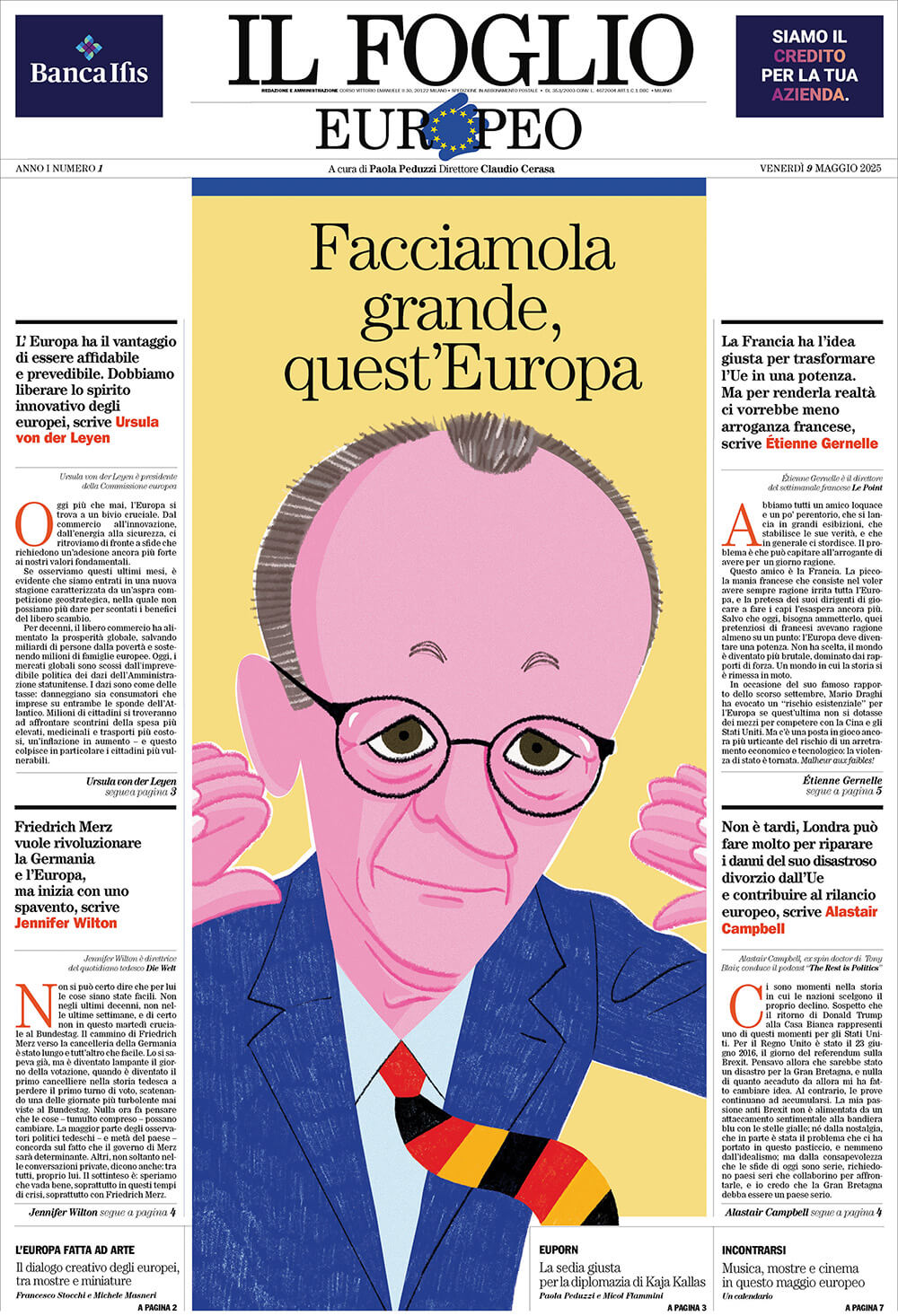
There are moments in history when countries choose their own decline. I suspect Donald Trump’s return to the White House represents one such moment for the USA. For the UK, June 23 2016, Brexit referendum day. I thought then that it would be a calamity for Britain, and nothing that has happened since has shifted me from this view. On the contrary, the evidence keeps on piling up. My post-Brexit anti-Brexit passion is not fired by some sentimental attachment to the blue flag with yellow stars; nor by nostalgia, which was part of the problem which got us into this mess, or even idealism; but by the knowledge that the challenges of today are serious, they require serious countries to work together to meet them, and I believe in Britain being a serious country.
Brexit was never serious. It was born of a Tory Party civil war, was fuelled by lies and delusion, referendum victory secured by false promises peddled by charlatans. They said it would boost trade, but it has throttled it. They said it would make Britain stronger, yet it has diminished our standing in the world. And far from “taking back control” of immigration, the numbers have soared.
The UK’s relationship with the EU, once a pragmatic and productive partnership, has been sacrificed on the altar of populism. Its high priests still pretend it was a triumph, not because they actually believe it has worked out as promised, but because to admit otherwise would be to destroy their very reason for being. So Boris Johnson traipses around the world trying to keep alive his faux bonhomie shtick. Nigel Farage talks about anything but Brexit as he rides the populist wave from one opportunist moment to the next, fantasising that Trump having made it to the White House, he can make it to Downing Street.
As I discovered on a BBC panel when Farage and I shared the platform, self-styled Mr Brexit doesn’t like it when you confront him with facts about what Brexit has actually done. “It’s over,” he shouts “you lost the war. Get over it.” Well, no. Not when it has done so much damage. Every credible analysis from every credible economic body shows that a large chunk of the economy has gone as a result of the UK tearing itself apart from our closest and biggest trading partner. The government’s own experts, the Office for Budget Responsibility, estimate a 15percent loss in trade intensity. Brexit has made the UK poorer, less competitive and, the leadership role Keir Starmer has played with Emmanuel Macron on Ukraine notwithstanding, less powerful or relevant on the world stage.
The promise that “Brussels red tape” would be swept away has been exposed as another big lie, with many small businesses, once free to trade across borders with ease, now giving up in face of the jungle of Brexit paperwork, tariffs, and costs. Farmers and fishermen betrayed, manufacturers starved of investment, musicians and artists grounded, young people with their rights eroded, horizons limited and their ambitions narrowed.
David Cameron is adamant he had no choice but to hold the referendum. I disagree. He agreed to it because of years of right-wing media pressure and caricature and because the issue had become too hot to handle in his party. He lost because, not unreasonably, he assumed that when the facts of life, economics and power were set out, the sensible pragmatic Brits would do the sensible thing. But he had not reckoned on Johnson’s naked ambition or Farage’s skills as a snake oil salesman. He hadn’t reckoned on the millions of people who, when asked to vote to save the great British economy, didn’t understand what this great economy was, because it certainly wasn’t the one they were living in. Complacency is lethal in campaigns and it abounded, in both the main parties, Tory and Labour.
That the Tories seek to cling to the idea that Brexit was somehow good for Britain is understandable, at the psychological level, given it was their referendum, and their deal that finally took us out. Less understandable is the approach of a Labour government with economic growth as its No 1 priority which, even surrounded by the evidence of economic stagnation, sticks to the mantra that the Brexit debate is settled, and there can be no return to the single market or the customs union – which, remember, the charlatans insisted we would never have to leave.
However, here’s the good news, if you can call it that: reality is catching up. Poll after poll now show that a majority of Britons believe Brexit was a mistake. Bregret is a real thing. Support for rejoining the EU, though far from overwhelming, is growing. And while that doesn’t mean the path back is clear, easy or imminent, it means the conversation is finally beginning.
I’m writing this for an Italian audience, but the message is meant for all our European friends: do not mistake the madness of Brexit for the settled will of the British people, any more than we should believe that the isolationist, racist, norm-breaking, guardrail-smashing, Putin-surrendering, abusive politics of Trump represents the totality of the USA.
Just as there is another USA, there is another Britain. A Britain that knows our future lies in partnership, not isolation. A Britain that values friendship, co-operation, shared progress, shared values. A Britain that is still European in spirit, even if we’ve been forced out of so many of its institutions.
Don’t write us off. Don’t close the door. Because there is a road back, and millions who wish to walk it. Young people feel especially strongly that have lost so much more than they gained in the actions taken by their parents and grandparents in that vote back in 2016.
Rejoining the EU is not something that can be done overnight, nor should it be. The wounds of Brexit run deep, and trust— between Leavers and Remainers, between Britain and Europe – must be rebuilt. But here’s what a serious, forward-looking Britain can do to begin repairing the damage:
Tell the Truth About Brexit: We need to stop pretending. It hasn’t worked. It has to be fixed.
Rebuild Trust and Institutions: First, we must clean up our own house. That means restoring integrity to our politics, putting hard fact over propaganda, and creating institutions that function again. Without that, no major European partner will believe we’re ready to be taken seriously. The new government is a thousand times better than the last one. But the work on this will require sustained commitment to rebuilding relationships torched by the infantile posturing and lying of Johnson and the economic madness of Liz Truss.
Closer Security and Defence Cooperation: You won’t hear me say this often but “Trump was right” when he said Europe took its defences and the US security umbrella for granted. Europe needs to step up and the UK is already showing we can and must be part of that.
Build on the renewed associate membership of Horizon Europe by rejoining Erasmus: these were programmes that represented the best of European cooperation—education, research, shared progress. Rejoining a clear signal that we want to collaborate, not isolate.
A Youth Mobility Scheme: One of the most tragic casualties of Brexit was the severing of young people’s rights to live, work and travel freely across Europe. This isn’t just about “gap year” students doing a ski season in a chalet somewhere, but also about us getting the construction workers we need to build new homes, or having people in classrooms to teach our children French, German, Italian, Spanish and so on. Agreeing to a UK-EU youth mobility agreement would be both a gesture of goodwill and a building block for closer ties.
Align Where We Can, Show the Benefits Over Time: Alignment with EU standards in areas like environment, consumer protection, and workers’ rights should be the default. Not only because it eases trade—but because it reflects who we are.
A Veterinary Agreement to Ease Trade: A targeted, pragmatic agreement on food and animal standards would go a long way to easing the Irish Sea border and reducing friction in trade. It’s a small step, but a meaningful one.
Rejoin the Pan-Euro-Convention on rules of origin.
Seek to gain the same Mutual Recognition Agreement on conformity assessments as enjoyed by Canada.
Some will say it’s all too late. That the EU has moved on. That Britain has burned too many bridges. I don’t believe that. Because I believe in politics as a force for positive change—and I know the EU has always been a story of reinvention. The UK’s exit was bad for us and bad for Europe. But it need not be the end of the story.
The EU, for all its flaws, remains one of the most extraordinary political projects in human history—a voluntary union of countries choosing cooperation over conflict, unity over division. No, Mr Trump, it was not created to “screw America”, but to shape a European history of peace and prosperity, and escape its past of national hatreds and wars. The UK helped to build that. And we have a duty to help defend it.
So to Italians reading this—know that many of us here in Britain still feel European. Know that we are fighting for something better. And know that one day, when the dust has settled and the truth has finally replaced the lies, we will knock on the door of Europe not as beggars, but as partners—wiser, humbler, and ready to give it another go. The Eurosceptics never stopped fighting to get us out. Now, armed with the evidence of damage done, and a better vision of what could be, in a world where alliances will be essential to all countries, large and small, we must fight to get us back where we should be, as a leader in Europe.