The current trade context is characterized by unprecedented uncertainty. The pandemic, the return of war to Europe, October 7th, and the surge in tariffs have transformed the structure of the global system. The security variable in supply chains, neglected for years in the wake of globalization and economic interdependence, has returned to assume a central role in national trade policies, now also in Europe. The trend has been evident for some time. According to a McKinsey report published in July 2025, since 2017 world economies have begun trading less with politically and strategically distant partners, instead favoring relationships with like-minded countries. Trade routes and transcontinental corridors thus become crucial for the stability of global security dynamics. It’s the return of commercial diplomacy, where competition is based on building large infrastructural networks such as railways, ports, pipelines, and highways. For the American consulting firm, in the next ten years, up to 30 percent of global trade will be redirected toward new directions.
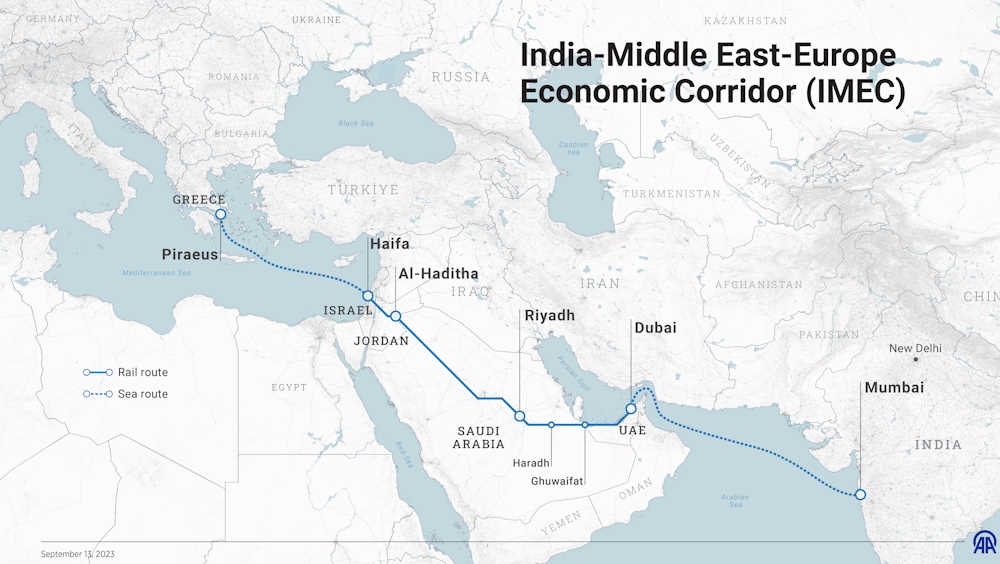
Throughout the centuries, control of major trade routes has represented one of the main tools of assertion for great empires. The Merchant Navy, the English crown’s merchant fleet, was crucial for the transcontinental consolidation of the British Empire, supporting its global extension and strengthening its military capabilities. Unlike the past, however, today it is no longer the historic superpowers, but rather emerging ones competing for control over connectivity networks. An emblematic example of this new trend is the ambitious IMEC (India-Middle East-Europe Economic Corridor), announced during the G20 summit in New Delhi in September 2023. The project’s objective is to connect India, the Arabian Peninsula, and Europe through an integrated network of logistical infrastructure, reducing transit times by up to 40 percent compared to traditional maritime routes like the Suez Canal. Under Turkey’s aegis instead, the realization of the Dry Canal project has restarted, now renamed Development Road, an integrated network of 1,200 kilometers of railways and highways connecting the Iraqi port of Grand Faw on the Persian Gulf to Europe, crossing through Iraq and Turkey.
India, Turkey, Saudi Arabia, and the United Arab Emirates are the new protagonists, crucial hubs of the new routes and determining actors in redefining global trade dynamics. Serving as an obligatory reference point for twenty-first century large-scale infrastructural projects is the Belt and Road Initiative (BRI), launched by Chinese President Xi Jinping in 2013. For Beijing, the initiative represents not only an economic development plan, but a strategic projection tool, also strengthened by signing various types of agreements with over 150 countries. The consolidation of China’s influence through BRI-branded infrastructure, despite the fact that in many recipient countries the advent of Chinese state capital has destabilized internal balances, exacerbating governance and debt sustainability problems, has redefined the very concept of commercial infrastructure, triggering a global response. From New Delhi to Ankara, many have understood that investing in large infrastructural projects means not only facilitating trade, but above all building a strategic role in an increasingly multipolar world.
With IMEC, New Delhi aims to position itself as an autonomous pivot between the West and Asia, offering an alternative to Chinese dominance over global value chains. But beyond optimizing commercial flows, the corridor’s realization will allow India to strengthen its projection over the Indo-Pacific area, enhancing the two fundamental directions of its foreign policy strategy: traditional non-alignment and containment of Chinese expansionism. IMEC also fits into the broader mosaic of regional initiatives promoted by the United States: from the Three Seas Initiative (connecting the Baltic, Adriatic, and Black Sea), to Greece-Israel-Cyprus cooperation in the Eastern Mediterranean, up to the I2U2 forum that brings together India, Israel, the United Arab Emirates, and the United States on economic and military issues. Turkey, excluded from all these platforms and marginalized by the IMEC project, became irritated. President Recep Tayyip Erdogan, on the sidelines of the G20 where IMEC was announced, stated bluntly: “Without Turkey, there is no corridor.” Hence the relaunch of the Dry Canal project, conceived as a direct response to IMEC and the pivot of a Turkish strategy aimed at reasserting Ankara’s centrality in Eurasian commercial geographies. The objective is east-west and north-south infrastructural integration, hinged on the Anatolian peninsula.
However, in the absence of regional stability, adequate resources, and effective mechanisms of shared governance, the ambition of the new corridors clashes with an unstable reality. Infrastructural costs are enormous and work on the western Indian coast and in Persian Gulf waters proceeds slowly. Also impacting IMEC is the war in Gaza and the difficulty of achieving the normalization process between Israel and Saudi Arabia. The Development Road instead faces Iraqi insecurity and the financial fragility of Ankara and Baghdad. But the corridors don’t only reflect the ambitions of promoting countries, fitting into a broader mosaic of global strategic interests. The United States looks favorably on IMEC to stem the Chinese advance, inserting India’s rise into the logic of friend-shoring, that is, the redirection of value chains away from countries considered hostile like China and Russia. Gulf countries also bet on IMEC and the Development Road to overcome the vulnerability of the Strait of Hormuz and strengthen their role in global logistical flows.
Regarding Europe, the Old Continent’s absence from the great infrastructure game is symptomatic of its descending political trajectory. At the community level, Brussels has attempted a response with the Global Gateway, designed to offer a “values-based” alternative to China’s Belt and Road. But the lack of a common industrial and commercial policy weakens every systemic effort. Proof of this are the tensions between Rome and Paris over the choice between Trieste and Marseille as IMEC’s European terminal. However, the growing competition between corridors still represents an opportunity for the continent. The multiplication of major infrastructural directions allows risks to be distributed across multiple geographical areas. Diversifying routes mitigates dependencies and reduces the leverage exercisable through coercive or distortive practices. The greater the alternatives, the greater will be Europe’s capacity to adapt to future shocks.