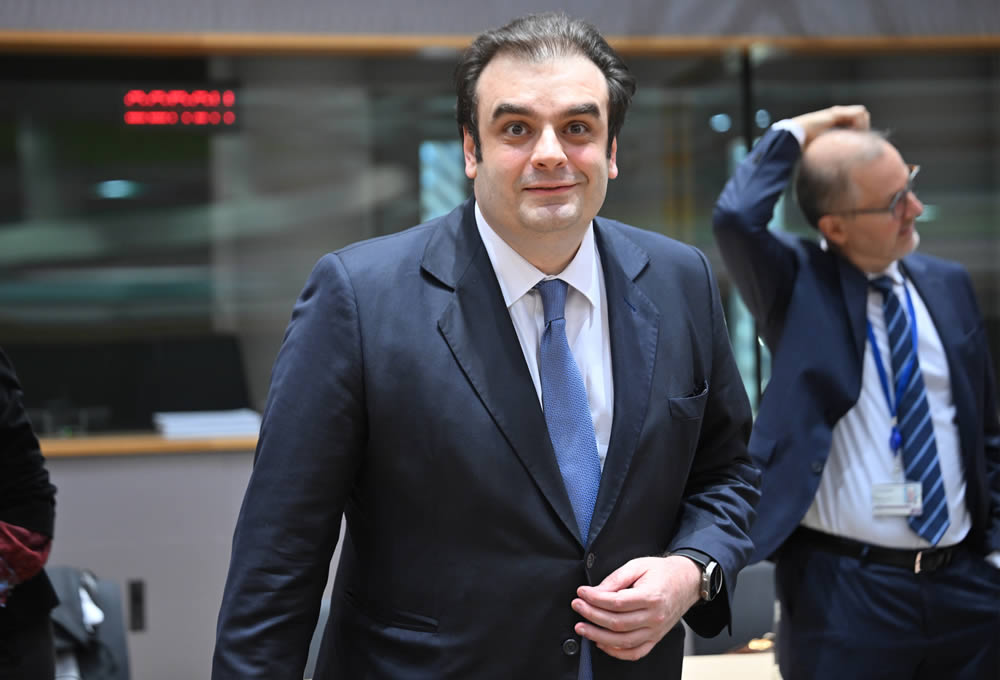
Europe cannot afford to be pessimistic, said the president of the Eurogroup, Greek Finance Minister Kyriakos Pierrakakis, inaugurating 2026: Europe cannot afford to be excessively accommodating either, because amid these global upheavals, “we must act with greater speed and decisiveness.” Pierrakakis, 43 years old, educated at Harvard and MIT, with a background in Greek social democracy – he was one of the negotiators with the European troika when there was a grand coalition government in Athens – and a career as minister in the center-right government, is part of a generation that was shaped by an existential crisis, and he says that when you find yourself in such a blind spot, you either succumb or discover “the power of resilience, the cost of complacency, the necessity of reforms, the strategic importance of European solidarity.” These are the words that Pierrakakis used in the letter in which he explained and motivated his candidacy to lead the Eurogroup for the next two and a half years, and he added other, radical words that change the perspective: “Our history,” meaning Greece’s history, “is not only national, it is profoundly European.”
The Greek crisis that almost led to the country’s exit from Europe and the disintegration of the eurozone, shortly before Brexit arrived, after ten years appears not only as a story of redemption, but also of pro-European tenacity, running counter to the centrifugal forces that are dismantling, from within, this bulwark of rights and freedom and prosperity that we call the European Union. One of Pierrakakis’s most famous predecessors, former Finance Minister Yanis Varoufakis, who today catalyzes many anti-European tendencies, said ten years ago that the Eurogroup was a place of psychopaths: from this body back then only bad news came out for Greece, painful directives and warnings that were received as an offense. Today Pierrakakis leads the Eurogroup, he won the challenge with the support of that Germany which back then was willing to kick out irresponsible Greece in order to maintain rigor (and teach the spendthrifts of the south a lesson), he keeps his country’s debt in check, takes pride in the primary surplus and fiscal results that go well beyond expectations, and speaks of resilience and optimism without anyone being able to tell him: how naive.
The EU always seems on the verge of breaking apart, confuses compromises with strategy, feels strangled by American abandonment and the Russian threat, but then it also knows how to choose a leader like Pierrakakis, who speaks of “European champions” leaping over nationalisms and protectionism with a single bound, who blends modernity and innovation with the continent’s liberal tradition, who speaks of competitiveness with light in his eyes, a symbol of a rebirth that everyone thought impossible but which is, too, above all, profoundly European.