Why has the Labour Government worked so hard so for long to handover the Chagos Islands to Mauritius? I have to admit, even as a former Foreign Office Special Adviser who worked on the deal, I do understand how odd this seems, which is why I want to set the record straight.
Labour arrived in government in the summer of 2024 to find the United States actively lobbying for it to do a deal with Mauritius and wrap up negotiations with them begun in 2022 under Liz Truss as Foreign Secretary. This was not a low pressure campaign. The Deputy Secretary of State Kurt Campbell actually took me aside and said “the only way the United Kingdom can actually hurt the United States would be by not doing the deal.”
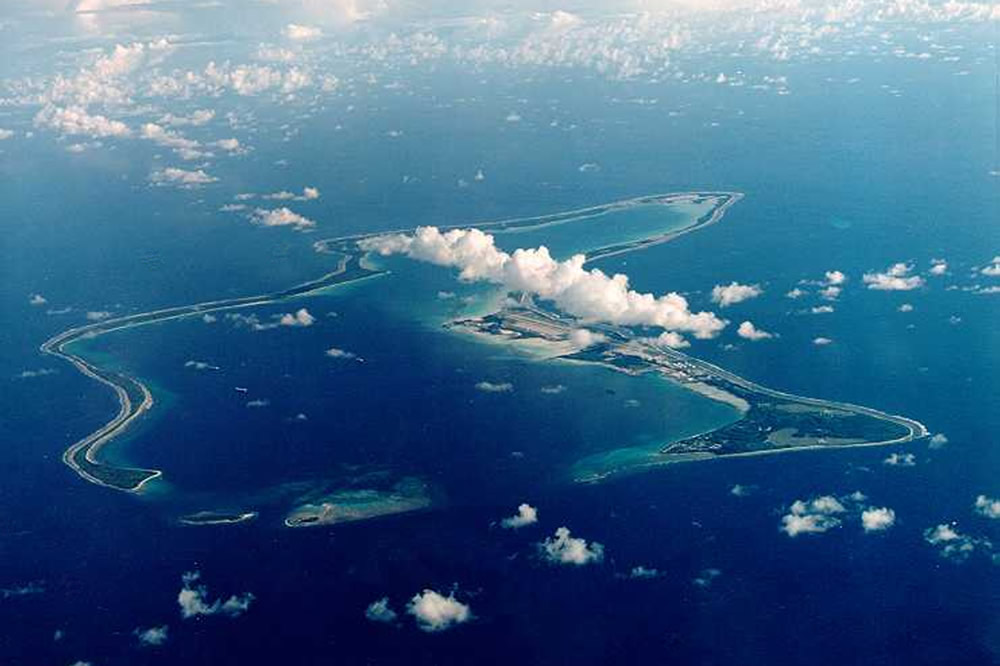
The answer is not self evident just as geopolitics itself is complicated. There is a base on Diego Garcia and it is an American base just with a British flag and a tiny British contingent. This base is only there because the Americans wanted it and the British Indian Ocean Territory itself only exists because the Americans asked us to carve it off from Mauritius and stay during decolonisation.
This base is not just any old base. In fact once you’ve been briefed, even partially, on what it does the information gives you vertigo. This is why we simply must do whatever we have to do to retain access to this.
But Britain’s legal position, due to the way America pushed for us to stay in decolonisation was collapsing internationally. The world was moving to a situation where legally America’s crucial superbase was going to be in what almost all countries considered international law recognised as illegally occupied Mauritian territory.
Mauritius as it stands, is a swing state in the great game against China. And Biden’s National Security Officials saw a big risk opening up. If Britain walked away from a deal, the Mauritians could walk away from the West and invite China, or anyone else, validated by the full legal mechanism of the international community, into any of those thousand atolls — and then how would they get them out? It might begin with the Chinese fishing fleet, then a research station and before you know it there might be a Chinese base within listening and striking distance of Diego Garcia.
This risk was simply unacceptable to the Democrats. And British officials understood this too. If the UK did decide to stick it out, how could we guarantee the security of those thousand atolls? The answer is we obviously cannot. A British frogman on every atoll? Trying to secure even half of it would soon suck up the entire Royal Navy. It was an impossible task. Team Biden didn’t want to even face such a risk — let alone commit the resources for us.
Under the Democrats the Embassy became increasingly concerned that inside the State Department there were teams thinking about a deal to secure the base: between the US and Mauritius. They feared a deal along the lines of, gee whizz, we’ve just looked at the international law and this was Mauritius all along guys.
Read Le Carré. Read the history of the Cold War. Britain often finds itself in these tight spots. What the British deep state did next was exactly what it has done in these situations before. In the best traditions of perfidious Albion, it would negotiate a deal, where — everything would change for everything to remain the same. Mauritius would be able to call itself sovereign over the islands, enjoying the pleasure of issuing postage stamps with them on or colouring them in their atlases, but in any way that remotely mattered in military terms an exclusion and veto zone where Anglo-American authority was complete would endure.
This is classic Cold War tradecraft. And to boot, for market rate rental of the base – 0.2% of the Britain’s annual defence budget – a considerable chunk of Mauritius finances would now be dependent on the UK. Structurally locking them into the global West in the great China game.
But we no longer live in a world where Britain and America can easily practice such subtle statecraft. Labour got unlucky. Whereas in the Cold War, the British state could predict what America wanted twenty years hence, predicting Trump’s position on Chagos has defied us. Britain felt it had a deal with Trump to proceed, only to fit him to become fiercely opposed because of Starmer’s refusal to break international law to let Trump use the base to do offensive missions against Iran. And China smiles.
Our Chagos problem is a subset of our much deeper America problem, which is we are deeply dependent on a superpower that is not the Cold War superpower of yore with its bipartisan foreign policy consensus – but one that has become erratic, internally divided and impulsive. Pushed towards a deal by one administration, blocked by another administration, painfully forced to suck it up because we’re critically dependent on them: this is what an abusive special relationship looks like.
Ben Judah, journalist, writer and researcher, has served as Special Adviser to the British Foreign Office and the Ministry of Justice from 2024 to 2026.