As Europe opens its doors to new paths of integration, Georgia keeps drifting further from that idealized continent which, for decades, stood for the promise of freedom. Tbilisi is heading the other way entirely toward a steady tightening of political, civic and even physical space.
The protests have now gone on for more than five hundred days without a break. Arrests keep mounting, while new laws choke off the right to assemble bit by bit. In a Georgia that increasingly resembles a police state, you can end up in court for nothing more than standing on a sidewalk or for a social media post. A doctor who’d been treating people who fell ill during the demonstrations was handed a five-year prison sentence on charges with no basis at all. Poets, artists, actors, musicians, even a well-known opera singer have been thrown behind bars. Their crime? Speaking up for the country’s European future.
But what’s being lost here isn’t just integration in some bureaucratic sense, it’s the idea of Europe itself. For many Georgians, as for much of Eastern Europe, Europe was never just a club of institutions; it was a moral space built on freedom, human rights, individual dignity and pluralism.
That space is closing in now. And not just metaphorically.
Under Georgian Dream’s rule, Tbilisi has changed face. Many who live there feel it as a slow erosion of the city’s soul. Concrete keeps eating away at what’s left, as if the scars Soviet city planning already carved into the historic center along the Mtkvari river weren’t enough. And it’s in this bleak moment that Georgia has lost one of the figures, who fought hardest to protect a different vision of the city and a different vision of the future to go with it.
Georgian entrepreneur Temur Ugulava has died at just fifty-six. His name probably means little to an Italian reader, yet anyone who has visited Georgia in recent years has almost certainly come across his legacy: the Rooms and Stamba hotels, Café Lolita, the Fabrika cultural center. Places that helped reshape Tbilisi into one of the most vibrant cities anywhere in the post-Soviet space.
What made him remarkable wasn’t just business success. Ugulava managed to reconcile the often brutal legacy of Soviet architecture with an authentically Georgian modernity. Never an imitation of the West, never a concession to kitsch. His projects preserved the identity of a country suspended between East and West, a crossroads of different cultures. But above all, they conveyed an idea of freedom.
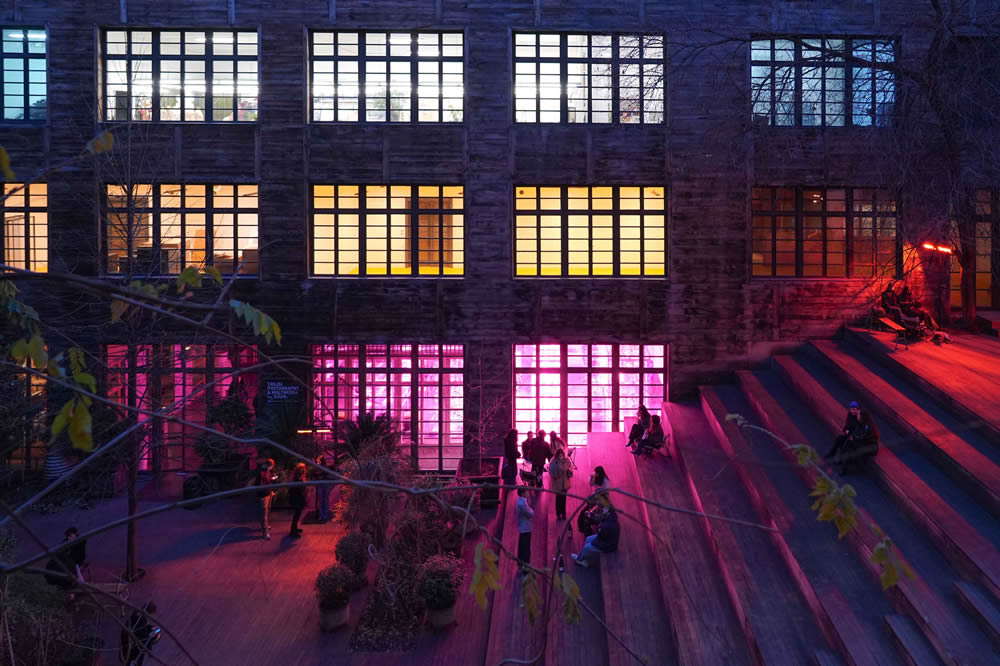
Fabrika is probably the clearest example: an abandoned Soviet textile factory he handed back to the city as an open space for young people, artists, community groups and creative entrepreneurs, a place that genuinely felt European in the deepest sense of that word.
Through his businesses he also promoted a different culture of work, grounded in respect for people. He pushed back against the prejudices of a post-Soviet society that viewed service-industry jobs as something to be ashamed of. Working in his spaces became, instead, a source of dignity and pride.
In an era dominated by oligarchs, he represented the opposite model: an entrepreneur who didn’t use capital against society but as a tool to strengthen it. He supported charitable causes without seeking visibility, helped build a hospice for children with terminal illnesses and championed workplace inclusion for people with disabilities.
As Georgian writer Lasha Bugadze put it, he created open, free spaces, helping to liberate Tbilisi from darkness and closure. Today, one of the spaces meant to be reborn through one of his new projects belongs to the brother of a senior official from the Georgian Dream party. New buildings are rising in its place. Concrete instead of culture. Closure instead of openness. Narrow-mindedness instead of freedom… instead of Europe.