Bernard-Henri Lévy, known to all as BHL, is the quintessential intellectuel engagé. He is not content with interpreting the world: he feels a duty to intervene in history, to rush to wherever freedom and human rights are under threat. Bangladesh, Bosnia, Libya, Ukraine: BHL has followed the conflicts and tragedies of our time at close quarters, making reportage, denunciation and civic commitment the weapons of his fight. At 78, in Mémoires provisoires (One), he has rewound the tape of his own life, telling his story through others: teachers, friends, adversaries, writers and men of action who crossed his path. An “exo-biography”, as he calls it, which is also a mirror of a century.
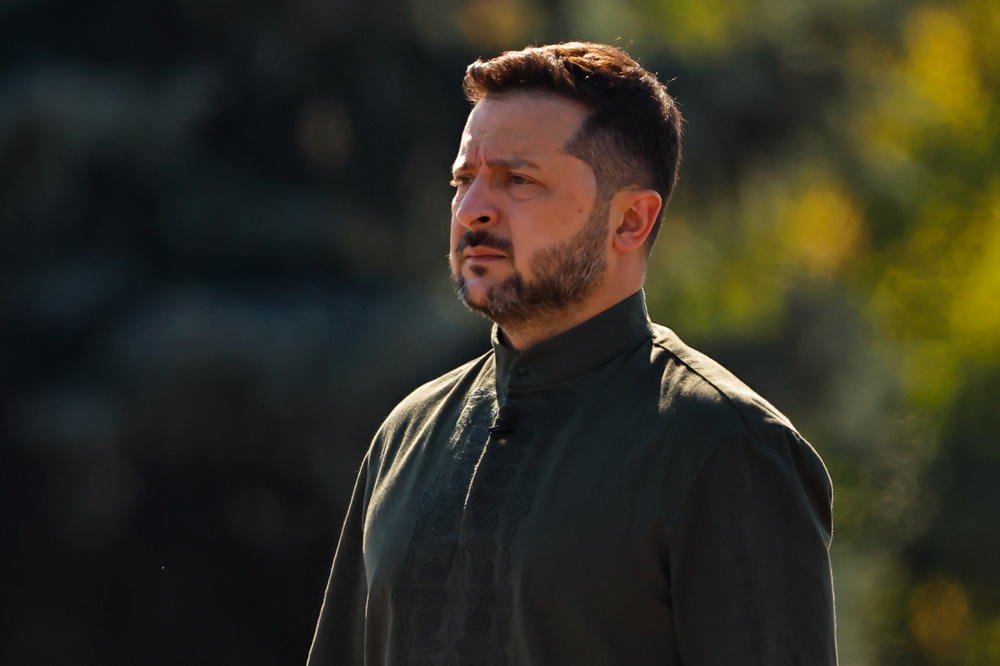
“All the women and men I talk about in this book are like the pieces of a puzzle that make up myself and my face. It is like Man Ray’s portrait of the Marquis de Sade. It is made of blocks of stone that fit together to form his face. That portrait is imaginary. And at the same time it faithfully reflects the idea one can have of the ‘real’ Donatien de Sade. That is how my book works. It is the most intimate of all the books I have written,” BHL tells Il Foglio. Many thinkers have left a deep mark on the French philosopher. “Althusser, because he shaped me. Deleuze, because we argued ferociously. Albert Cohen, because he reminded me that I was Jewish and exactly what kind of Jew I was. Massoud or Zelensky, because they are heroes, and I love heroes,” he says. He has devoted four documentaries to Ukraine, “Pourquoi l’Ukraine” (2022), “Slava Ukraini” (2023), “L’Ukraine au cœur” (2023) and “Notre guerre” (2025), born of his trips to Kyiv and to the front, and of his meetings with the Ukrainian president. “Zelensky makes me think of Churchill in the streets of London, under the bombs, in September 1940. But also of de Gaulle answering all the apostles of submission to the Nazi order: ‘Perhaps I am alone today; but I will not be for long; and, for now, I am France.’ And then of the heroes of antiquity who made me dream when I was at school. Hector, the defender of Troy. Themistocles, who held firm when Athens seemed lost and ended up leading his people to victory at Salamis. Judas Maccabeus, the leader of the Jewish revolt against the Seleucid empire and, in the second century BC, the man who led the reconquest of Jerusalem,” BHL says, and goes on: “In the Latin classes of French lycées in the 1960s there was a little book called De viris illustribus, which we called ‘the Lhomond’. Written by the Abbé Lhomond shortly before the French Revolution, it allowed us to study the Latin language and at the same time to admire the most virtuous figures of antiquity, men of iron character. It is precisely of these figures, Romulus, Cincinnatus, Coriolanus, Mucius Scaevola, Scipio Africanus, that Zelensky makes me think. He has never disappointed me. He has never betrayed that ideal of heroism on which I feed and which is so cruelly lacking in the Europe of today.”
Ukraine is not defending only its own borders: it is the military and moral shield of the whole of Europe against the expansionist designs of Vladimir Putin. Yet many Europeans still seem not to realise it. “It is a mixture of cowardice and blindness. The two feed each other. And it is a mechanism of the mind that is certainly not new. Isn’t this way of moving through History with open eyes and a closed mind precisely the ‘spirit of Munich’? Putin is not Hitler. But we are the direct heirs of Daladier and Chamberlain. If Kyiv fell, Europe would not wake up under the bombs, but the threat would be at our door. And the war would be in everyone’s mind. Military budgets would explode at the expense of public services and, therefore, of our daily lives. And crazy pressure would be exerted on our societies to destabilise them,” he explains. And again: “I know Ukraine as, I think, few Europeans do. And above all I know the fronts, which I have not stopped travelling since the start of the full-scale invasion. Well, this is exactly what the fighters on the front line have told me over and over in our long night-time conversations in the bunkers: ‘In defending ourselves, we defend you; in defending our homes, we stand as a bulwark in front of yours.’ Europeans who don’t realise this are idiots. In the sense of Daladier muttering ‘ah, the idiots’ when he was cheered for having managed, at Munich, to ‘save the peace’. That is, in reality, to buy a little time.”
From the era of the “new philosophers”, of which BHL was the leading figure, to the age of social media, the figure of the committed intellectual has changed radically: he is no longer regarded as a guide or a recognised moral conscience, but as one voice among many. “Because social media have brought us the plague. Not, of course, the idea that everyone has a right to speak: that is perfectly fine! But the idea that all words have the same value and that the opinion of an antisemitic cretin is worth as much as that of a committed intellectual,” BHL says. “I had adversaries in the days of the ‘new philosophers’. But they were called Gilles Deleuze. Or Félix Guattari. Or Toni Negri. Today it is anybody. The man in the street. The idiot, satisfied with his idiocy. The ignoramus, happy with his ignorance. Isn’t it what you in Italy, fifty years before social media, called qualunquismo? We have reached that point all over Europe. And, beyond Europe, all over the world. A globalisation of qualunquismo. And it is true that intellectuals have almost no role left to play in this mad and wretched world. I avoid going on X. It has become a dump of spite, stupidity and hatred. Louis Aragon dreamed of an ‘eraser to rub out human filth’. Elon Musk has invented the filth pump, the sewage spreader, the continuous jet of human lowness,” BHL says.
Italy played a central role in his intellectual education. “There are several figures I was close to and whom I still miss. Marco Pannella, of course, with his profile of a Roman emperor, his sovereign extravagance, his way of living without a telephone and of leading the Radical Party through messengers, his relationship with Emma Bonino, his repeated hunger strikes, his sense of theatre. Armando Verdiglione, the Italian heir of Lacan, organiser of the finest intellectual conferences postwar Europe has ever known, the man who brought together Milan Kundera and Philippe Sollers, Jorge Luis Borges and Jean Daniel, Eugenio Scalfari and Eugène Ionesco. And Pasolini, whom I knew shortly before his death,” BHL says. His pantheon also includes Alberto Moravia, “the greatest of the contemporary Italian writers, together with Curzio Malaparte”.