Since its inception in 1957, the European Community (renamed the European Union in 1993, but remaining a simple association of states) has long exerted a considerable centripetal force, fuelled by the advantages that membership promised, delivered and continues to deliver.
However, the rapid evolution of the international political, cultural and economic landscape after 1991 has progressively reduced the relative weight of those advantages, whose essentially economic and legal nature has not changed in the face of a new situation that would have required decisive steps forward in the political, military and technological spheres. Thanks to bold decisions such as eastward enlargement and the adoption of the euro, as well as the inertia of the alliance with the United States, the ‘hypocritical’ solution of 1993 (renaming what remained an association as a Union, because it was known that this was needed) nevertheless offered advantages until the crisis of 2007–08, despite the warning sign sent in 2005 by the French and Dutch rejection of the draft European Constitution. With the crisis, however, the problems caused by the failure to renew a NATO rendered obsolete by the collapse of the USSR, by the refusal to focus on technological renewal and, above all, by the failure to tackle decisively – including on a cultural and intellectual level – a dramatic demographic crisis, suddenly came to a head.
Since then, events have begun to unfold at an ever-increasing pace: while the demographic crisis deepened, turning immigration into a divisive political issue, and the disappearance of European mobile phones (caused by the iPhone and our inability to produce smartphones) symbolised an ever-widening scientific and technological gap – later made evident by Europe’s absence from the development of artificial intelligence – the alliance with the United States began to show its first serious cracks. These came from the words and indecision of Barack Obama, which signalled the deepening crisis of a ‘West’ taken for granted but linked – as the very name of NATO recalled – to an Atlantic world itself in decline, in the face of the emergence of China and the Pacific. The loosening of the Atlantic bond was soon compounded by Russian aggression, fuelled in part by the attitude of a European ruling class that chose to turn a blind eye to the very clear words spoken by Vladimir Putin in Munich in 2007, decided to ignore the aggression against Georgia, and, above all, downplayed the aggression against Crimea and the Donbas in 2014, giving Moscow the impression that it had been given a free pass provided it continued to honour the economic pact with the major European countries.
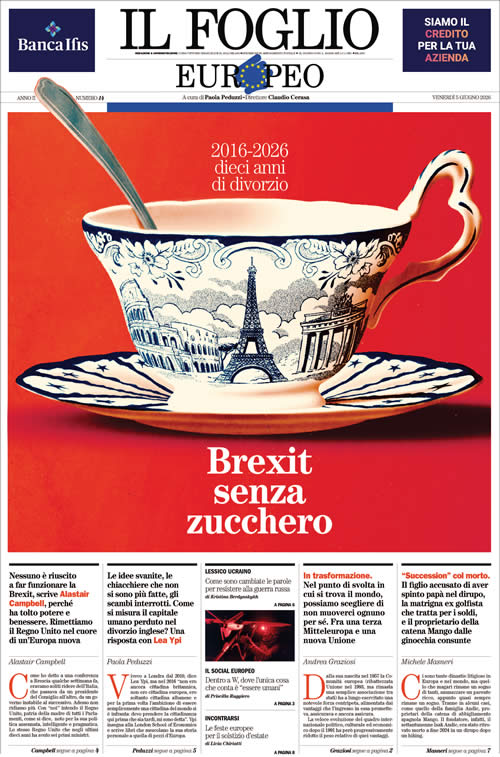
The increasingly evident limitations of the Union, symbolised by the right of veto and highlighted by the loosening of ties with Washington, Russian pressure and the loss of economic, scientific and cultural centrality of European countries, brought the centripetal period to an end. In many countries, decidedly anti-European forces emerged, of which the Brexit of 2017–2020 has so far been the strongest expression: for the first time, someone was leaving an association which, moreover, confirmed its economic benefits in the following years, highlighted by the self-inflicted damage suffered by the British.
Then came the war of 2022, with the large-scale military aggression against Ukraine, a war which, confirming Europe’s diminished standing, did not become – unlike in the past – a ‘world war’. With its nearly two million dead and wounded, however, it is today the factor that weighs most heavily on the future of European countries, their union and their alliances, not least because it coincides with a Trump presidency that has made the rift with the United States (a rift that will certainly have to and can be mended, but only in part: the past is, alas, the past) all too evident.
Regardless of the solution it receives – which will in turn play a crucial role – there are in fact countries within the EU that feel the impact of that war far less than others and are far less willing to bear the costs and embrace the changes that are, for the latter, both inevitable and vital. Consider Spain, which naturally looks to ‘its’ Latin America and has its own ‘domestic issues’, or Portugal, which can look as much to Brazil as to Africa, or even those vast areas of the Balkans that have for centuries been bound by stronger ties to Moscow.
Different forces and fears weigh on Germany, however, which remembers its guilt but also what happened between 1945 and 1949 (see Norman Naimark’s *The Russians in Germany, 1945–1949*), as well as on Scandinavia, where Sweden has cut its foreign aid to support Ukraine, on Denmark, which is perhaps, in relative terms, its main contributor, and naturally on the Baltic states, Poland and Ukraine. In between lie, in different positions and circumstances, Italy and France – whose decisive role is also linked to its status as the Union’s sole nuclear power – in a situation open to many scenarios, of which I shall attempt to outline three possible ‘types’.
The first could be described as ‘simply’ pessimistic. The war will continue for an unforeseeable period; the 2027 French presidential elections – the key political event for Europe’s short-term future – will be won by the Rassemblement National, and the EU will therefore fail to make the leap hoped for by Mario Draghi, without disappearing because, thanks in part to Brexit, ‘everyone’ (apart from the usual self-saboteurs) now understand its benefits, whilst remaining the association it has always been. The EU countries as a whole will fail to capitalise on NATO’s decline – or even on its formidable remnants – to build a European command and control centre capable of cooperating on an equal footing with the Americans on the European theatre, and our defence system will become even more vulnerable.
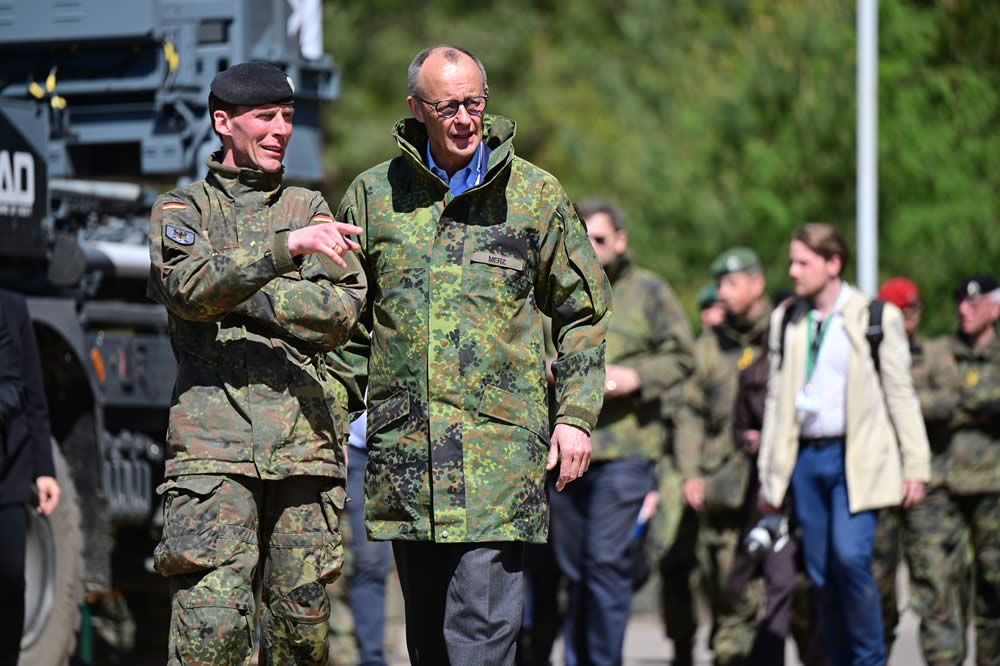
A new Mitteleuropa could then take shape, without France and Italy and inevitably centred on Germany, which is already outlined today by German rearmament, by the firm support Berlin offers to Kyiv—which Friedrich Merz recently proposed should be immediately associated, albeit in an incomplete form, with the Union—as well as by his statements on a Germany ready to assume its responsibilities. This Mitteleuropa would be much closer to the one imagined by Friedrich Naumann in 1915 than to the one extolled in the 1980s by Milan Kundera and Claudio Magris to remind those who had forgotten that Central and East Europe, then swallowed up by the socialist bloc, had long been an integral part of our continent and a rich source of its culture
In an optimistic scenario, by 2027 France would hold firm and willing Europeans might find the strength to assemble their own nuclear arsenal and build a single European command and control centre within NATO, also benefiting from Germany’s renewed commitment and thus beginning to build a new centripetal political entity capable of implementing a major scientific and technological revitalisation plan and realistically addressing the demographic crisis. For Italy, which lies at the heart of Europe and faces pressure from all sides, this would by far be the best solution, and it should therefore champion it.
The worst-case scenario is one of every nation for itself, even if this does not formally translate into a series of exits. But as long as we can focus on the optimistic scenario, it is best not to dwell on the alternative, not least because what would be done for the former is, in any case, part of what we would need in the worst-case scenario.