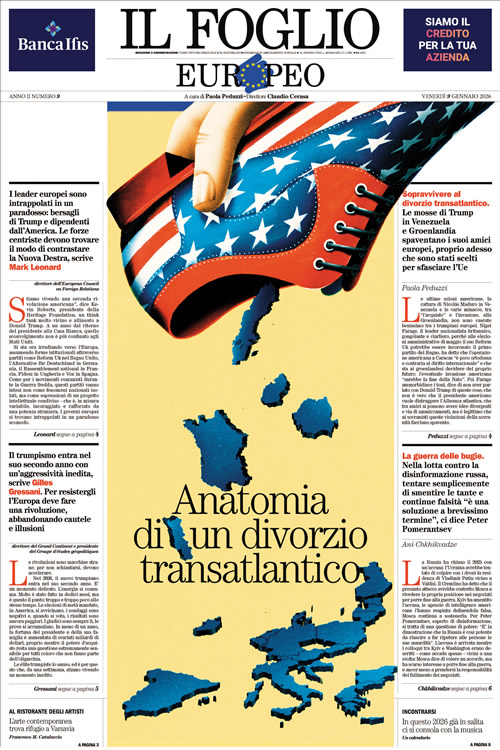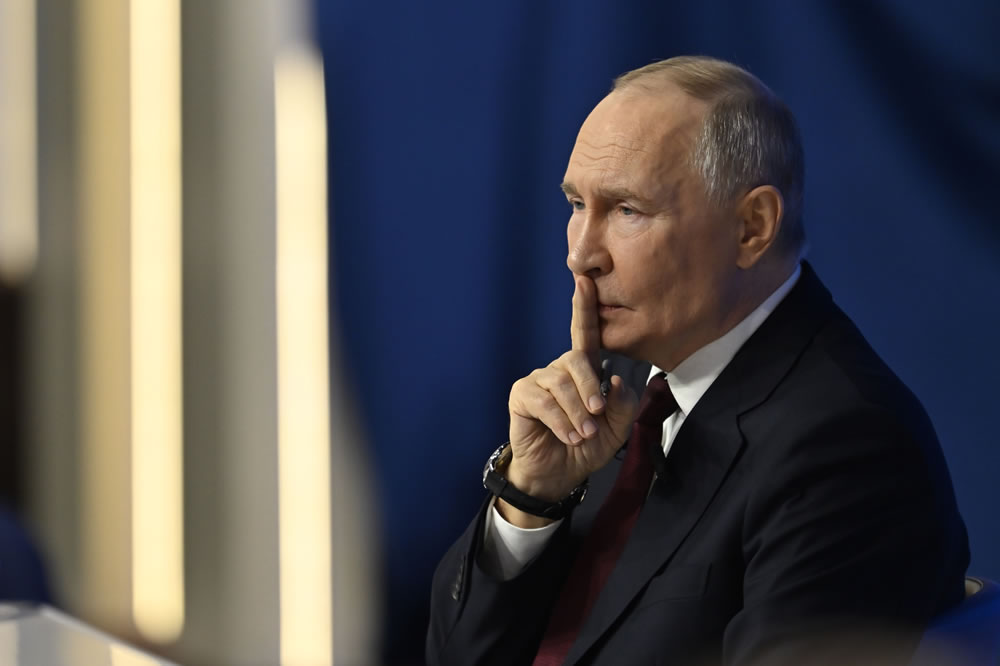
Russia ended 2025 with a claim that Ukraine tried to hit Vladimir Putin’s residence near Valdai with drones. The Kremlin cast it as a turning point, saying the alleged attack would force Moscow to review its position in talks to end the war. Kyiv denied the claim. American intelligence agencies rejected it as false. Moscow continues to push it.
For Peter Pomerantsev, the episode is about power. “That is about Russia showing that it is so powerful, it’ll get people to repeat its nonsense.” The accusation arrived just as talks between Kyiv and Washington appeared close. Moscow insists it wants a deal. In practice, it has little interest in ending the war, and even less in owning the collapse of negotiations. If talks fail, the Kremlin wants the blame – and the pressure – to land on Kyiv. The allegation provides that cover for the Kremlin and those who side with it.
Pomerantsev, a senior fellow at Johns Hopkins’ Agora Institute, studies modern propaganda and political warfare. His central argument is that such attempts at disinformation works because it confirms what audiences already believe. “The greatest lie people tell is that they want to know the truth,” Pomerantsev warns. In reality, “either through laziness or bias, people will seek out the disinformation that suits them.” The supply side – bots, trolls, platforms – matters, he notes, but “much more important is the demand. And a good propagandist will give stories that the audience wants.” Quantity does the rest. “Just with a very sheer volume of stuff,” Russia confuses audience, “overwhelms them, making them feel helpless and dispirited.”
As Russian tanks crossed the border, Putin told the world that Ukraine is an artificial state, run by Nazis and framed the war as a mission to protect Russian speakers. Those were lies. But for Moscow it was “a false flag to excuse the attack,” Pomerantsev says, tracing the tactic back to earlier wars in Georgia in 2008, in Crimea and in Eastern Ukraine in 2014.
However, Putin is not a pioneer. He a student of history. Disinformation is one element of what the Soviets once called “active measures,” now often grouped under hybrid warfare.
In recent years, the Western governments have reported a rise in suspected Russian-linked arson attacks, infrastructure sabotage, cyber intrusions, and alleged assassination plots across Europe, often carried out through deniable proxies. The cases include the 2024 arson attack on an IKEA store in Vilnius, the fire that destroyed Warsaw’s Marywilska 44 shopping center, and a foiled plot in Germany targeting the head of arms maker Rheinmetall. “All of these kinetic actions have a communications effect,” Pomerantsev describes. Russia is sewing fear and testing whether Europe responds together or fractures.
And sometimes it succeeds. It’s effectiveness lies in its ability to tailor different messages to different audiences. “Russia’s always been masters of changing their narratives to fit their audiences,” Pomerantsev said. For the far right, Moscow casts itself as the defender of traditional values and Christian civilization, pushing claims that Ukraine was advancing LGBTQ laws and that “Russia had to take action to stop this dreadful perversity.” For the far left, the story flips: Russia becomes an anti-imperialist power resisting American aggression, with the war reframed as NATO expansion threatening Russian security. The messages contradict each other, but both work.
For everyone else, Russia has pushed messaging that Ukraine is hopelessly corrupt, that Western military aid enriches elites while ordinary people struggle, and that Kyiv is losing the war so there is no point in aiding them. These talking points have gained real traction among some Western lawmakers and media figures, creating serious divisions over continued support for Ukraine in the United States and in Europe.
Pomerantsev points to the Ukrainian Orthodox Church controversy as a perfect example. Ukraine moved to restrict the Moscow-linked church in question over security concerns after Russian invasion. The clergy had served as an arm of Russian intelligence, gathering information and spreading Kremlin narratives. “It’s called the KGB church for a reason,” Pomerantsev says. But Russian propaganda told a story that Ukraine was persecuting Christians. The narrative spread through Russian state media, then abroad and found amplification through influencer figures like Tucker Carlson, landing perfectly within existing culture-war narratives in conservative circles in the US and in Europe. “It’s actually Russia which persecutes Christians on the occupied territories, especially evangelicals,” Pomerantsev clarifies. “Ukraine is one of the most Christian countries in Europe,” he adds. But once the narrative took hold, facts struggled to break through.
The question then is, can you fight the flooding of the screens with Russian lies?
The problem, Pomerantsev replies, is that “the authoritarians are really good at playing this game while liberal democracies are not in the game. We have some great media in the West. But they don’t speak to the people that Russia is targeting. The New York Times isn’t engaging with audiences that matter. So, somebody has to go and talk to those audiences.”
Disinformation thrives, he added, where distrust and political alienation already exist. “People suffer from a lack of agency, chronic distrust of institutions,” he maintains. Simply debunking falsehoods, he thinks, “is a very short-term fix.”
Until democracies can address the underlying grievances and engage those audiences, Russia will keep winning the information war.
Peter Pomerantsev is a senior fellow at Johns Hopkins’ Agora Institute. He’s an expert on information warfare.