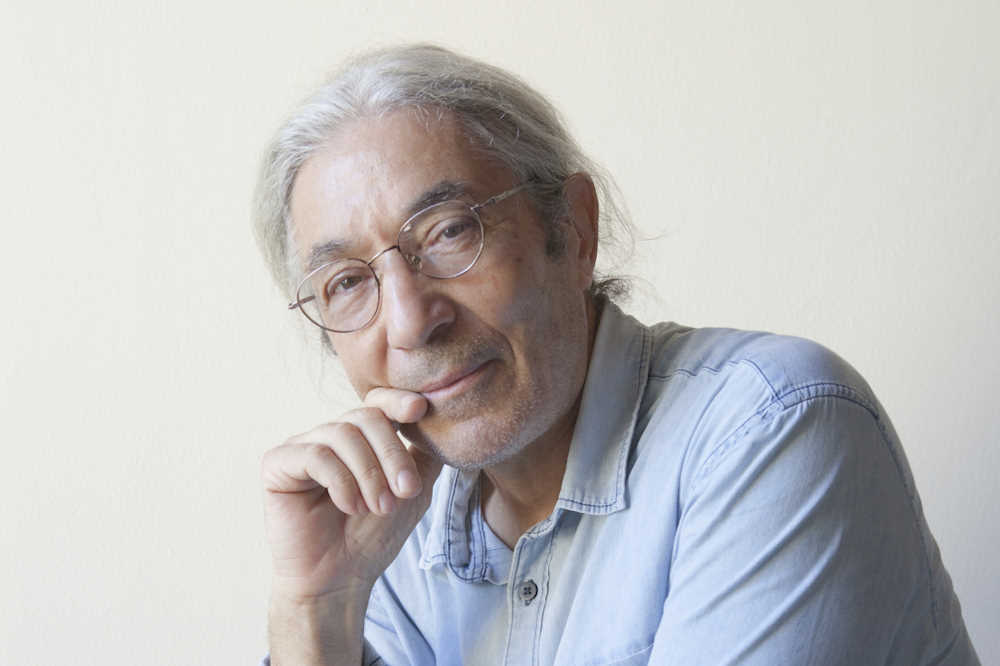
Boualem Sansal is today the most famous forgotten hostage. An 80-year-old Franco-Algerian writer, world-renowned, recipient of several literary prizes including that of the French Academy in 2015, the German Booksellers’ Peace Prize in Frankfurt, and the Cino Del Duca Prize in 2025, he received training as an engineer and economist. Once a senior civil servant in Algeria, he was dismissed from his position following the publication of a novel Tell Me Paradise (2003) that was highly critical of the Algerian government and Islamists. With his white hair pulled back and his Apache-like features, Boualem Sansal is the very example of a good-natured but stubborn rebel. He embodies the rejection of stereotypes: an Arab, he demands that the Algerian government recognize the ethnic plurality of his country composed of Berbers, Kabyles, and Jews. Born Muslim, he renounces Islam, denounces the stranglehold of the Muslim Brotherhood on youth education and women’s condition, and demands the freedom to believe and not to believe. He does not insult, does not apostrophize, but yields nothing. This affair is triggering a veritable tsunami in Franco-Algerian relations.
His imprisonment—or should we say his kidnapping—by the Algerian state in November 2024 for a pure crime of opinion should have raised a storm, outraged the entire political class, and pushed the President of the Republic to threaten a rupture. Nothing of the sort occurred. Ten months later, the prospects for his release are more tenuous than ever, and he has been joined in Algerian prisons by a French sports journalist, Christophe Gleizes, guilty of having written about a Kabyle football club. The French president’s lightness on this matter has been remarkable. In 2017, Macron began by speaking of French colonization as “a crime against humanity.” In a mimetic approach to that of Jacques Chirac, he confessed to wanting to do for Algeria what his predecessor at the Élysée had done with the Shoah in 1995. The comparison is enormous but justified by the fact that the Algerian War would be “the unthought” of our memorial policy. Unthought, really? This unthought is very talkative—one can no longer count the thousands of books, hundreds of documentaries, and dozens of films devoted to this episode. Macron even created a reconciliation commission headed by historian Benjamin Stora, who did not fail to condemn Boualem Sansal as well to stay in good standing in Algiers. The Algerian junta seems unable to exist, breathe, or think without demonizing France, the eternal adversary as much as the indispensable one. One truth has become evident: for six years, Macron has not wanted to divorce from Algeria or engage Paris and Algiers in a relationship of peaceful partnership. If one must face history, one must also look at reality: it is in France that Algerian dissidents take refuge, it is toward France—the stepmother as much reviled as desired—that Algerian youth turns, eager for visas. There is worse: Macron can state something and its opposite with remarkable frivolity—this is characteristic of the “at the same time” approach that angers everyone without satisfying anyone. Thus, in October 2024, he recognizes before Parliament Morocco’s sovereignty over Western Sahara, ending five years of procrastination and a long sulk with the Cherifian kingdom. Fury from President Tebboune, yet his close “friend”! The cup runneth over for the Algerian authorities, who launch a veritable Stalinist campaign against France. On November 22, the official agency Alger Presse Service publishes a communiqué: “Macronist-Zionist France takes offense at the arrest of Boualem Sansal at Algiers airport.” In other words, the Jewish lobby would make the law in Paris to better discredit Islam and Algeria. To this psychodrama must be added an interview given by Boualem Sansal to the French media Frontières in which he adopts Morocco’s position and adds that the entire western part of his country was Moroccan before French colonization. He adds a sentence that made the Algerian government howl: if France did not colonize Morocco (it made it a protectorate from 1912 to 1955), it is because the latter “is a great state” that has existed for thirteen centuries. Indeed, “it’s easy to colonize small things that have no history, but colonizing a state is difficult.” The leaders of the “small thing” saw red. Let us recall that Algeria, a slave-trading outpost that lived off the trafficking of captives thanks to its pirates, the Barbary corsairs, was subjected to the Ottoman Regency from 1516 to 1835 while maintaining broad autonomy. But it is against France that this country’s leaders direct their blows because the Sublime Porte was Muslim. Boualem Sansal thus made himself guilty of treason and undermining the territorial integrity of his country.
Algeria wants to remain France’s eternal victim and reiterate this “memorial rent” that Macron had so well denounced in October 2021 before retracting, as if frightened by his own audacity. The French president can sometimes let slip an uncomfortable truth that embarrasses his interlocutors. He also affirmed on January 6, 2025, during the Ambassadors’ Conference that Algeria had dishonored itself by detaining the Franco-Algerian writer. No concrete consequences followed regarding visas or possible retaliation against the regime. French diplomacy also tacks between silence, flattery, or condemnation of “extremists” such as Interior Minister Bruno Retailleau, who demands an attitude of firmness and concrete reprisals. If our president was right to condemn the crimes of colonialism, he could have also recalled those of the independence fighters, notably the massacre of the harkis and the expulsion of one million pieds-noirs in the name of the principle “The suitcase or the coffin.” A clear discourse could have cut the Gordian knot with Algiers and opened a dispassionate future for both countries. It is all this ambiguity that Boualem Sansal pays for, an unwitting scapegoat of Élysée ambivalences, even though the president in July seemed, in a new change of stance, to opt for hardness in the name of the principle “A free country is first a feared country.”
While Paris and Algiers are on the brink of rupture, I see for my part only one solution for the dissident Boualem Sansal: Italian mediation undertaken by Giorgia Meloni. Madam President of the Council, you are today the most respected European leader, including by your adversaries. In the name of your good relations with Algiers, put your connections and know-how at the service of liberating Boualem Sansal, a sick and exhausted old man whom his country of the heart, France, has not known how to or not wanted to snatch from the claws of arbitrariness.