 When Oulu was chosen as “European Capital of Culture for 2026,” Putin’s massive invasion of Ukraine had not yet begun. Some could see, in the choice of a Finnish town whose region borders Russia, almost an attempt to broaden the concept of Europe, inviting neighboring nations to visit it. On one side the flat birch forests, on the other the Gulf of Bothnia sea, from which you can sail from Sweden, and above, at the right hours, the northern lights, Oulu sits between the urbanized regions of the south and snow-covered Lapland. It has roughly the same population as Padova and here hosts the world’s largest AirGuitar competition (jumping around and pretending to play a real guitar), various heavy metal bands come from here as a source of local pride, and there are large Sami communities, the ethnic minority of the north. But the most important thing about the city is the headquarters of Nokia, the mobile phone company that conquered the world for several decades, and on which the local economy was long based, at least until the arrival of American and Chinese smartphones. According to calculations, today 3 billion people use technologies that were developed in this small Scandinavian Silicon Valley. Now, with a new mega headquarters-campus-factory just inaugurated by Finnish President Alexander Stubb, Nokia will focus primarily on 5G and artificial intelligence.
“Being European capital makes us proud, it will be a year full of events and celebrations, art, culture and music,” Ari Alatossava, the city’s mayor, tells Il Foglio Europeo. Elected last year, he is the son of a cheese maker who grew up near the Soviet border and came to Oulu in the 1990s to study at its renowned university. “Oulu is known for technology and innovation, but from next year it will also be known for its culture,” Alatossava continues. “The important thing is that citizens come together, it’s the year of all Oulu citizens, and also of the 39 municipalities in the region.” Announced for the annual program will also be a Sami opera, the first in history, an extension of the already highly visited light festival, the Lumo, where the city fills with light installations during the dark winter months, and various jazz festivals with attention to ecological themes, given that the event’s slogan is “Cultural Climate Change.” A highlight of the ’26 program will be “Layers in the Peace Machine,” an immersive and multidisciplinary media installation located inside the city hall, just steps from Alatossava’s office. The machine will ask participants questions about peace, building a changing database to better understand what feelings and sensations this concept brings us. Machine learning will create a dynamic process based on interactions, arriving at possible solutions. “We had thought of it before the invasion of Ukraine,” says the mayor. The machine is based on the writings of scientist and computer scientist Timo Honkela, who died in 2020, convinced that artificial intelligence could help in the peace process. “It’s a way to return to the original values of the European Union, and this can be a small piece of the process,” Alatossava tells us. Aren’t you afraid of Russia, being so close? “No,” he responds firmly. “We’re in NATO. For two years now. And now we’re more at ease. Joining NATO has changed the mindset of all of Finland. We’re not afraid.”
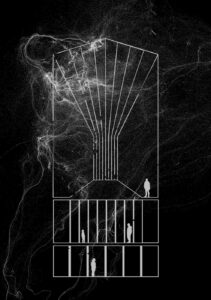
Despite this, there are large atomic shelters ready to be used in the cities. In Oulu, one has recently been built, gigantic, carved under 30 meters of rock, which in peacetime is used as a parking garage, and where some performances will be held next year. “We must be prepared, that’s also why we’re in NATO,” says the mayor, who returns to speaking about the EU’s strength: “Europe’s wealth is the cultures and different backgrounds of 500 million people.”
Various Ukrainian families have arrived in Oulu, fleeing the conflict, “but most then go around Helsinki,” he says, “to the south.” In the city, however, you can see the effects, in the culinary offerings, of recent immigration, “especially from Asia: India, Pakistan, Sri Lanka.” And it’s this immigration that is exploited by the far right, which also makes itself heard here in elections. “But many immigrants are students, attracted by excellent engineering programs.” One of the few recent acts of violence in placid Oulu was against an immigrant. The nationalist Eurosceptic party entered with seven ministers in the governing coalition formed in 2023. But the mayor, a member of a centrist party, is calm. “In the last elections, far-right parties actually got fewer votes than in previous elections. Even though you increasingly hear racist discourse around, or see immigration as a threat, they’re losing votes. One person in ten, in Finland, doesn’t vote for them.”
The mayor’s hope, and that of many inhabitants, is that a “Matera effect” will be created on Oulu, and that it will become a tourist destination, attractive, where the next 007 films might be shot, after making itself known as European capital of culture. “According to many studies, Oulu is the thirteenth happiest city in the world,” says the mayor with a smile. “I hope that after next year this spirit will continue, and that, indeed, maybe we’ll reach twelfth or eleventh place.” But what makes Oulu, and Finland, so happy? “A Japanese ambassador who was here a few years ago always told me that it’s all a matter of security, and trust. Here we trust each other, we trust institutions, the police, there’s practically no corruption here,” says Alatossava. “All this makes your life very stable. And if your life is stable and secure you can be confident that the future will be better. That’s what makes you happy.” Being optimistic? “Yes, optimism is happiness.”