The uncertainty created by Donald Trump’s tariffs
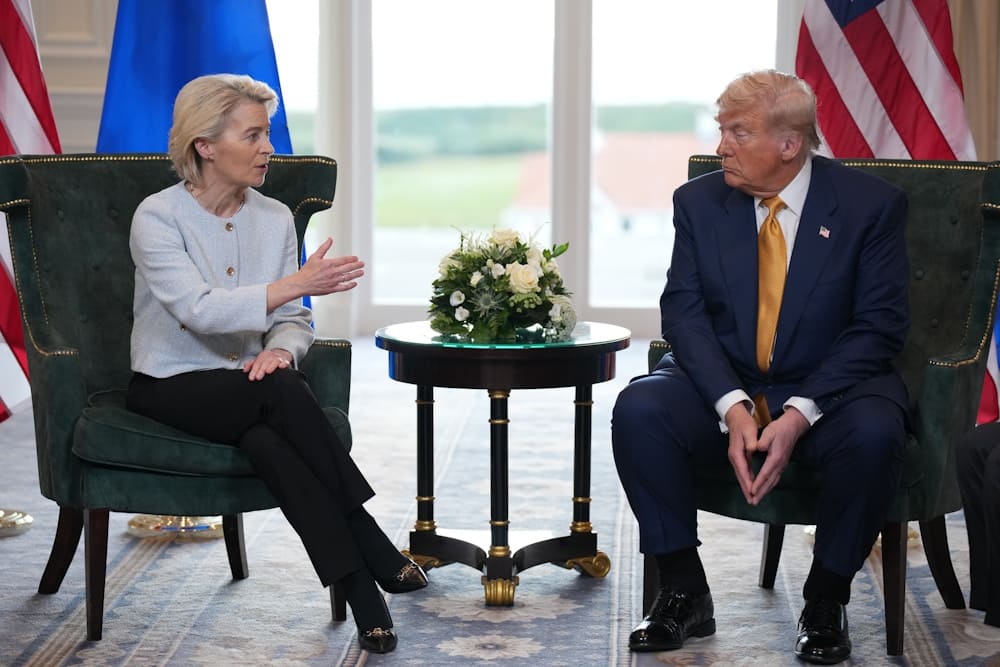
May got off to the worst possible start for relations between the European Union and the United States. On top of the rift over the war with Iran and Donald Trump’s decision to withdraw five thousand American soldiers from Germany comes the increase in tariffs on European cars and trucks to 25 percent. This is a breach of the agreement Trump reached with Ursula von der Leyen on the golf course at Turnberry, Scotland, last July. The American president accuses the European Union of not yet having eliminated tariffs on American goods, as the Turnberry agreement required. National governments and the European Parliament are indeed still negotiating the final text needed to implement the commitments made by the EU. But the Trump administration has also failed to honour the terms agreed at Turnberry, which set a maximum ceiling of 15 percent on tariffs on European goods. The United States applies a significantly higher rate to steel-derived products. Ursula von der Leyen’s Commission has said it is keeping “all options on the table” to defend its interests, should Trump follow through on his threat again. The European Parliament is divided: the Socialists are calling on the Commission to deploy the full force of the anti-coercion instrument in response, while the European People’s Party wants to accelerate the elimination of tariffs on American goods. Will the parliamentary session of 18–21 May provide the right opportunity? Trade ministers will meet the following day in Brussels to either seal a truce or prepare for another trade war with Trump.
The NATO summit in Ankara, with the United States an unknown quantity
A military committee meeting on 19 May in Brussels and a foreign ministers’ session on 21 and 22 May in Helsingborg, Sweden: NATO is stepping up its preparatory work ahead of the heads of state and government summit to be held in early July in Ankara. For Europeans, the key question is what Donald Trump will do. “The gravest threat to the transatlantic community is not our external friends, but the ongoing disintegration of our alliance,” said Polish Prime Minister Donald Tusk, after the American president announced the withdrawal of five thousand troops from Germany. Trump’s administration is considering further potential “punishments” for the Europeans’ refusal to participate in the war with Iran. The most extreme — though legally unenforceable — would be expelling Spain from the Atlantic Alliance. Behind the scenes, European members are continuing their work to strengthen the so-called “European pillar of NATO” — not only by increasing defence spending and boosting military capabilities, but also by taking on greater responsibility within the Alliance’s internal structures.
Practising how to defend the EU from an attack
If NATO’s Article 5 is undermined by Donald Trump, will the EU be in a position to invoke its mutual assistance clause to defend a member state under attack? During May and June, Kaja Kallas’s European External Action Service will conduct the first exercises on how to operationalise Article 42.7 of the EU Treaty. “If a Member State is the victim of armed aggression on its territory, the other Member States shall have towards it an obligation of aid and assistance by all the means in their power,” reads Article 42, paragraph 7 of the EU Treaty. Some describe it as the equivalent of NATO’s Article 5. Others consider it less effective. In the history of the EU it has been invoked only once — by France, following the terrorist attacks of 13 November 2015. At the time, no one knew how it worked and its activation amounted to little more than symbolic gestures. Following Trump’s threats against Greenland and the Iranian drone strikes against Cyprus, EU leaders decided to dust off Article 42.7. Three scenarios are to be tested in the exercises. The first involves a hybrid attack, in which an EU country calls on its partners’ solidarity without the intervention of EU institutions. The second involves a simultaneous request for assistance from several member states, with EU institutions expected to play a coordinating role. The third concerns how to coordinate efforts in the event of a simultaneous activation of both EU Article 42.7 and NATO Article 5. The exercises will first be conducted with the ambassadors of the twenty-seven member states — in the so-called Political and Security Committee — and then at the level of defence ministers. Each ambassador, and subsequently each minister, will be required to respond in real time, declaring the commitments their country is prepared to make to come to the aid of a fellow member state under attack.
The strategic debate on how to deal with China
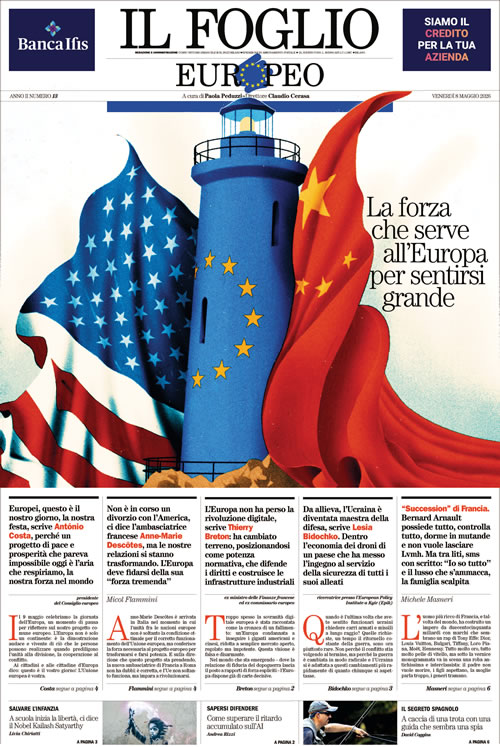
Should Donald Trump’s hostility towards Europe push the EU to seek a rapprochement with China? Some heads of state and government believe so, among them Spanish Prime Minister Pedro Sánchez, who in April made his fourth trip in four years to Beijing to pay his respects to President Xi Jinping. But Ursula von der Leyen appears to think differently. Her Commission will hold a strategic debate on China on 29 May. The discussion had originally been scheduled for 13 April, but the war with Iran took precedence and upended the EU’s original plans. Von der Leyen appears determined to press ahead with the de-risking policy. In recent months the Commission has stepped up a series of initiatives in the name of strategic autonomy that have drawn Beijing’s anger, with China viewing them as anti-Chinese measures. The latest is the proposed Industrial Accelerator Act, presented on 4 March, which introduces the “Made in Europe” principle into public tenders and procurement supported by public funds across a number of strategic sectors, including electric vehicles, solar panels, batteries, heat pumps, and nuclear power plants. Beijing has accused the European Union of imposing “serious investment barriers and institutional discrimination” and is threatening countermeasures. On China, at least, von der Leyen’s line is unlikely to change.