

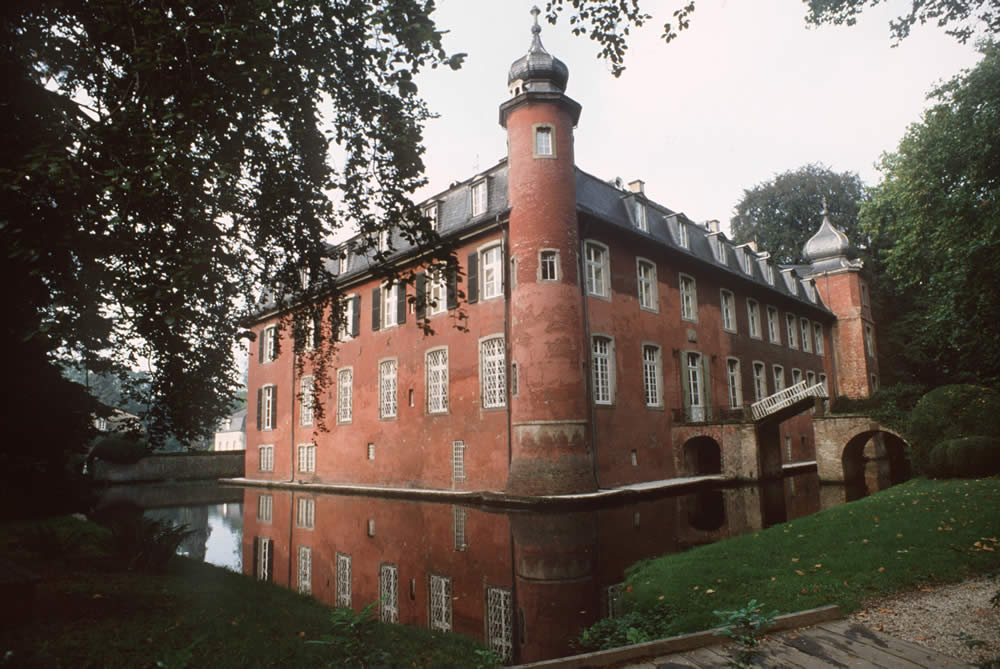
Traditionally August is a month of rest for the European Union. No official meetings are scheduled. The European Parliament is closed. The Commission offices are practically empty. A single commissioner is enough to ensure “continuity,” while President Ursula von der Leyen can spend a couple of weeks’ vacation at her family home near Hanover, Germany, where she can prepare her State of the Union speech for September 9th. Even the ambassadors of the twenty-seven member states allow themselves some days of rest at sea and in the mountains, though they’re always ready to return in case of emergency. Only at the end of August does EU institutional activity slowly resume. The first and only appointment will be the informal meeting of Defense and Foreign Ministers, to be held between August 28th and 30th in Copenhagen. The format is called “Gymnich,” named after a castle in Erfstadt, Germany, which hosted the first informal meeting of Foreign Ministers back in 1974.
The presence of Defense Ministers alongside the heads of diplomacy in Copenhagen is due to Ukraine, which remains the EU’s number one priority. The Europeans have managed to buy time, avoiding Donald Trump’s total disengagement. But the situation on the battlefield remains precarious for the Ukrainians. The EU is no longer able to guarantee financing for military aid due to Hungary’s vetoes. Viktor Orbán also blocks accession negotiations with Kyiv. New sanctions are becoming increasingly difficult to approve due to “no” votes not only from the Hungarian premier, but also from his Slovak colleague, Robert Fico. Foreign and Defense Ministers will have to show creativity in setting up coalitions of the willing that are solid enough to allow Ukraine to continue resisting even without Trump.
However, it’s Israel’s war against Hamas in Gaza that risks taking center stage at the Copenhagen Gymnich. EU Foreign Ministers had managed to postpone a decision on possible sanctions against Benjamin Netanyahu’s government thanks to an agreement reached by High Representative Kaja Kallas with Israel to guarantee substantial improvement of the humanitarian situation in the Strip. The July agreement has not yielded results. Some member states are calling for the suspension, in whole or in part, of the EU-Israel association agreement. The first opportunity to discuss this will be at the informal meeting at the end of August. Unless Kallas decides to interrupt the ambassadors’ vacations to bring them back to Brussels sooner.
