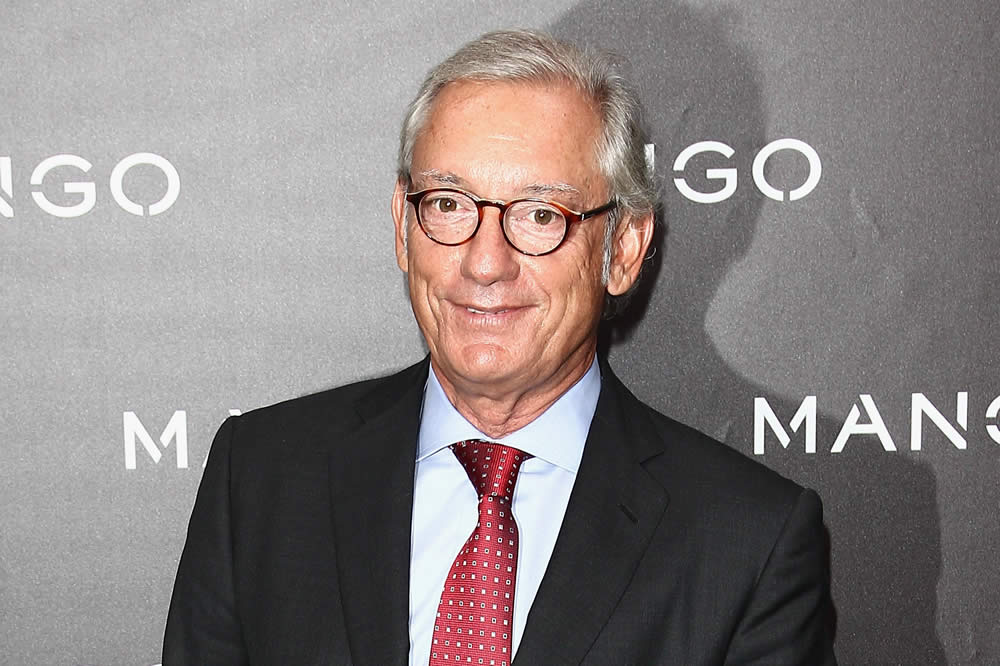
There are plenty of quarrelsome dynasties in Europe and around the world, but what for many people remains a mere fantasy — killing a wealthy relative — almost always stays just that: a fantasy. Except in certain cases, such as that of the Andic family, owners of the Spanish clothing chain Mango. The founder, seventy-one-year-old Isak Andic, was found dead at the end of 2024 at the bottom of a cliff after a hike.
A word that is difficult to translate — sometimes meaning a country ramble, sometimes a proper climb, often something in between — this particular hike took place in the mountains of Catalonia, and he was with his eldest son Jonathan Andic. Up to that point: corporate consternation and grief. Then the son — who is also vice-president of the company — was arrested a few days ago by Barcelona police on suspicion of having pushed his poor father off the cliff. Scandal, shock, with the heir to one of Spain’s most important dynasties in handcuffs. He proclaims his innocence; his sisters and his uncle also say he had nothing to do with it. But as in every self-respecting thriller, a stepmother figure enters the picture: the father’s partner, former golfer Estefanía Knuth, who apparently does harbour some suspicions. It seems things had been going badly between founder and heir for some time. Police suspect the son because the various accounts he gave during questioning were inconsistent; moreover, GPS data and cross-referenced footage from road cameras and the like — making the perfect crime seem all but impossible these days — suggest he had made several visits to the area of rocks and cliffs in the days before the fatal fall. Furthermore, analysis of messages between the two suggests the heir was ravenous for money and wanted his share of the inheritance immediately — not, literally, “when his father was dead.” The inheritance question had long been fraught: the most recent will, signed in 2023, left the company in equal shares to the three children, Jonathan and his two sisters, with a bequest of 5 million euros to the golfer — who was not satisfied, and after various negotiations had managed to push the figure up to 30 million. But then, plot twist: according to investigators, the young Andic had recently discovered that his father was on the point of changing his wishes and setting up a charitable foundation — which, let’s be honest, was rather asking for it. The son mounts his defence: there was no conflict between them; in fact, the walk-cum-climb was meant precisely as a way of patching things up (though the two claims are somewhat contradictory). Besides, his father suffered from bilateral gonarthrosis in both knees — a form of chronic cartilage wear causing stiffness and severely impaired movement — in short, he was practically falling apart, which is why his hundred-metre plunge would have been particularly smooth, as the investigators contest (disputing not only the dynamics of the fall but also the presence at the landing site of shoe prints possibly attributable to the son).
The unfortunate airborne gonarthritic Andic had been born in Istanbul in 1953 into a Sephardic Jewish family. He had emigrated to Barcelona in the 1960s, and in 1984 co-founded Mango with a brother, building over four decades a colossus with annual revenues of 4 billion euros — a rival to cheap-but-stylish fashion chains like Zara. He had become the wealthiest man in Catalonia, the second wealthiest in Turkey, and the thirty-second wealthiest Jew in the world — for those who enjoy that sort of statistic.
Jonathan, the son, had led the Mango Man line until last year, though it was in fact a relatively minor division of the company. Initially, he appeared destined to take charge of the entire business, but his performance is said not to have been particularly impressive. More recently, he held only a non-executive vice-chairman role, and following his arrest he has stepped down from that position as well. He is currently out on supervised release after posting €1 million bail, and it remains to be seen whether he will ever gain access to the family fortune, estimated at around $4.5 billion.
The theme of inheritance disputes — with or without foul play — is ancient but perpetually topical. Here in Italy, the Del Vecchio clan, the eyewear dynasty, is providing endless drama: first one brother buying out the others’ shares, then a mother offloading a stake only to have second thoughts, then another brother filing a lawsuit — better than a soap opera. Before them came the Caprotti family of Esselunga fame, and then the De Benedettis, with the patriarch gifting newspapers to his children and then wanting them back; and naturally the Elkann family, with the war between Margherita Agnelli and her sons (not to mention the collateral Caracciolo branch, with its mysterious wills and multiple heirs). In America the Murdoch family set the benchmark, generating so many plot twists that one of the greatest television series ever made was based on them — Succession — itself partly inspired by another fascinating little family: the Maxwells, of British newspaper publisher Robert Maxwell, who also died in mysterious circumstances, falling from a yacht after it emerged he had plundered his employees’ entire pension fund. It was said — as is often said, to add a little colour — that he was a Mossad agent and had been murdered, while his son, some time later, suggested that his father had rather the unfortunate habit of urinating into the sea and had leaned too far over the railing. Daughter Ghislaine, meanwhile, says nothing, being in prison as the supreme handler and procurer of guests for Jeffrey Epstein. And perhaps, had daddy not died and gone bankrupt and stolen his employees’ money, things might have gone better for everyone — including her. Some people, it turns out, simply aren’t cut out for honest work. Better to wipe out the relatives.
As in the case of Patrizia Reggiani Gucci, the legendary wife of the heir to the Florentine fashion house, who had her husband shot in 1995 and, after serving seventeen years in San Vittore prison, will nonetheless receive a generous annuity of one million Swiss francs a year, the fruit of an agreement with her late, murdered husband. The European Court of Human Rights recently ruled against the daughters, holding that agreements made before the murder remain valid — meaning the daughters, on top of having an assassin for a mother, will now have to pay her an allowance as well. But Patrizia Gucci remains an icon, ever since 2011, when she was offered a form of supervised release with the possibility of leaving prison in exchange for taking on some form of work. Her response: absolutely not. She had never worked in her life — why start now, she declared, preferring to remain behind bars. Perhaps her daughters are now considering doing away with her too. Because while money may not bring happiness, crime — sometimes — does.