An Unconventional Danish Presidency
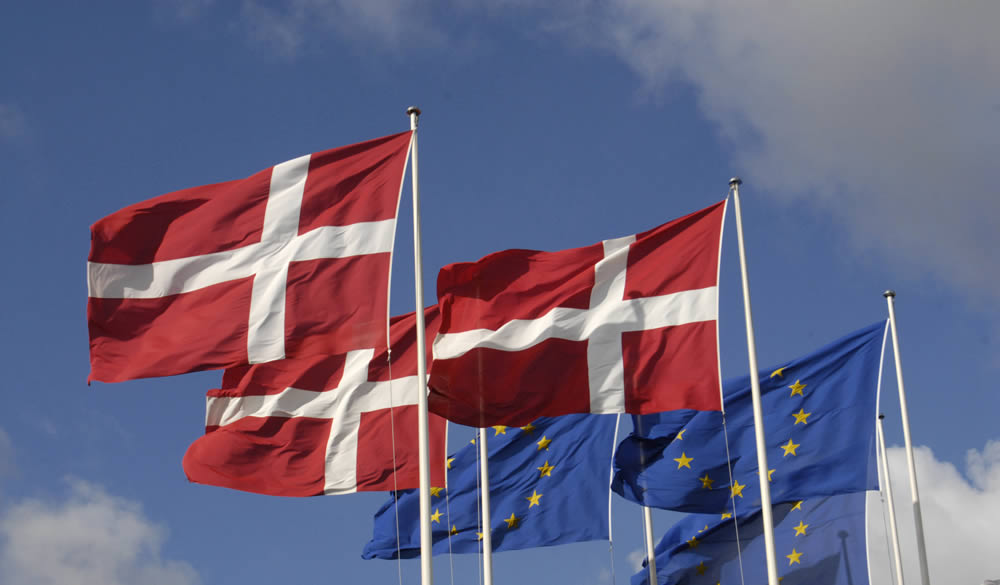
On Tuesday, July 1st, Denmark will take over the rotating presidency of the Council of the European Union from Poland. The official program will be unveiled by Prime Minister Mette Frederiksen about ten days earlier. There will be two main priorities, in line with the Polish semester: defense and security on one hand, and economy and competitiveness on the other. The first legislative proposals from Ursula von der Leyen’s Commission in these sectors have already been presented. It will be up to the Danes to lead negotiations between governments and between the Council and the European Parliament.
Denmark also intends to make progress on three other issues: migration policy, enlargement, and the next multiannual financial framework. However, the unpredictability of the United States under Donald Trump, Russia’s ongoing war of aggression against Ukraine, and the broader geopolitical context will force the Danish presidency to think outside the box. Trump’s obsession with annexing Greenland has already forced the Danes – who are used to planning and predictability – to change their mindset. The same principle will apply during the EU presidency.
Copenhagen’s diplomats have compiled a long list of current and potential crises that could impact the six-month term: a trade war between the United States and the EU, between the US and China, or between the US and the rest of the world; Russia’s war in Ukraine; Israel’s war against Hamas in Gaza; and the situation in Syria. Each of these fronts could evolve into a domestic EU crisis – economic, security-related, or migratory.
A failure to reach a deal on Trump’s tariffs would force Europeans to respond more forcefully, even at the cost of self-inflicted economic damage and inflation. A US disengagement from Ukraine would compel Europeans to assume full responsibility for its security. A new Syrian civil war could push millions of refugees toward Europe’s borders. The Danes are ready to shelve their agenda and bureaucratic dossiers to focus on managing one or more crises – wherever they may come from.
Some threats are internal, such as a potential veto by Hungary on renewing sanctions against Russia, which must be approved by July 31st.
Defense and Security
The goal in defense and security is to lay the groundwork for Europe to be able to defend itself independently by 2030. The Commission has already presented a rearmament plan. A deal has been reached on the €150 billion SAFE loan instrument. Slightly more than half of the member states have decided to invoke the national safeguard clause of the Stability and Growth Pact to spend an additional 1.5% of GDP on defense. Denmark wants to go further.
How it will do so depends on the outcome of the NATO summit of heads of state and government, but the Danish presidency will also push proposals linked to the broader concept of security: hybrid threats, cyberattacks, sabotage, recommendations from Sauli Niinistö’s preparedness report, and natural disasters.
Economy and Competitiveness
Denmark is betting that Trump’s tariffs will give new impetus to strengthen the single market and dismantle cross-border barriers. A figure cited in Copenhagen from the IMF estimates that if intra-European trade increases by 2.5%, it would offset the economic losses from 20% US tariffs.
Denmark will initiate negotiations on Commission proposals to completely phase out Russian oil and gas, but also wants to encourage investment in interconnections and energy networks. The Danish presidency aims to advance the capital markets union, which should provide the private investment needed to boost competitiveness. Copenhagen has already received encouraging signals from Paris and Berlin, particularly from Friedrich Merz’s government, after twenty years of German obstructionism.
During its previous EU Council presidency in 2012, Denmark succeeded in reaching a historic agreement on the banking union.
The G7, NATO, and EU Summits Test Western Unity
The G7 summit in Kananaskis, Alberta, Canada, from July 15 to 17, will be the first test of the unity (or perhaps the very existence) of the West as a political entity. Trump’s treatment of traditional US allies, all present at the G7, through his tariff policies, raises the worst fears.
The NATO summit in The Hague from June 24 to 25 will be highly uncertain. A tentative agreement has been reached to raise defense spending targets to 5% of GDP by 2034 (3.5% for military and arms, 1.5% for broader security), but it’s unclear whether that will satisfy Trump. Beyond the issue of American disengagement from Ukraine, the major concern is Trump’s potential withdrawal from European security – including the approximately 100,000 US troops stationed on the continent.
The outcomes of the G7 and NATO summits will fuel debates in Brussels ahead of the European Council on June 26 and 27.
New Rules for State Aid
On Wednesday, June 25, the Commission is expected to present the new framework on state aid, setting principles for public subsidies for the remainder of the legislative term. Between Trump’s tariffs, the push for stronger defense, and the need to support the climate transition, the Commission may keep the state aid tap wide open.
There is an additional and even stronger reason pointing in that direction: the German government’s plans on infrastructure and competitiveness. Economy Minister Katherina Reiche has said she hopes the Commission will understand Berlin’s need to subsidize industries such as chemicals and steel, given their importance to the EU economy. President Ursula von der Leyen always lends a keen ear to her compatriots’ advice.
The danger in giving Germany free rein is the destruction of the level playing field within the EU’s internal market.
Budapest at the Center of Foreign and General Affairs Councils
The Foreign Affairs Council on June 23 and the General Affairs Council on June 24 will feature Viktor Orbán’s Hungary as the main player. Foreign ministers will be called upon to discuss the 18th sanctions package against Russia and the extension of existing sectoral sanctions.
Their European Affairs colleagues must decide whether to open the first set of negotiation chapters for the EU accession process of Ukraine and Moldova. All three dossiers face Orbán’s looming veto. The level of exasperation among European partners has never been higher.
On renewing sanctions against Russia, a “Plan B” is being prepared to bypass a potential Hungarian veto. Regarding Ukraine’s accession, a group of member states is ready to change the current rules to avoid needing unanimous approval for every step of the EU entry process.