Ursula von der Leyen’s State of the Union
It’s the big “rentrée” moment after the summer break. Commission President Ursula von der Leyen will deliver her State of the Union address on Wednesday, September 16, before the European Parliament in Strasbourg. It’s the occasion to set priorities for the year ahead, but also to take stock of the year just gone. Traditionally, von der Leyen’s staff never lets anything slip, so as not to spoil the surprise. But the central themes are already known. Europe’s sovereignty and independence are expected to sit at the heart of the Commission president’s new political narrative. Ukraine remains one of the top priorities, now compounded by Russia’s direct threats against European countries. China will be flagged as the main economic challenge to guard against, despite the unpredictability of Donald Trump and his tariff policy. Among the many initiatives, von der Leyen could announce a ban on social media access for minors below a certain age.
The State of the Union will also be a chance to gauge how tired the European Parliament has grown after seven years of von der Leyen’s presidency. Her majority — made up of the European People’s Party, the Socialists & Democrats, and the Renew liberals — is growing ever more fragile and unstable. The center-left accuses von der Leyen of failing to rein in the EPP whenever it strikes deals with the sovereigntist right and the far right. A number of MEPs are pushing back over delays in implementing the recommendations of the Draghi report. In a speech in Paris in late August, von der Leyen claimed credit for having already opened six work streams (competition with China, the Savings and Investments Union, completing the single market, energy, artificial intelligence, trade agreements) and announced an industrialist turn. But the heatwaves recorded across the EU over the summer, and their impact on sectors like agriculture, could also give the Commission president an opportunity to reaffirm the need to press ahead with the Green Deal, albeit with a more pragmatic approach. Immediate challenges still await von der Leyen this autumn: the first is saving her proposal for the new Multiannual Financial Framework. Without sufficient resources for the EU’s 2028-34 budget, an independent Europe will remain a pipe dream.
António Costa’s “capitals tour”
September is when European Council President António Costa is working to build consensus among heads of state and government on the new Multiannual Financial Framework. Since late August, Costa has been on a tour of capitals, meeting the leaders of twenty-six countries (all but Sweden, which is headed to elections in mid-September) in an effort to reach a unanimous agreement by year’s end on the EU’s 2028-34 budget. Costa’s task won’t be easy. That much is clear from the stance taken by the frugal countries at a mini-summit called by German Chancellor Friedrich Merz in Berlin on Thursday, August 27. Germany, the Netherlands, Austria, Denmark, Finland, and Sweden issued a joint statement with an ultimatum: “To reach an acceptable landing zone, the Commission’s proposal of nearly €2 trillion must be cut by several hundred billion euros, in a balanced way.” Having already visited Slovakia, Estonia, Lithuania, Latvia and the Czech Republic, Luxembourg, Croatia, Hungary, Bulgaria, Greece, Cyprus, and Slovenia, the coming weeks of the “capitals tour” will focus on the key players: the leaders of the frugal camp and those of the Friends of Cohesion.
Mark Carney at the European Parliament
Canadian Prime Minister Mark Carney will also be at the European Parliament during the September session. He will be von der Leyen’s guest of honor during the State of the Union address, and will address the plenary the following day. After the breakdown of negotiations with the United States and the start of a tariff escalation with Trump, Carney has expressed a clear intent to significantly strengthen relations between Canada and the EU. His speech on alliances among middle powers at the World Economic Forum in Davos drew applause from many European leaders. His address to the European Parliament will be followed closely, in hopes of finding inspiration within the EU. There is, however, a fundamental difference between Carney’s approach and the one chosen by Ursula von der Leyen and the EU’s heads of state and government toward Trump: Canada’s prime minister has chosen a position of strength, accepting the economic costs, to resist the Maga president’s economic imperialism; the Europeans, by contrast, have chosen to give in meekly to his demands, settling for a tariff deal that is decidedly disadvantageous to the EU.
Elections in Sweden and Saxony-Anhalt
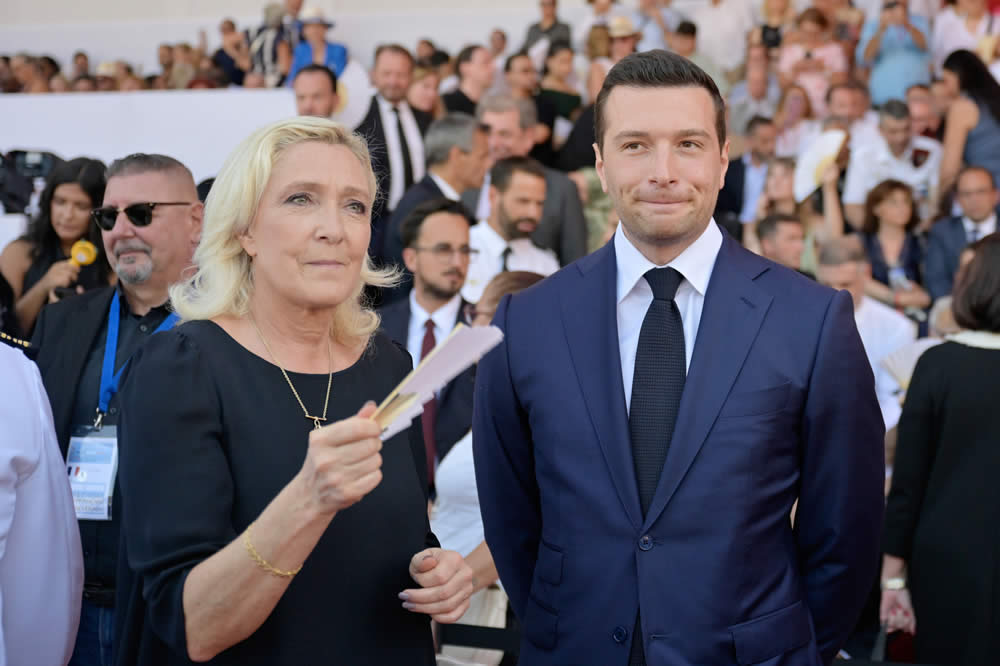
Sweden will open a new 2026-27 election season fraught with risk for the European Union. France, Spain, Italy, Poland, and Greece are among the member states heading to the polls over the next year and a half, at a time when far-right parties are gaining ground everywhere. The EU’s greatest fear is the election of Marine Le Pen in France’s presidential race. On Sunday, September 13, Swedes are expected to vote in a change of government, returning power to the Social Democrat Magdalena Andersson after four years of conservative government led by Moderates leader Ulf Kristersson, backed externally by the far-right Sweden Democrats. The implications for the EU will be limited: support for Ukraine is a consensus issue in Sweden, as is closing the borders to irregular migrants. Andersson will be an ally of Italy’s Giorgia Meloni and Denmark’s Mette Frederiksen on that front. The implications for the EU could prove more serious in the election in the German state of Saxony-Anhalt on Sunday, September 6. The far-right AfD (Alternative for Germany) could win control of a state government for the first time, dealing a heavy blow to Friedrich Merz’s grand coalition. The AfD’s rise in national polls and in state-level elections could push the chancellor toward more hardline positions in Brussels.