It has been a trying time for Europe, with tariffs and threats to NATO from the Trump administration, the Russians at its doorstep, the fallout from the wars in the Middle East, and anti-European forces gaining ground. There are also positive signs, such as Viktor Orbán’s electoral defeat in Hungary, the British government’s second thoughts on Brexit, and an EU unemployment rate at an all-time low. So, how is Europe feeling? To answer this, we can sometimes turn to the seventh art: after all, May is the month of cinema, with the film festival season kicking off in Cannes and concluding in Venice in September. That is why we asked experts and voices from the international press which film, or films, best capture Europe and Europeans today.
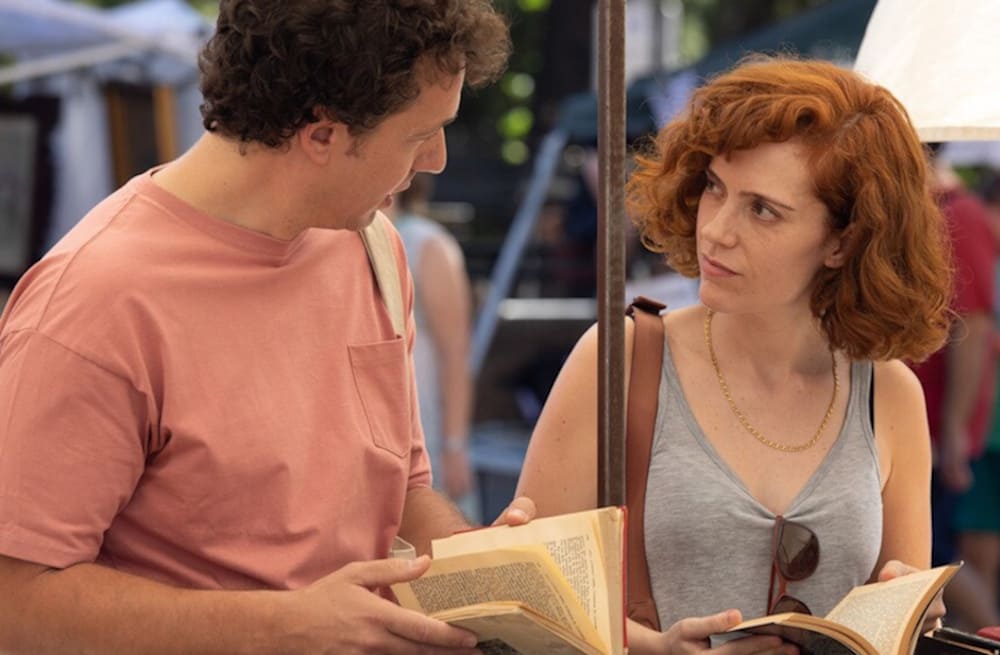
“The Other Way Around” or “Volveréis” from 2024 is a Spanish film that depicts Europe today to me. Two artists, in love or not in love, charting a course through the middle of life in everyday Madrid, navigating family and art and real estate. Alex and Ale are trying to figure out how to end their relationship, or perhaps by ending it, continuing it. Itsaso Arana and Vito Sanz are drily brilliant. This film is an emblem of what we might call Europeanism to me because it so deeply engages the life of the mind and the heart and the body, rather than the violent, dramatic themes of our era — it preserves the importance of simple, personal life. Compare that to American films glorifying late capitalism and war, or all those films that cast creativity as a purely consumerist endeavor. “Volveréis” made me believe in the mundane life of the artist again.
Kyle Chayka, staff writer at The New Yorker
A rosy façade and vanilla walls— “The Grand Budapest Hotel” was an obvious choice when Il Foglio Europeo invited me to take part in this assignment. In it, Wes Anderson presents, with both precision and a touch of nostalgia, a certain idea of Europe, while also delivering a powerful manifesto against fascism and totalitarianism.
The relationship between Monsieur Gustave, played by an outstanding Ralph Fiennes, and his protégé Zero is beautiful and heartwarming, encapsulating the power of friendship in the darkest moments of history. Wes Anderson may be an American, but his style draws on Stefan Zweig and delivers what I consider a true European classic. On a personal note, whenever I’m feeling sad, it’s my go-to film.
Maria Tadeo, chief Europe editor at Euronews and former Europe correspondent for Le Grand Continent
“Visages village” (2017, France), a documentary by Agnès Varda and the artist JR, follows the multigenerational duo around rural France, where JR takes large-scale photographs of people then plasters them on buildings. The film captures a sense of place and people’s fundamental need to be seen and valued. I think of this film every election season.
Matteo Garrone’s “Io, capitano” (2023, Italy), which follows two teenagers from their native Senegal through gruesome Libyan camps and finally on the boat to Italy, is the most vivid representation I can think of in contemporary cinema of migration to Europe — arguably the single greatest issue reshaping and redefining European politics today.
Not only did “Toni Erdmann” (2016, Germany), Maren Ade’s hilarious father-daughter comedy, put Sandra Höller on the international map, it is a subtle commentary on the clash between the idealistic 1968 generation and its capitalist children, and the impact of neoliberalism on Romania. I would also add Christian Mungiu’s excellent GRADUATION (2016, Romania), on the moral dilemmas and compromises of post-Communist Romania.
Alice Rohrwacher’s marvelous “La Chimera” (2023, Italy) is a haunting, unassuming film that speaks of the inescapable presence and persistence of antiquity and mythology in the contemporary Mediterranean — and what is more European than to live with the ghosts of the past?
Rachel Donadio, Paris-based American journalist, contributing writer at The Atlantic, former NYT Rome Bureau Chief
“The Worst Person in the World” (2021). Joachim Trier’s romantic dramedy is one of the best contemporary coming-of-age films about the challenges of settling down in a modern urban world with limitless (but, crucially, flawed) career and romantic options. The movie speaks to a similar moment in life as American television shows like “Girls” and movies like “Frances Ha”, but with a distinctly European slowness; the cutthroat financial pressures of New York City squeezing Hannah Horvath and Frances Halladay don’t weigh nearly as heavily on Renate Reinsve’s Oslo-based Julie, whose demons are more existencial and emotional than economic. Scandinavian tourism certainly also owes Trier a major thank you for his portrait of a design-y modern Norway with beautiful people drenched in dreamy natural light.
Max Tani, Semafor media editor, former Politico White House correspondent.