The stuff of legends
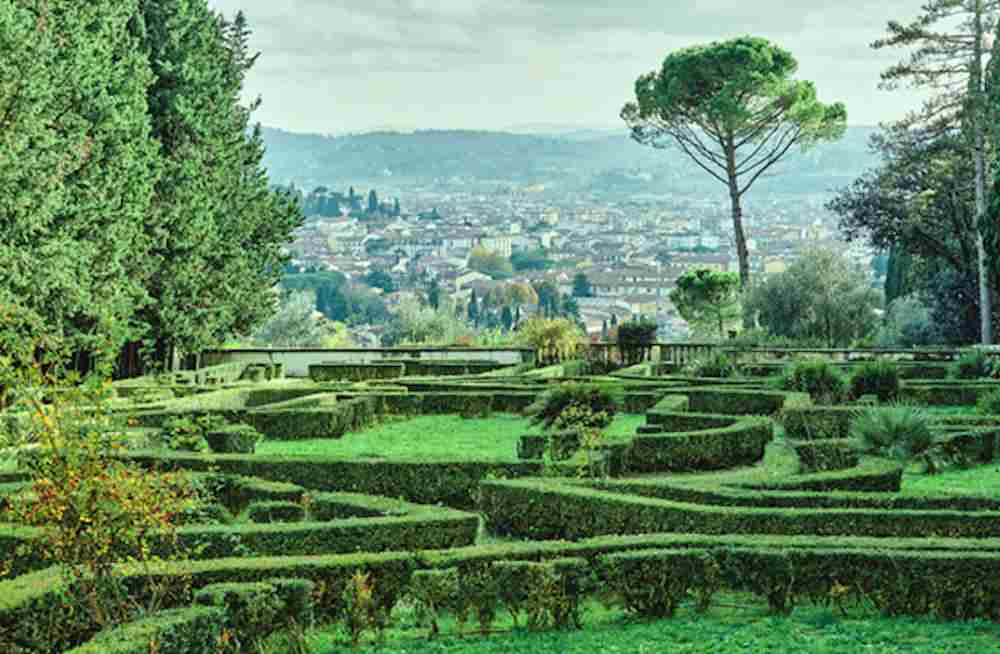
Many legends surround the European University Institute (EUI) and its Florence campus. Some are whimsical, others macabre. One says that in the gardens of Villa Schifanoia, Boccaccio wrote the Decameron, daydreaming of lustful encounters in the Florentine heat. At Villa Salviati, the tale goes, a noblewoman ordered the murder of her husband’s mistress, and her severed head was delivered to him in a basket. At Palazzo Buontalenti, a Medici heir was said to dabble in alchemy, chasing the philosopher’s stone.
Charming, dramatic, even unsettling – but all grounded in history. Which is why it feels odd that The Economist, in a recent profile, chose instead to compare us to British fantasy. Picturesque, yes. Accurate, hardly. The EUI I lead is, in fact, serious business.
For readers less familiar with us: the European University Institute was founded in 1972 by the member states of the European Community as the one university created specifically “for Europe”. It welcomed its first 70 researchers in 1976, long before the European Union as we know it today existed. Our campus is like Europe in miniature, where scholars and citizens are formed free from a single national perspective. Conceived alongside the EU’s political, economic, and judicial pillars, the EUI was designed as a unicum in the academic landscape: an intergovernmental organisation and a multinational university where Europe could reflect, study itself, and imagine its future. Today, it brings together scholars, policymakers, and practitioners from across the continent and beyond – a transnational hub of ideas and reflective practice.
The charm of our setting is not lost on us. But universities are peculiar, fascinating places for other reasons. In their purest form, universities are worlds apart from governments, businesses, or think tanks: they do not exist to deliver short-term answers, easily measurable results, nor do they bend to performance indicators or sales targets. At universities, innovative ideas circulate like currency; the young are forged in science and tempered by the classics. On campus, the act of studying, theorising, and researching is often a goal in itself – sometimes far removed from immediate application, yet essential to the long-term progress of societies.
At a time when the very existence of some universities in Europe and across the Atlantic is under threat –stripped of funds, bent to political will, replaced by vocational shortcuts, and challenged from within by the unchecked rise of AI – the defence of curiosity-driven research is vital.
Reimagining Europe together
What is the relevance of research not directly linked to tangible problems in a world plagued by conflict and crises? The question is, of course, justified. And one that has been haunting us and all other universities alike. What can academia contribute to solving the very practical challenges facing humanity today? An EUI-authored study on silk consumption and dressing practices in late-medieval Catalonia, mentioned somewhat tongue-in-cheek by the Charlemagne column, can help to illustrate the point. The research shows an early form of European regional integration driven by the movement of artisans, the diffusion of technology, and shared elite fashion tastes. It is a powerful reminder that integration often begins with shared practices, economic exchange, and cultural aspirations, not with treaties – but also that the circulation and consumption of a single commodity can integrate the lived geography of a region.
In the 1950s, Jean Monnet, the intellectual father of the EU, identified coal and steel as the “one precise point which leads to everything else”. He thought that the mutualisation of these commodities between Germany and France could put the continent on the path of unity and prosperity – and he was right. In a sense, the EU exists thanks to the type of phenomenon the silk consumption paper investigates.
The gist of the matter is: when we speak about coal and steel in the 1950s, we do not speak only about a commodity or technology; we speak about a driver of societal transformation. The same was the case with silk around the Mediterranean in the 1500s. In both cases, governments realised the transformative potential – economic, political, and otherwise – of that single commodity or technology, and decided to rein them in. Today, Europe’s governments should come to a similar realisation when it comes to a 21st-century “commodity” transforming our lives: digital infrastructure.
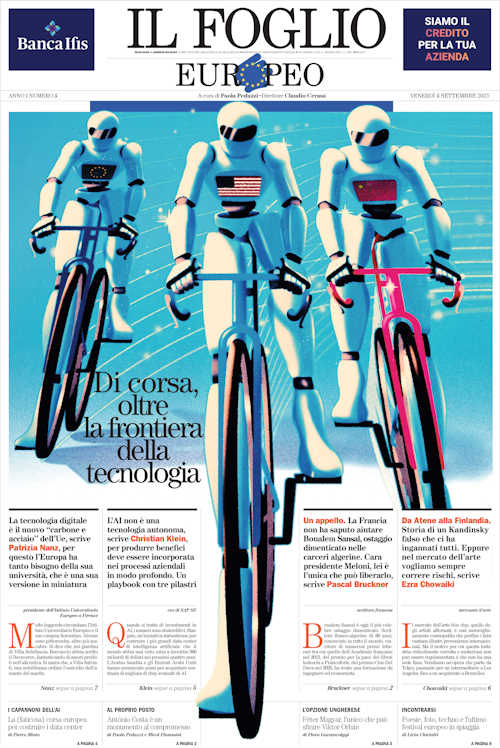
In today’s world, digital infrastructure is not just a technology, but a driver of social transformation. Political and democratic control over this tool – or what is called “digital sovereignty”– is a precondition for competitiveness, security and resilience, social cohesion, and democratic governance. Especially Artificial Intelligence (AI) is increasingly shaping economies and geopolitical power – and the EU is vulnerable with the US and China leading the charge. EU institutions are pushing for investment into European AI systems as a strategic lever for European competitiveness, but Brussels fails to fully grasp how developing digital infrastructure, such as AI, is much more than an economic question. Being able to develop and control critical infrastructures, including relevant AI systems, is a precondition for being sovereign – to safeguard Europe’s capacity to govern on its own terms, to shape EU and member state markets, to enable Europeans to decide for themselves how they want to live. Trump knows it full well, and so does China.
To cut a long story short, the social sciences and the humanities are essential to understand the link between technology and social transformation. Recognising digital technology as the new “coal and steel”, an EUI budding tech hub will conceptualise what European technological sovereignty could and should mean. The new initiative at the Institute will analyse how digital sovereignty interacts with other policy domains and political dynamics; and build blueprints for the digital infrastructures and the institutions necessary to create, fund, and maintain them. And who knows what kind of historical examples will inspire us to do so this time.
Today, the EUI strives to reinforce its role as an open and reflexive community at the critical intersection of academia, politics, and society, bringing together worlds that are too often separate. Rather than just coming up with a cure for the symptoms, we offer the space to linger on questions about the causes. To dive deep enough to be able to identify the dynamics and interconnections of challenges and develop new scenarios.
Across Europe, illiberal and anti‑EU parties are gaining ground. That makes debate, the one grounded in science and facts, even more essential. What scholarship demands of us is to engage with different perspectives, including those that are illiberal and anti-EU, openly and critically. The EUI was never meant to endorse any political view or movement, liberal, nationalist, or otherwise. Our role is to scrutinise them, to test their claims against evidence and history, and to expose their implications for Europe’s future. That is how common ground is found, or at least how differences are better understood. A polarised Europe needs to have these science-based conversations to broaden a shared understanding of the problems it is facing. To connect to the earlier point on digital technologies: take sovereignty, for instance. The buzzword of sovereignty creates unease, as it is also claimed by nationalist governments questioning European integration and EU institutions. But if we were to articulate what European sovereignty could be, how it could serve the interests of member states and how it could be enacted in practice – via, for example, the development of European digital and AI infrastructure –, we would find a common denominator for bold political action.
The future
This September, the State of the Union debate in Strasbourg is setting the agenda for Europe’s future, including the role of research and innovation. The EUI takes an active part in this ongoing conversation. The discussion is a reminder that universities are more than charming places, with their classrooms and libraries, but strategic actors in Europe’s competitiveness, sovereignty, and identity. It underlines what we at the EUI know well: that higher education is central to Europe’s resilience – connecting research and practice, shaping citizens, and providing the thought leadership that has long guided Europe through its darkest hours.
Next year, the EUI will celebrate its 50th anniversary. Much like Europe, we are ever-changing, hard to define, and impossible to replicate. Earlier in 2025, we adopted a new vision: to remain faithful to our founding mission while adapting to a world transformed by technology, geopolitics, climate change, as well as by ageing populations and migratory movements. Europe does not only need armies, markets, and treaties. It needs places that connect across disciplines, sectors and generations; places where the future can be imagined – and shaped. That is what the EUI was built for. And that is why, fifty years on, we continue to help Europe make sense of itself and face the future.