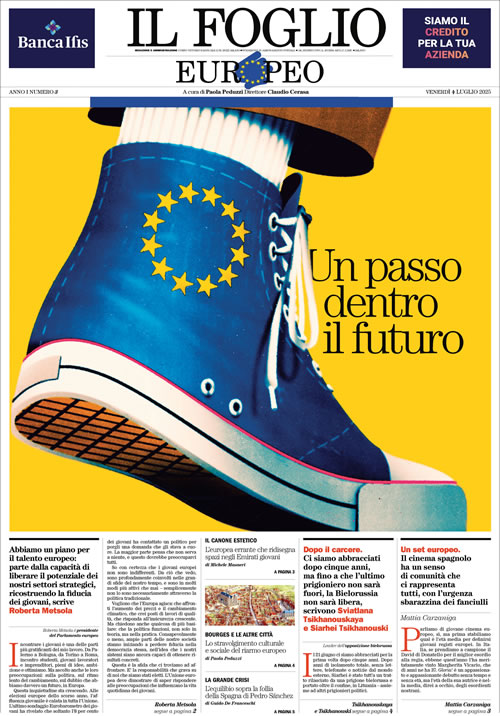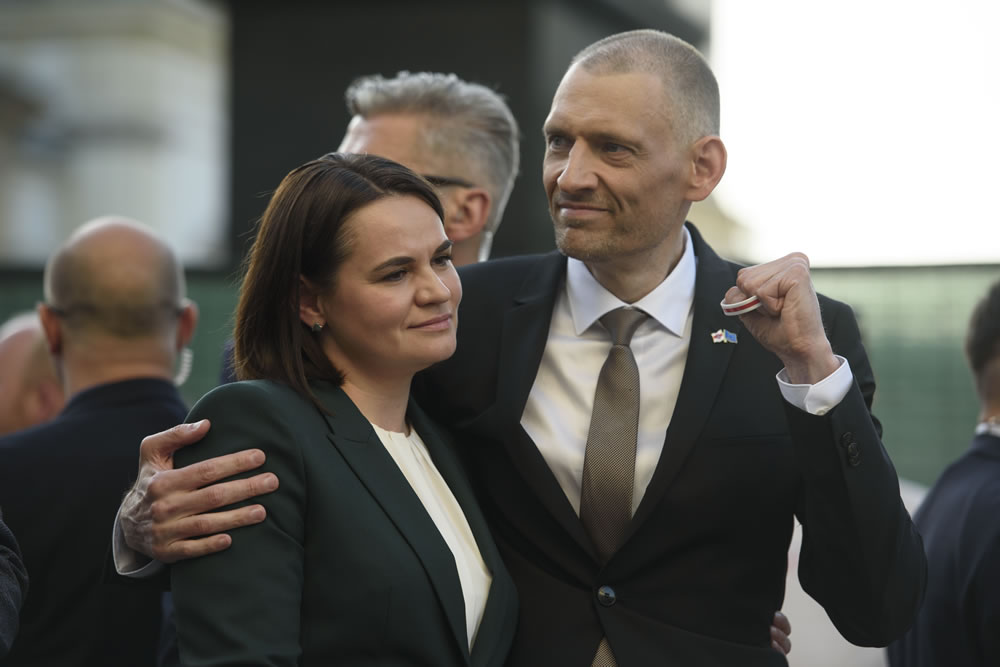
On June 21st, we embraced for the first time in five years. After years of total isolation, with no letters, no calls, and no word from the outside world, Siarhei was suddenly released from a Belarus prison and brought across the border into Lithuania—together with other political prisoners.
We had no warning. No chance to prepare. The first sign of life came as a phone call: “I’m at the border.”
When our nine-year-old daughter saw her father, she didn’t recognize him. He had lost half his weight. The man who had once carried her on his shoulders was a stranger now. She hesitated—until he spoke. Then she ran to him, and we all cried.
Siarhei had spent nearly five years in solitary confinement. I spent them in exile. His letters never reached us. Ours never reached him. We didn’t even know if he was alive.
Reuniting was overwhelming—but it didn’t mark the end of our struggle. It reminded us how far we still have to go.
Siarhei’s release was made possible by international pressure, determined diplomacy, and tireless advocacy. We are especially thankful to President Trump, the U.S. Administration, and our European allies for their efforts and engagement.
Italy is one of our closest allies and we are full of gratitude for all your support. Not just from the Italian government, but also from members of parliament who joined the friendship group for democratic Belarus, civil society, journalists and mayors—your solidarity has touched us deeply.
We are especially thankful to Prime Minister Giorgia Meloni, Deputy Prime Minister Antonio Tajani, Senator Giulio Terzi di Sant’Agata and Filippo Sensi, Deputies Andrea Quartapelle, Benedetto Della Vedova and Debora Bergamini.
Your commitment to human rights and freedom in Belarus is a true example of democratic leadership. You have reminded us that Europe has not forgotten Belarus.
And we are profoundly grateful to everyone who spoke out—those who raised his name in meetings, wrote letters, stood outside embassies, and refused to let his story be forgotten.
But we also know the truth: his release is an exception, not a solution.
Today, more than 1,100 political prisoners are still behind bars in Belarus. Some were arrested for joining peaceful protests. Others for writing articles. Still others simply for speaking Belarusian, or for having the wrong sticker on their laptop. Among the imprisoned are Nobel Peace Prize laureate Ales Bialiatski, Maria Kalesnikava, Maksim Znak, Ihar Losik, and hundreds more.
Many are suffering under the most inhumane conditions.
Siarhei spent most of his sentence in solitary confinement. Not for disciplinary reasons, but as a method of pressure and isolation. He was denied medical care. He suffered from cold, from hunger, from untreated illnesses. Guards told him again and again: “You will die here. You are forgotten.”
But he knew he wasn’t forgotten. He held on—because he believed that Belarusians had not given up.
His story is not unique. Harsh treatment, psychological torture, and medical neglect are widespread in Belarusian prisons—especially for political detainees. The death of Russian opposition leader Alexei Navalny in custody in 2024 served as a warning to the regime in Minsk: the international consequences of another death in prison might be too high. We believe this is why Siarhei and others were kept alive.
This is not a system of justice. It is a system of fear.
We are under no illusions about why the regime released Siarhei now. This was not an act of compassion. It was a political calculation—an attempt to test the waters with the West. In recent months, the regime has pardoned several hundred prisoners. However, these individual cases cannot obscure the broader picture: repression continues. Independent media is still banned. Human rights groups are dismantled. And the regime continues to arrest and intimidate.
Some observers suggest that Siarhei’s release could lead to rivalry or tension within the democratic movement. That is not the case. We are united—as a family, and as political allies. We share a goal: to see a free and democratic Belarus. Nothing matters more than that.
We also recognize that Belarus does not exist in isolation. The fate of our country is intertwined with the fate of Ukraine—and with the broader struggle for democracy in the region. Since 2022, Lukashenka has made Belarus a staging ground for Russian aggression. His regime has enabled the invasion of Ukraine, allowing Russian troops and missiles to launch from Belarusian soil. He is turning our country into a weapons factory for Russia and helping to circumvent sanctions.
Lukashenka survives today because of the Kremlin’s political and economic support. If not for Vladimir Putin, the Belarusian people would already be free.
That is why the international community must not treat Belarus as a separate or secondary issue. Supporting Ukraine and standing with Belarus are part of the same fight.
So what can be done?
First, keep pressure on the regime. Sanctions must remain in place—and should be extended where needed, particularly to those financing repression. The regime’s elite and its enablers must not be allowed to travel, invest, or launder their reputations abroad while continuing to violate basic human rights at home.
Second, link any normalization of relations with tangible progress, starting with the full and unconditional release of all political prisoners. Not some. Not the most famous. All of them.
Third, support Belarusian civil society, independent media, and democratic institutions in exile. Despite enormous challenges, a resilient movement for change continues to operate from abroad. It needs resources, protection, and political recognition.
And finally, recognize the importance of justice. Impunity only encourages further crimes. We continue to support the creation of international mechanisms for accountability. Belarusian victims deserve truth, justice, and, eventually, reconciliation.
We know change will not come overnight. But we also know that it is possible. If Siarhei’s release has reminded us of anything, it is that pressure works. Persistence matters. Solidarity makes a difference.
To the families of those still imprisoned: we share your pain. We will continue to fight for your loved ones as others fought for Siarhei.
To the political prisoners: your courage inspires us. You are not alone. We will not rest until you are free.
And to the international community: this is a moment of opportunity—but also a test of resolve. Belarus cannot be stabilized through appeasement. It can only be changed through sustained commitment to democratic values.
Let this reunion become a turning point—not only for our family, but for our country.
Until the last prisoner walks free, Belarus will not be free.