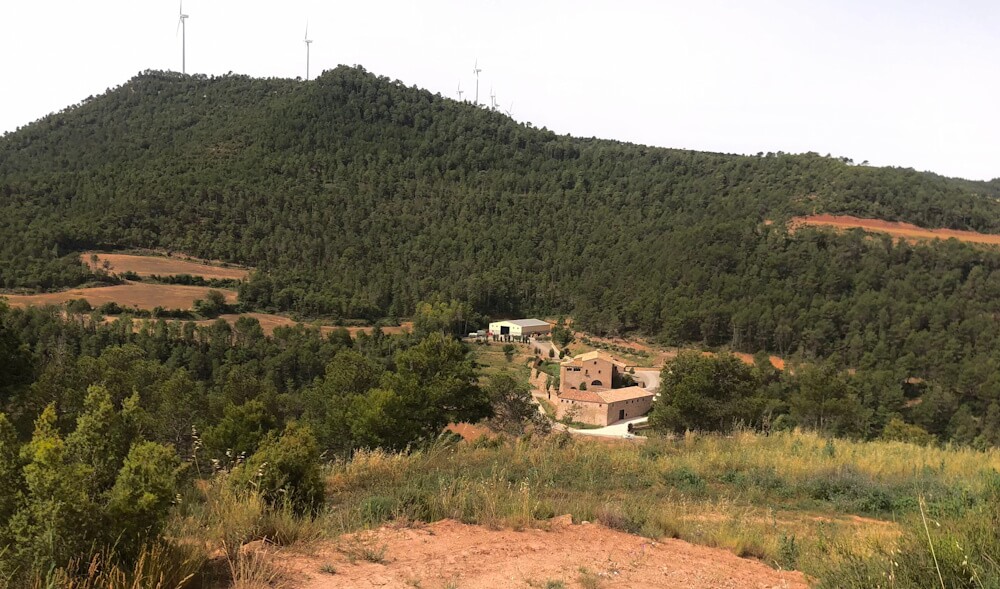
These past weeks we’ve learned the frightening technical vocabulary of wildfires: firestorms, zombie fires, pyrocumulonimbus clouds. Climate conditions are becoming more extreme and fires are increasing: in 2026 alone, Spain and France have seen more than 300,000 hectares burn — an area equal to twice the size of Rome. Take Les Landes, in Gironde, in southwestern France: a rainy winter produced abundant vegetation, then a dry spring and a scorching summer dried it out, turning it into perfect fuel.
Europe is the fastest-warming continent, and faced with forests reduced to powder kegs, destroyed ecosystems, hundreds of thousands of people evacuated, and the despair of exhausted firefighters, the question isn’t how to put out fires faster — it’s now clear that existing protocols are outdated in the face of blazes of this scale — but how to change the approach to forest management. What’s needed are more protective buffer zones around inhabited areas and firebreak strips within the woods. According to Arthur Guérin-Turcq, a Sorbonne geographer who studies the 2022 Gironde fires, it’s essential to break up the continuity of the forest, diversify land use, and break the taboo around monoculture. Les Landes is the largest commercial forest in Western Europe, an expanse of maritime pines grown intensively for timber and paper (and cardboard for packaging — environmentalists call it the “Amazon forest”). Rather than hastily replanting pines, the geographer argues, crop rotation should be respected and diversified with broadleaf trees, which retain more moisture, as well as pasture and agriculture. The point is that European countries can no longer act only reactively during emergencies; they need to develop a forward-looking strategy of prevention and adaptation. Wine — or rather, viticulture — can play a key role in this. A well-tended vineyard actually functions as a firebreak corridor: green vines burn more slowly, the space between rows (the cleaner, the better) slows or blocks flames, and the rows themselves become strategic corridors for movement and water access.
This research is being carried out by Fire Wine, a project launched in Catalonia by the Centre de Ciència i Tecnologia Forestal de Catalunya (Ctfc) as part of the European FIRE-RES initiative, which is developing an integrated wildfire management strategy for Europe. Today the project has expanded to Galicia, the Canary Islands, France, Portugal and Italy, studying how vineyards reduce fire risk, how to involve producers, identify strategic zones, offer training and funding to reclaim abandoned land, and design a “mosaic” landscape where vineyards alternate with forests, pastures and other crops.
In 2025 Fire Wine became a certified label: wineries that clear vegetation between and around the rows and maintain buffer strips can earn the “Fire Wine Resilient Landscape” and “Fire Product Resilient Landscape” certifications. Soazig Darnay, a landscape architect at Ctfc and the project’s lead, tells Il Foglio Europeo that more than 40 producers are now involved, through a mix of individual agreements, partnerships with producer associations, a consortium, and a protected designation of origin (DOP). The project is still too young for precise impact data — only in Catalonia have priority areas been mapped so far — but it’s widely recognized that keeping rural activity alive has a positive effect on risk management. The research is based on biomass density per hectare, Darnay explains: well-maintained, cultivated plots can change fire behavior compared with continuous forest areas carrying heavier fuel loads. She cites as an example the sustainable winegrowers’ association Mes 500, in Pla de Manlleu, which worked with local fire services to fold agricultural plots into their strategies.
But for producers to actually seek out the label, it has to be worth their while. Darnay says it’s first and foremost a matter of recognition: many producers today find themselves isolated in the face of an overwhelming risk, without enough institutional support, feeling that their situation on the ground isn’t fully understood. Coming together, she says, is about more than networking — it marks a shift from individual vulnerability to collective recognition, since sharing experiences helps overcome practical obstacles and brings visibility to shared challenges that are still largely underestimated. The certification, she adds, helps legitimize farmers’ central role in prevention, and the fact that it’s led by Ctfc lends it scientific and technical credibility, challenging the traditional divide between agriculture and forestry. Each producer who signs on can create a ripple effect across a territory, which is why the project seeks to mobilize local players who already carry influence. In Galicia, for instance — hit hard by fires last summer — an agreement was signed with the Martín Códax cooperative in the Val do Salnés, which reflects the region’s collective management systems and brings together more than 500 families who grow mainly Albariño, a native variety that thrives on granite soils exposed to salty Atlantic winds. The collaboration stands out because the cooperative’s model centers on “agroforestry polygons” — areas where crops, fruit or timber trees, and wooded pastures are combined on the same plot of land in an integrated way. In Catalonia, meanwhile, in the Pla de Bages DO, many vineyards sit within forests dominated by Aleppo pine, which is highly vulnerable to fire. Among them is the Abadal estate, already a case study for how it slowed the 2017 fires and the first winery to join Fire Wine. It’s still too early to gauge the label’s commercial impact, but Fire Wine will be at the upcoming Barcelona Wine Week — a sign the topic has spilled beyond technical circles. And, in fact, beyond viticulture too: the model can be adapted to different farming systems depending on the local context. A New York Times article from June describes the involvement of a truffle producer, and Darnay adds beekeepers, olive oil cooperatives, and, still at an experimental stage, cherry growers to the list. The European way of life: eating and drinking well, while slowing down the fires.