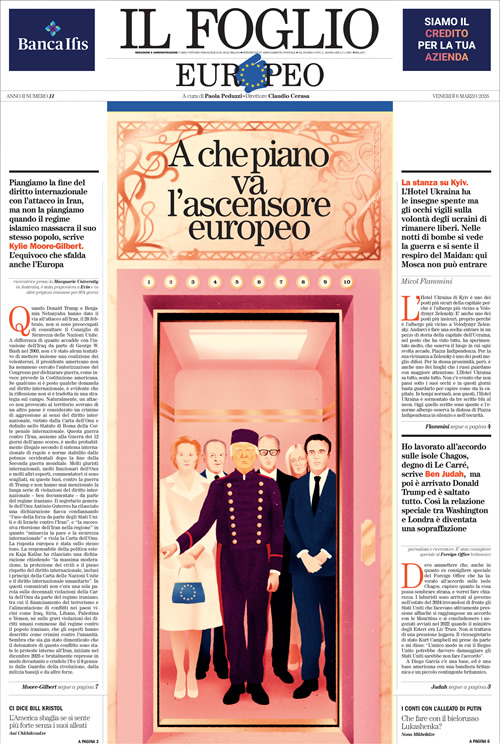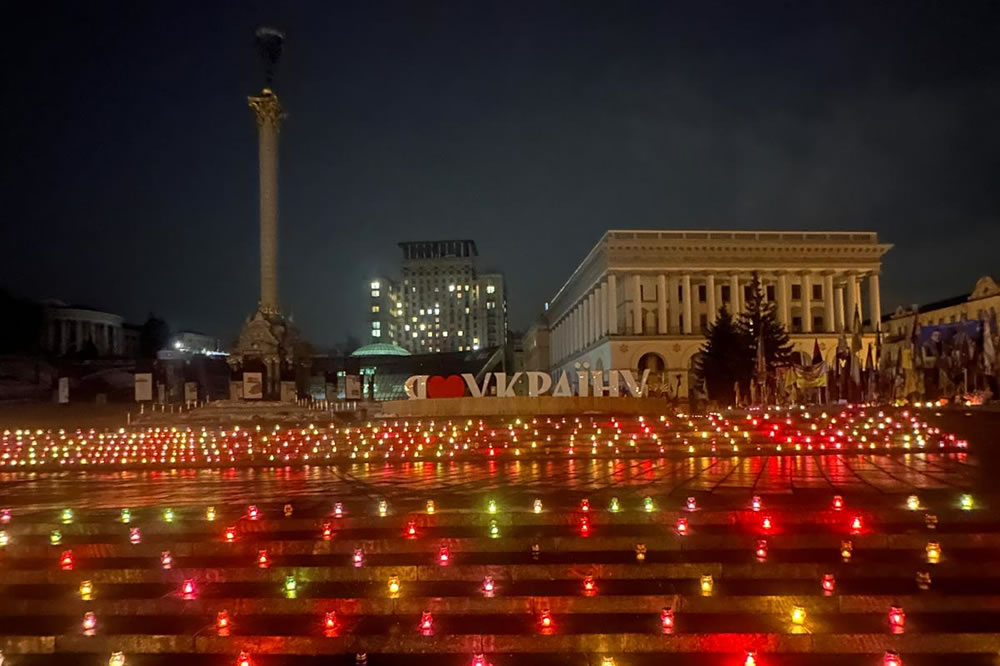
At the entrance, behind the long reception desk from which a blonde girl’s head pokes out as she welcomes guests with quiet kindness – no broad smiles – there are clocks showing the time in various cities: Beijing, Berlin, London, New York. Moscow time is not among them. On 24 February 2022, when Russia launched its full-scale assault on Ukraine and directed its army toward Kyiv, the Hotel Ukraina waited, as did the rest of the country. After the attack began, it emptied out; the last guest left his room on 26 February. Then the Hotel Ukraina’s waiting grew heavy, every minute weighing like hours, because anyone who knew the building understood that the Kremlin’s men would pour into the hotel and perhaps, advancing toward the institutional area around Mariinsky Palace, the seat of the president, would occupy its rooms as their headquarters. Sandbags were placed in front of the main entrance. They seemed destined to remain there forever, blocking the doors of the colossus on Independence Square – but today the entrance is open, and the signs of war are of a different kind: the darkness, the silence in this building that remained state property until 2024, when it was sold to fund the resistance against the Kremlin.
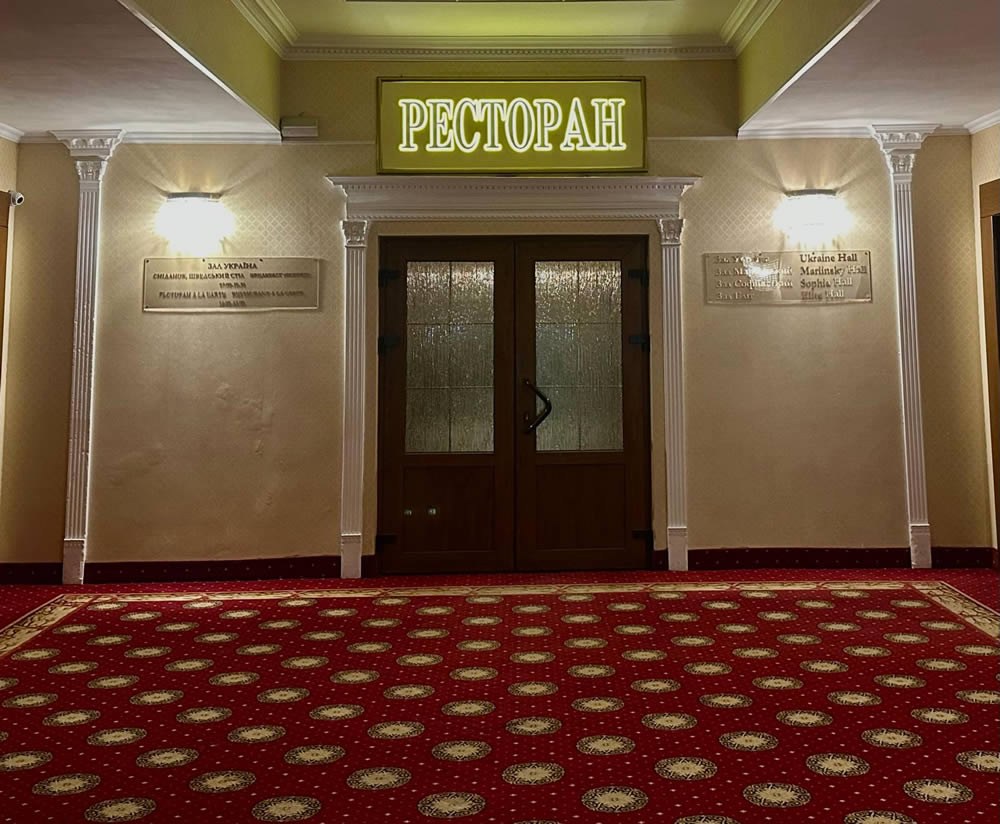
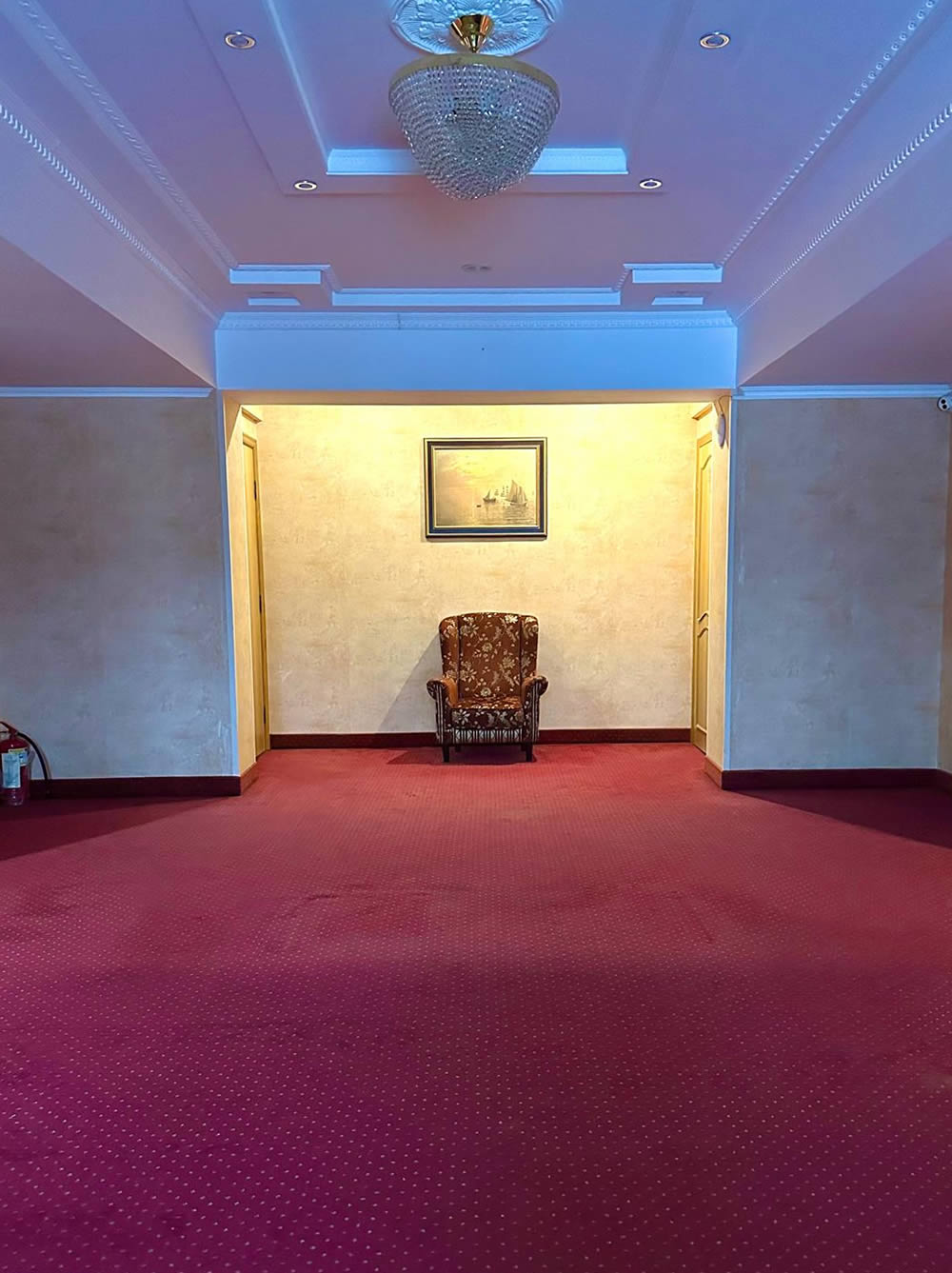 One cannot say the Hotel Ukraina is full – in the breakfast room, finding a seat is easy. In that same room one can have lunch or dinner in complete solitude, looking out over a snow-covered Independence Square, feeling like a sentinel, stepping into the history of this place that is at once privileged and ill-fated. Burgundy carpet covers creaking floors; all the doors lock with a key; there are no key cards to slot into light switches. Everything is as it was. So too the waitresses, who move in groups, in flocks, wearing a new uniform that looks like the thousandth copy of the one their predecessors must have worn in 1955, when the hotel first opened. The bouffant hairstyles, the vivid shades of hair dyed too red or too blonde, also carry you back seventy years. You walk into the Hotel Ukraina and find yourself in Soviet-era Kyiv. You walk out and return to modern Kyiv – the Kyiv that innovates, that invents, that shoots down the enemy’s drones. Yet the sense of the past is not a sense of shrivelling. The Hotel Ukraina’s time is not dying; it is alive, it is tended. It is as though the building has remained trapped in time, but without ageing. The floor numbers that light up on the lift, illuminating alternately, seem to announce entry into different worlds. On the minus-one floor is the shelter where guests run at night in the event of a Russian attack, equipped with blankets, water, and an internet connection. On the seventh floor there is a seamstress who cuts, sews, and mends. On the second floor is the restaurant, offering a menu of traditional Ukrainian dishes with international touches. Everything speaks of times gone by, and seems to keep a secret.
You reach the Hotel Ukraina along the road that, after 2014, is called Heavenly Hundred Street, dedicated to the protesters killed during the Euromaidan protests. To get to the hotel you walk uphill, past images of men, women, young and not so young – all dead for a free, new Ukraine that does not show Moscow time. It is curious, but when you speak with those who made the revolution, with those who were in the square during those months, you often sense a feeling of victory: it was a tragedy, a hundred people died, but they won, they drove out the Kremlin’s man, they held free elections. It was the first act toward a freedom that Ukrainians are still paying for with their blood. Of this sacrifice, the Hotel Ukraina has been witness, hospital, and executioner. In the lobby – where today a red carpet is laid out and soft armchairs are arranged – during the final month of Euromaidan, in February 2014, there was a field hospital. In its upper floors, on the rooftop that cannot be accessed today because it is one of the most closely monitored spots in the city, snipers were positioned, firing down on the revolution. In 2004, when Ukrainians took to that same square – Independence Square – to protest against the election results that handed victory to Yanukovych, the same Kremlin man they would reckon with ten years later, the Hotel Ukraina frequently sheltered his challenger, Viktor Yushchenko.
 Both refuge and sentence, the Hotel Ukraina has the look of a building left half-finished. It resembles other buildings of the Stalinist era, such as the Seven Sisters of Moscow or the Palace of Culture in Warsaw. But it is as though the architects forgot something. The original plans called for twenty-one floors, but the Central Committee of the Communist Party decided that the structure should curb its excesses. The floors were scaled back to fourteen, and today the building looks as though it is missing its top – as if it needed a hat placed on it at any moment. When it opened, it changed the Kyiv skyline forever, but its position carried a meaning. Its original name was a message: it was called Hotel Moskva – Hotel Moscow – and that name was like an eye fixed on the heart of the Ukrainian capital, a declaration that Russia dominated Kyiv. It could have been a hated building, rejected – a place that Ukrainians might fight against, as the Poles do with the Palace of Culture in Warsaw, Stalin’s unwanted gift, which the people of Warsaw surround with ever-taller buildings in an effort to obscure it. But no: Ukrainians left the hotel exactly where it stood. Tearing it down never crossed their minds; covering it up never occurred to them either. They simply changed its name: Hotel Ukraina.
The pale blue lettering is dark today, switched off because of Moscow’s attacks; few windows are lit. On nights of bombardment, you can watch the war pass over the city centre. From inside the rooms it feels as though you have eyes over all of Kyiv, as though you can hear Independence Square breathing. You enter a history and everything becomes clear: Moscow cannot enter here.