An extraordinary European Council on the budget
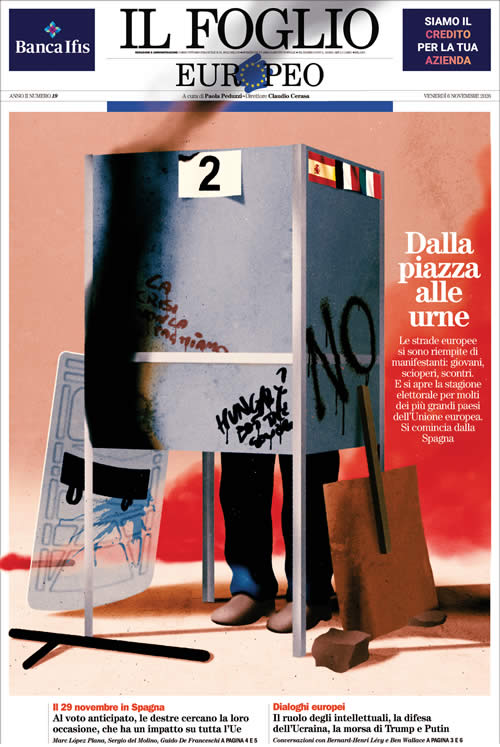
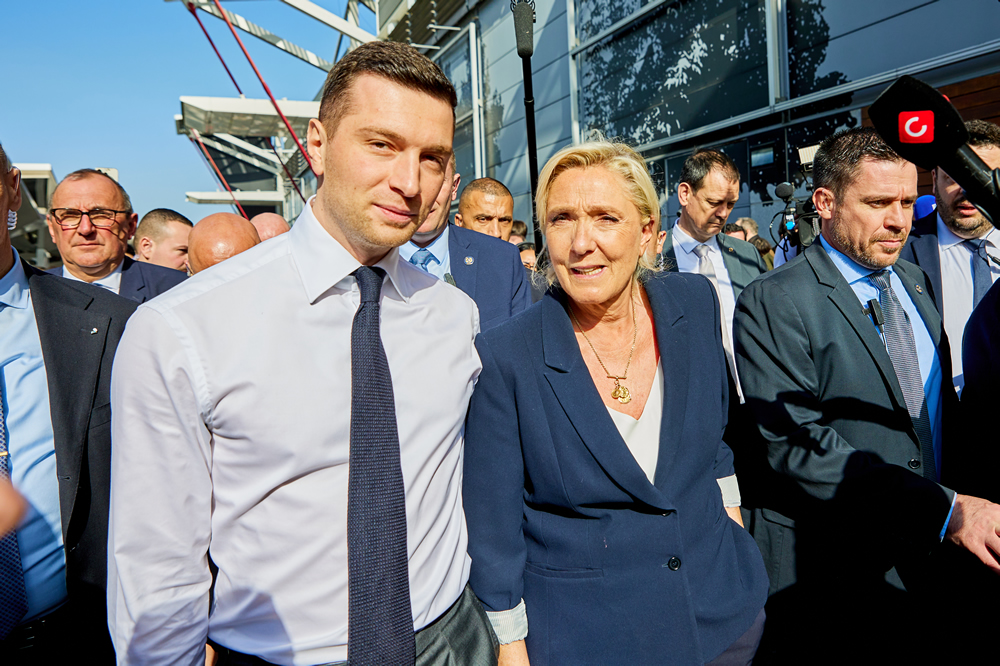
Negotiations on the new Multiannual Financial Framework will get serious in November. More than a year after the Commission’s proposal of July 2025, heads of state and government will meet on 26 and 27 November for an extraordinary European Council devoted almost entirely to the EU’s 2028-34 budget. October’s European Council made no progress. The two opposing camps, the “frugals” on one side and the “friends of cohesion” on the other, have stayed put. The former, led by Germany, want cuts of several hundred billion euros from the Commission’s original proposal of 1.8 trillion euros over seven years, without reducing the money available for the new priorities (competitiveness and defense). The latter, led by Italy and Romania, insist on preserving the traditional policies (agriculture and cohesion) without sacrificing the resources earmarked for the new priorities. The Irish presidency of the Council of the EU presented a “nego-box,” the document that serves as the basis for negotiations, which satisfied the “friends of cohesion” but not the “frugals.” António Costa, the president of the European Council, will present a new nego-box in mid-November. Costa told Politico that he hopes to reach a deal at the extraordinary European Council on 26 and 27 November. He will focus on new own resources, that is, the taxes and levies to finance the EU budget, meant to reduce member states’ national contributions and thus the burden placed on the “frugals,” who are the main net contributors. But a deal looks unlikely. The history of Multiannual Financial Framework negotiations teaches that it takes at least one or two failures to reach an agreement among twenty-seven. Each leader has to show his or her electorate that they fought in Brussels with declarations and vetoes before making the compromises needed to reach unanimity. The “frugals” want to convince their voters that their national contributions will not rise too much. The “friends of cohesion” must come home with a substantial check from the EU. A safer bet is a deal at the European Council of 17 and 18 December, or perhaps a few days later. Costa has already threatened to keep heads of state and government there until Christmas to conclude the negotiations on the new budget. The EU is in a hurry, and not only to ensure the funds are available from 1 January 2028. Leaders want to avoid the EU budget becoming a central issue in the French election campaign, and negotiations dragging on until Marine Le Pen’s potential arrival at the Élysée.
An extraordinary European Council to finance Ukraine
On 26 and 27 November, heads of state and government will also have to find a way to provide Ukraine with 70 billion euros to cover its budget gap for 2027. The 90 billion euro loan allocated for 2026 and 2027, financed with common EU debt, will not be enough to give Kyiv the money it needs to keep the machinery of the state running and, above all, to keep defending itself against Russia’s war of aggression. The most likely solution is another loan of about 45 billion euros (the rest should be covered by Ukraine’s other partners), once again financed with common debt. As with the budget, unanimity will be required. But the group of countries that want to be exempted from the burden of principal and interest is growing. Whereas last year the opt-out was granted to Hungary, Slovakia and the Czech Republic, this year Bulgaria has joined them.
Choosing Christine Lagarde’s successor
On 29 October, Christine Lagarde announced she would cut short her term as president of the European Central Bank. The Frenchwoman will leave her post on 7 February, more than seven months early. The reason is tied to the presidential election in France. Had Lagarde waited for her natural expiry, her successor would have been appointed in June 2027, after Marine Le Pen’s potential election. The summit of 26 and 27 November will be the first chance for heads of state and government to tackle the package of ECB appointments. A replacement must be found not only for Lagarde but also for two other Executive Board members, Isabel Schnabel and Philip Lane. The favorites for the ECB presidency are the Dutchman Klaas Knot and the Spaniard Pablo Hernández de Cos.
An informal summit on artificial intelligence
Before the extraordinary European Council on the budget and the Ukraine loan, heads of state and government will meet in Dublin on 12 and 13 November for a European Political Community meeting and an informal summit devoted to artificial intelligence. Some leaders seem to want to give up chasing the United States and China on frontier AI models: the investment needed to keep pace with the two giants would be too great. The Commission, too, is pushing to focus on industrial applications of AI. Ursula von der Leyen has appointed a special envoy, the Siemens chairman Jim Hagemann Snabe. A preliminary report from him is due to be published before the informal summit in Dublin to feed the discussion among leaders.
The adult in the Trump administration at the Defense Council
The EU’s foreign and defense ministers will meet in Brussels in mid-month, on 16 and 17 November. The priority for the Foreign Affairs Council remains Ukraine. The Commission has announced that the twenty-second package of sanctions against Russia will be presented. Defense ministers will also discuss how to increase military support for Kyiv. But their meeting will also have a special guest. Elbridge Colby, the Pentagon’s under secretary for policy and the architect of the Trump administration’s security strategy, has been invited by Kaja Kallas to discuss transatlantic security and defense. Colby is considered one of the few adults in the room in the Trump administration. He is the main interlocutor in NATO.
The autumn package of the European Semester
On 24 November the Commission will present the autumn package of the European Semester. It is a moment dreaded by some national governments. The Commission delivers its verdicts on each member state’s draft budget law, asking for corrections if they do not respect the rules of the Stability and Growth Pact. But the energy price crisis and the situation on France’s markets could lead the Commission not to be too strict. Italy and Greece are among the countries asking for more flexibility on the deficit in order to provide aid to households and businesses because of rising fuel and gas prices. To be able to benefit from the European Central Bank’s bond-buying program in case of market turbulence, France must be in compliance with the Stability Pact. These are all factors the Commission will have to take into account.