The map of Spain that we schoolchildren memorized had two oddities: a box in the bottom-right corner, where the seven Canary Islands were drawn, and two marks on the north coast of Africa, bearing names as familiar as they were exotic: Ceuta and Melilla. They had no shape, just two black dots on the African coast.
Very many people know the Canaries, but almost nobody knows anything about Ceuta and Melilla, two cities far apart from each other that are perceived as a single thing and only make the papers when migration crises break out. The two black dots on the map are holes of ignorance: reaching them is expensive and difficult, and almost no one in Spain thinks it is worth the trouble. Deep down, both the right and the left associate the two cities with an imperial idea of the nation. That is why, after this summer’s crisis, some on the left painted them as remnants of a colonial past to be overcome, while the right lit nationalist torches and proclaimed its unredeemed Spanishness, like D’Annunzio at Fiume.
Both sides are wrong.
Such ignorance is curious, because the historical importance of Ceuta (Portuguese from 1415 and Castilian from 1640) and Melilla (Castilian from 1497, barely five years after Granada) can be grasped in the center of Madrid, in front of the main door of the Congress of Deputies, guarded by two very popular lions: Daoíz and Velarde, symbols of Spanish parliamentary democracy. Both are cast from the bronze of the Moroccan cannons that the Spanish army seized after the Treaty of Wad-Ras in 1859, the document by which the Sultanate of Morocco recognized Spanish sovereignty over the two cities and drew their borders.
Morocco resonates strongly in twentieth-century history. In the part of the country occupied by Spain between 1912 and 1956, the civil war broke out a day before it did on the peninsula, and the hard core of the officers who rose against the Republic called themselves Africanists and shared an imperial obsession with North Africa fed by Ceuta and Melilla. The dictator Franco enjoyed great prestige among the askari or regulares troops (who still exist): he was credited with a great deal of baraka, which in Arabic means luck. Bullets did nothing to Franco. That is why he spent his life surrounded by troops of Moroccan origin, the famous Moorish Guard, and during the war used the regulares as extremely violent shock forces.
All this fostered a Francoist, militaristic image of Ceuta and Melilla, hiding the reality of a complex and contradictory society in which four religions (Christians, Muslims, Jews and Hindus) live together in peace, and where a fervently Spanish Muslim community flourishes, perhaps the most patriotic I have ever known.
The Francoist cliché conceals stories like that of Ceuta’s Republican mayor, Antonio López Sánchez-Prado, a victim of the fascist repression in July 1936. Sánchez-Prado was the most improbable mayor for a supposedly colonial and militaristic city: a member of the Communist Party, he was a popular doctor who performed clandestine abortions and treated poor women. On the day of the military coup he called for popular resistance, and for that he was arrested and murdered on the beach that is now occupied by migrants. His secret story shows what many do not know and want to keep ignoring about these very different cities, which struggle to preserve their pluralism and their complex coexistence amid the geopolitical hurricanes that batter their streets and coasts.
The stubborn reality is that Ceuta and Melilla are inhabited by people who have never expressed any wish other than to be Spanish, whatever god they pray to, if they pray to one at all, and who feel that the rest of the Spaniards do not understand them, which makes them second-class citizens. For example, both cities have limited autonomy: most powers rest with the central state, which is not the case in any other corner of the country. Nor are they part of the Schengen area, which discriminates against their inhabitants, and their condition as a harsh and violent border radically shapes daily life.
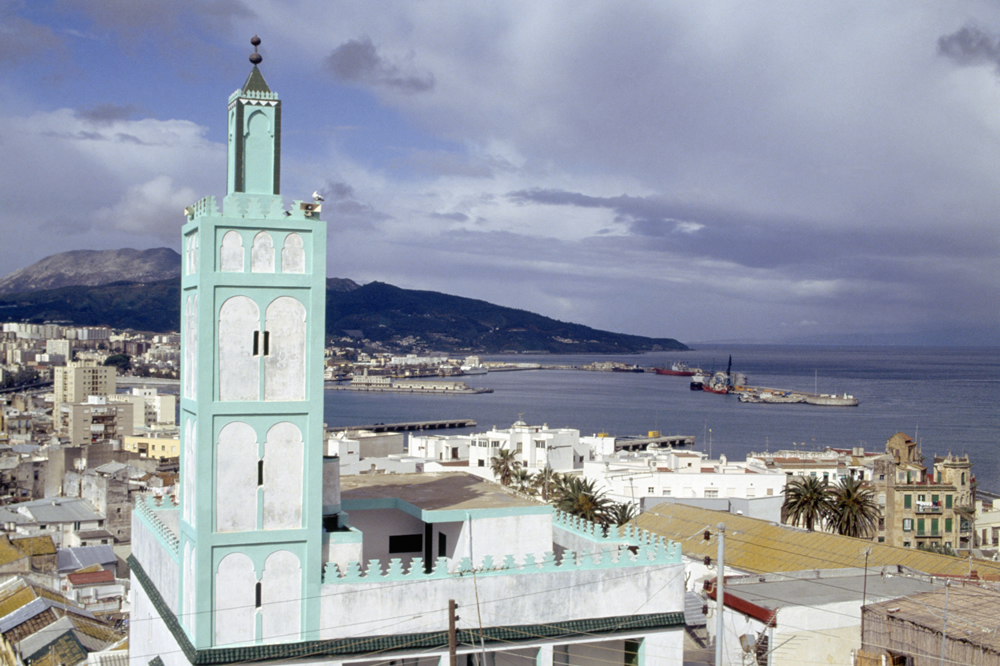
Despite all these problems, they retain much of the sweetness of Mediterranean life. They are cities open to the sea, beautiful and coquettish, that have shaken off the legacy of barracks and military parades and, when allowed, give themselves over to a placid life in which all the cultures of the Mediterranean intertwine. They say the best couscous in Africa is eaten at the Oasis restaurant in Ceuta, whose owners are very proud of their ancestor al-Idrisi, the cartographer who drew the first world map in history in the service of the Norman kings of Sicily. In Melilla, which boasts one of the most impressive fortresses on the African coast, people take pride in the Amazigh language, an ancient tongue with almost no written tradition, cultivated by the Berbers, who make up half of the city’s population.
But all this is invisible to the vast majority of Spaniards, who see only black dots on the African coast and absurd fences to be abandoned or defended with cannon fire, as if the civilian population had no opinions and no importance. Perhaps this is the only colonialism still in force: the one that condemns the inhabitants of Ceuta and Melilla to second-class citizenship, outside Schengen and with conditional autonomy.
Sergio del Molino is a Spanish writer. He has published essays, novels, short stories and a memoir. His latest book is “Los alemanes”.