A packed schedule of summits around the world
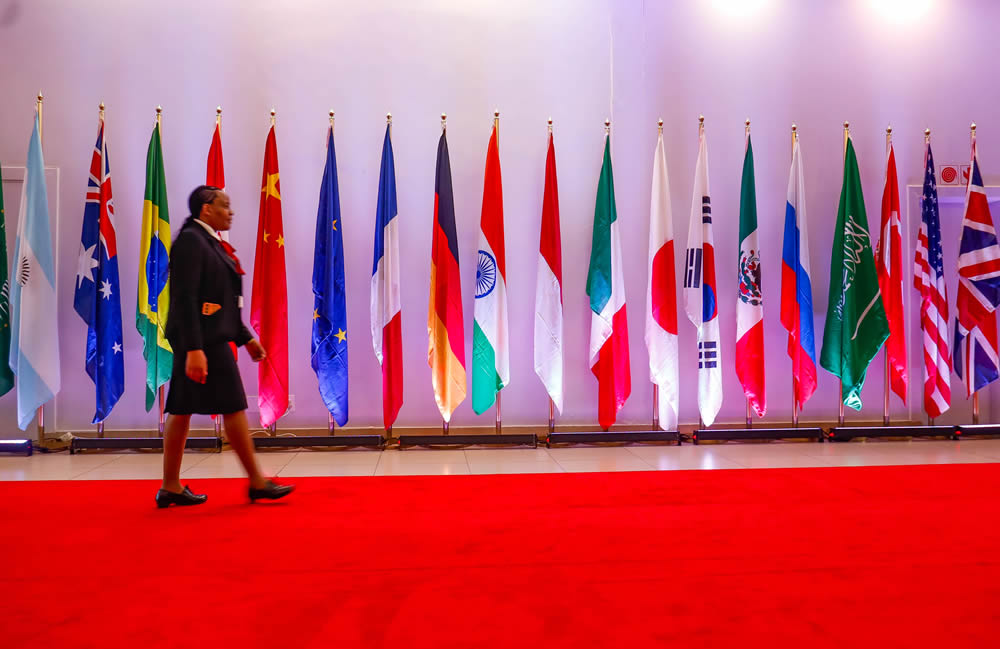
COP30 in Brazil, the summit with Latin American countries in Colombia, the G20 in South Africa, the meeting with the African Union in Angola: António Costa and Ursula von der Leyen, the presidents of the European Council and Commission, will have little time in Brussels to deal with the internal affairs of the European Union. The month of November is packed with international appointments around the world. The journey begins today and tomorrow in Belém, where the Brazilian president, Luiz Inácio Lula da Silva, is hosting the Conference of the Parties to the United Nations Framework Convention on Climate Change (COP30). The appointment is considered decisive for the fate of the Paris Agreement, after Donald Trump chose to withdraw (again) and abandon all climate policies. The EU presents itself as the best in class globally, but even among the twenty-seven there is a rethinking. Europeans failed to submit their emission reduction commitments for 2035 on time and presented themselves with a simple range. After the leaders’ major speeches, COP30 negotiations will begin and last until November 21. After Belém, Costa (but not von der Leyen, who together with other European leaders doesn’t want to irritate Trump with his Latin American whims) will go to Colombia for the summit between the EU and the Community of Latin American and Caribbean States (CELAC), which will be held in Santa Marta from November 9 to 10. Another major international appointment awaits them in Johannesburg, South Africa, on November 22 and 23, for the G20 summit. Finally, on November 24 and 25, they will move to Luanda, Angola, for the summit between the EU and the African Union. Heads of state and government of member states are also invited to participate in these appointments. Costa has made relaunching the EU’s relations with the rest of the world one of the objectives of his mandate as President of the European Council. It’s a way to react to the growing influence of China and Russia, considered a competitor and adversary of the EU, at the global level. Ursula von der Leyen wants to diversify trade relations to respond to Trump’s tariffs.
Omnibus bills put the Ursula majority to the test
The date is set for November 13, when the mini-session of the European Parliament will vote for the second time on the so-called “Sustainability Omnibus package.” It’s considered a test of the cohesion of the pro-European majority that supports Ursula von der Leyen’s Commission, formed by the European People’s Party, the Socialists & Democrats, and the liberals of Renew, to which the Greens are occasionally added. And it’s the second time that MEPs are forced to express themselves on the “Sustainability Omnibus.” The first time it was rejected during the October session, because a group of socialist MEPs rebelled against a text considered excessively favorable to businesses and penalizing for the objectives set by the two measures that are the subject of the package. The “Sustainability Omnibus” is the first that the Commission presented on February 26 and substantially modifies the two directives CSRD and CSDDD that impose obligations regarding due diligence and sustainability reporting to ensure that multinationals and companies verify compliance with climate and human rights standards along their supply chain. The EPP threatens to vote with the far right on a much more radical version of the “Sustainability Omnibus” if the socialists and liberals don’t accept its compromise proposal.
Hunting for 140 billion for Ukraine
On the same day, November 13, the European Union’s Finance Ministers will meet in Brussels to discuss the 140 billion euro reconstruction loan for Ukraine. At the European Council on October 23, leaders failed to reach an agreement to use Russian sovereign assets immobilized by sanctions. The Commission was given a mandate to present various “options” to guarantee financing for Ukraine for 2026 and 2027. Ursula von der Leyen confirmed that she intends to focus primarily on frozen Russian sovereign assets. The other options – such as a new joint borrowing instrument or a traditional macrofinancial assistance program – are not considered feasible for various reasons, including the need to obtain unanimous approval from member states. The Hungarian Prime Minister, Viktor Orbán, could obstruct it. Back to square one, therefore. The ministers want to see a concrete proposal from the Commission on the legal and financial construction and on the sharing of risks related to Russian sovereign assets. Belgium is the key country to convince. Time is running out. The President of the European Council, António Costa, said he wants a decision at the heads of state and government summit in December.
Packages, roadmaps, omnibuses, compasses on the Commission’s agenda
Despite Ursula von der Leyen’s international appointments, her Commission will have a significant agenda in November. It already started on Tuesday the 4th with the Enlargement package and a project to develop the high-speed rail network throughout the EU. On November 13, on the agenda are a strategy for the bioeconomy and a package for democracy, and a compass for culture in Europe. November 19 will be an important day for defense, digital, and capital markets: the College of Commissioners will present a roadmap for the transformation of the defense industry, a package on military mobility, the Digital Simplification Omnibus, and a series of measures on the Savings and Investment Union. On November 25, in the last November meeting of the Commission, the College will focus on implementing the Clean Industrial Deal with a package that will include electricity grids, industrial development, and the strategy to increase battery production. The same day, the Commission should launch the European Semester, expressing its judgments on member states’ budget plans. Eyes will be on France, whose political crisis has aggravated its inability to comply with the rules of the Stability and Growth Pact.